
By Zeng FengMyCarWhy EditorialUpdated
Best Portable Car Battery Jump Starter
For most US cars and light SUVs, the best portable car battery jump starter is a mid-tier NOCO Boost GB40, the noco gb40. Use the GB20 for small four-cylinders and the GB70 for large gas engines or diesels. A portable car battery jump starter still has to match the maker’s liter rating to your engine—and skip the pack for grinding, a fuel smell with no fire, or a locked interlock. Cables need a donor car, and a wall maintainer will not crank tonight.
This guide compares three portable NOCO Boost lithium packs—GB20, GB40, and GB70—by engine size and roadside use. It is a buying map, not a lab test. Ratings come from the manufacturer listings linked here. Sort the failure first with why my car won't start. After a jump that works, load-test with a car battery tester and see how long a car battery lasts.
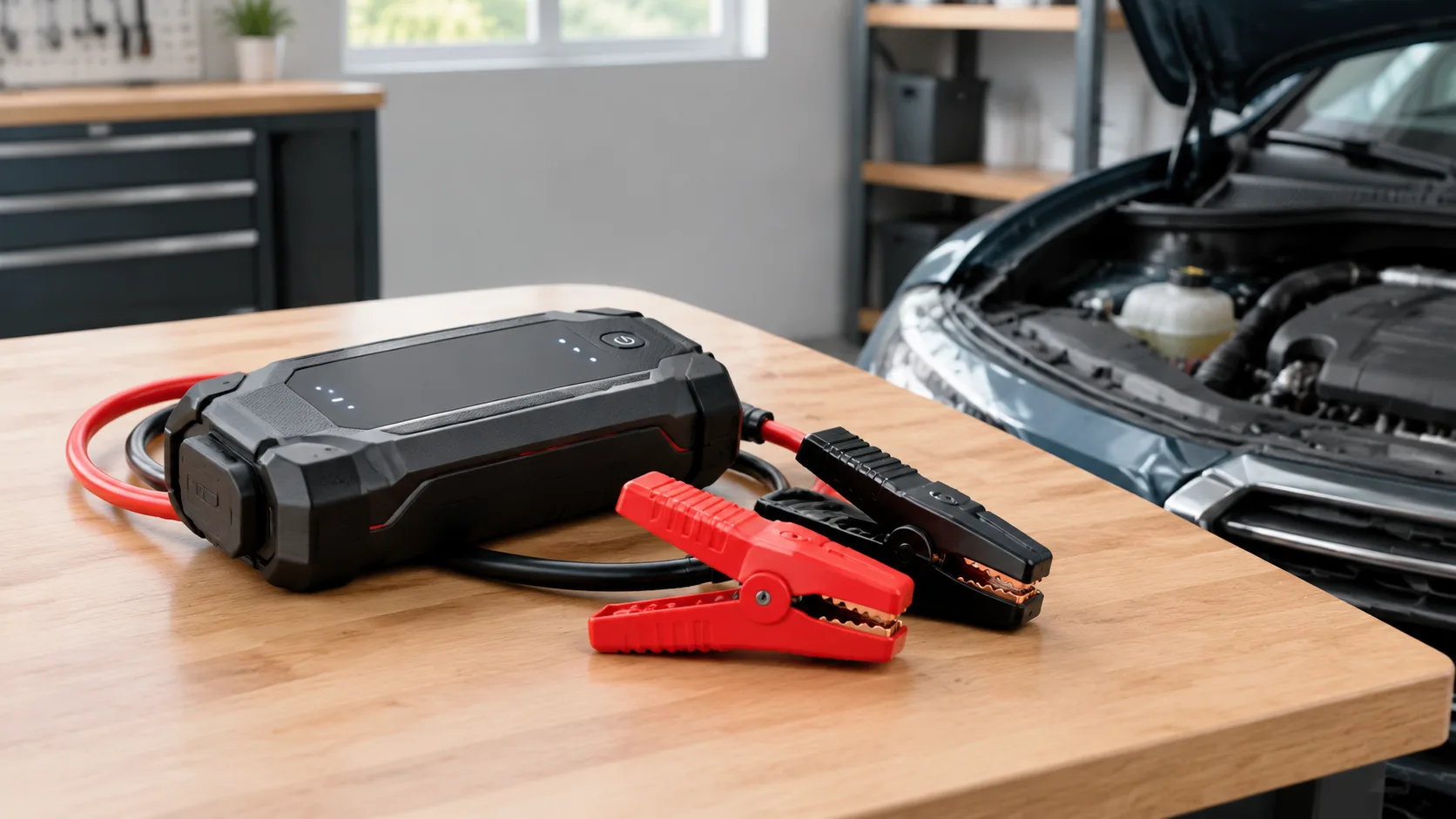
Should you buy a jump starter for this no-start?
A jump starter only helps when extra electrical power is the missing piece. Rapid clicking with dim lights, a dark dash after the car sat, or a pack that already load-tested weak are the usual green lights. Bright dash, one solid click, and no crank more often point at the starter circuit. A strong crank with no fire points at fuel, spark, or immobilizer logic. Silence with bright lights can be a brake-pedal or Park/Neutral permission fault on a push-button car.
Do one calm attempt. Note dash brightness, the sound, whether the engine spins, and any security or battery lamp. If grinding starts, stop turning the key. If you smell strong raw fuel and the engine will not catch, stop flooding the cylinders. Those cases need a different plan than a lithium pack in the glove box.
A successful jump is information, not a completed repair. Direct Brakes and similar consumer guides treat a jump that works as proof that extra current helped—not proof that a new battery alone will hold. After you get home, load-test the battery and check charging voltage with the engine running. If the car needs frequent jumps, the battery warning light branch or a parasitic drain still belongs on the list.
| What you hear and see | Jump pack useful? | Better next step |
|---|---|---|
| Dim lights, rapid clicking | Often yes | Jump, then load-test |
| Dark dash after sitting overnight | Often yes | Jump or charge, then test the pack |
| Bright lights, one loud click, no crank | Usually no | Starter-circuit diagnosis |
| Strong crank, no fire | No | Fuel, spark, codes, immobilizer |
| Grinding while cranking | No — stop | Tow; protect the ring gear |
| Push button ignored, brake lights out | No | Fix the pedal signal first |
What do peak amps and liter ratings mean?
Portable lithium jump starters advertise peak amps and a maximum gasoline or diesel engine size. Those numbers are the maker’s rating for that model, not a promise for every cold morning in every parking garage. Use them as a matching filter:
- Read your engine displacement (liters) from the manual or the under-hood label.
- Note gasoline versus diesel. Diesel ratings are usually lower for the same pack.
- Prefer a pack whose rating sits above your engine in normal weather, and higher still if you live with hard winters or a high-compression truck.
- Ignore marketing that treats “2000A” as automatically better than “1000A” without checking the liter limit and clamp design.
Also check what is in the box: clamps, a charge cable you can actually use (USB-C versus older micro-USB), a bag, and whether the unit doubles as a phone power bank or flashlight. Those extras matter on the roadside. They do not replace reverse-polarity protection and a clear ready light before you crank.
Keep the pack charged on a calendar. A dead jump starter in the trunk is a brick. Most makers want a top-up every few months even if you never used it. Store it where cabin heat will not cook the cells all summer if your climate is extreme.
Which NOCO Boost should you buy?
These three models sit in one product family: smaller and cheaper for compact gas engines, mid-pack for most daily drivers, and a heavier HD unit for larger gas and diesel engines. As an Amazon Associate, we may earn from qualifying purchases. Prices move; compare live listings rather than any dollar figure you remember from a review.
| Model | Amazon link | Maker peak rating | Typical engine rating (maker) | Best fit |
|---|---|---|---|---|
| NOCO Boost GB20 | B015TKPT1A | 500A | Up to about 4.0L gasoline | Small cars, short errands, glove-box size |
| NOCO Boost GB40 | B015TKUPIC | 1000A | Up to about 6.0L gas / 3.0L diesel | Most US passenger cars and light SUVs |
| NOCO Boost GB70 | B016UG6PWE | 2000A | Up to about 8.0L gas / 6.0L diesel | Larger trucks, bigger diesels, more margin in cold |
NOCO Boost GB20 — smaller engines, smaller bag
The NOCO Boost GB20 is the entry tier in this trio: lower peak amps, a gasoline rating aimed at roughly 4.0 liters and under, and a compact body. Choose it when your daily driver is a small four-cylinder, you want something that disappears in a door pocket or glove box, and you already accept that a large V8 or diesel is outside the rating.
Skip it as your only household pack if you also own a truck, a large SUV, or a diesel. One under-rated jump attempt in January is how people end up calling a tow anyway. If two vehicles share one emergency kit, size the kit for the larger engine.
NOCO Boost GB40 — the common daily-driver pick
The NOCO Boost GB40 is the mid tier most US owners land on for a normal sedan or crossover. Maker ratings put it around 1000 peak amps with gasoline coverage up to about 6.0 liters and diesel up to about 3.0 liters. That band covers a large share of passenger cars without stepping up to the heavier HD unit.
It also appears in our no-start triage tools list for the same reason: when the sound already says “weak battery,” a charged mid-size pack is a practical trunk item. It is still optional. Cables and a second car remain valid. A load tester still belongs after the emergency is over.
NOCO Boost GB70 — more margin for trucks and cold
The NOCO Boost GB70 steps up to about 2000 peak amps with maker ratings near 8.0 liters gasoline and 6.0 liters diesel. Pick this tier when the engine is large, you tow in winter, or you want one pack that can cover both a family car and a work truck without sitting on the edge of the rating chart.
It weighs more and costs more than the GB40. That trade is the point of a tier chart. You are buying margin and diesel headroom, not a prettier Amazon thumbnail. If your only vehicle is a small hatchback that never leaves the city, the extra capacity is usually unused insurance—not a required upgrade.
How do you use a jump starter safely?
Follow the order printed on your unit and in the vehicle manual. In general for a 12-volt negative-ground car:
- Park safe, in Park or Neutral, parking brake on, accessories off.
- Identify the positive battery post or the under-hood jump point the manual names. Many modern cars want the jump on a stud, not on a buried post.
- Connect the pack clamps as the jump-starter manual shows. Wait for a ready or OK indication before you crank.
- Crank in short bursts. If it does not catch, stop and reassess rather than cooking the starter.
- After a start, disconnect in the reverse order the manual lists. Keep the engine running long enough for a real charge path—or drive to a place that can load-test the battery.
Do not use a damaged, swollen, or wet pack. Do not jump a frozen battery that is cracked or leaking. Do not bridge clamps together to “test the spark.” If the pack refuses to enable because polarity is wrong, fix the clamp placement; do not defeat the interlock.
Hybrids and EVs are a special case. Many still have a 12-volt battery that can leave the car dark, but the jump points and procedures are model-specific. Use only the 12-volt jump points in that owner’s manual. Do not clamp onto high-voltage orange cables.
When should you buy a battery tester instead?
A jump starter solves tonight. A tester answers tomorrow. If your real question is whether the battery still holds cranking amps, or whether the alternator is refilling it, put money toward measurement:
- A simple digital multimeter for resting and running voltage (see the Fluke 101 mention on the no-start and battery light pages).
- A dedicated 12-volt battery/charging analyzer such as the ANCEL BA101. For BA101 vs TOPDON BT100, see best car battery tester.
Buying both is reasonable for a household that keeps older cars. Buying only a jump pack and never testing is how a failing alternator becomes a subscription to roadside boosts. If the engine already cranks strong and a check-engine light is the complaint, a jump pack will not help—use best OBD2 scanner for check engine light instead.
When should you not buy a jump starter?
Skip “mystery amp” packs with no clear 12-volt vehicle rating, no reverse-polarity protection description, and no reputable clamp design. Skip a gas-station booster box that needs a second car if your whole point was to travel alone. Skip a recharge kit mindset: a jump starter is not an alternator, not a battery tender for months of sitting, and not a scan tool.
Also skip shopping while angry in a parking lot. The expensive mistake is ordering the wrong tier overnight, then finding the pack’s liter rating is below your engine when the next cold snap hits. Read the displacement once at home. Match the tier once. Charge the unit before you need it. If you already own heavy copper jumper cables and a reliable second car at home, a portable pack is still optional insurance for travel—not a mandatory upgrade for every driveway.
If the car is under a hybrid or EV warranty conversation, or the under-hood label points at a special 12-volt jump post only, print that page of the manual. A generic clamp photo on Amazon is not your procedure. Go to a shop or arrange a tow when grinding, a flooded smell with no fire, or a security lockout is what you already heard.
Quick pick guide
- Small gas engine, tight storage, occasional use: GB20.
- Typical car or light SUV, one pack for the household: GB40.
- Large gas engine, diesel, or winter truck duty: GB70.
- Grinding, fuel smell with no fire, or a locked brake interlock: do not shop a pack first—re-read why my car won't start and arrange diagnosis or a tow.
Charge the unit when you bring it home. Put a reminder on the calendar. Keep the clamps clean. After any real-world jump, schedule the battery and charging checks so the emergency kit is not the maintenance plan. A pack that sits forgotten at 20 percent charge is not a plan—it is only a delay before the tow truck.
FAQ
Do I need a jump starter if jumper cables already work?
Not always. Cables need a second vehicle with a healthy battery and a safe place to park nose-to-nose. A portable lithium pack helps when you are alone, in a lot with no donor car, or when you want a charged pack in the trunk. It still does not replace a load test after a successful jump.
Can a jump starter fix a bad alternator?
No. A pack only supplies cranking current. If the car dies again soon after you disconnect, or the battery light stays on while driving, the charging system still needs a test. See the battery-light and battery-life guides for that branch.
What size jump starter do I need?
Match the maker's gasoline and diesel liter ratings to your engine, then leave a margin for cold weather. A pack rated only for small four-cylinders is the wrong tool for a large truck diesel. When ratings are close, the next tier up is usually the safer garage pick.
Is a lithium jump starter safe for electronics?
Modern packs with reverse-polarity and spark-proof clamps are designed for 12-volt vehicles when you follow the clamp order in the manual. They are still not toys. Keep clamps off painted body panels, do not use a swollen or damaged pack, and stop if the unit alarms instead of enabling a start.