
By Zeng FengMyCarWhy EditorialUpdated
Best Jumper Cables
For most US cars and light SUVs, buy 4-gauge, 20-foot cables: the Energizer set, or the Cartman set if you prefer that clamp. Step up to Energizer 2-gauge for a large truck or cold-weather margin. Cables need a second car with a healthy battery. If you travel alone, buy a jump starter instead.
This guide compares those three verified 20-foot sets by thickness and clamp design. It is a buying map, not a lab test. Specs come from the manufacturer and Amazon listings linked here. Sort the no-start first with why my car won't start. For a solo boost, see best jump starter for a dead car battery. After a jump that works, plan a health check with best car battery tester.
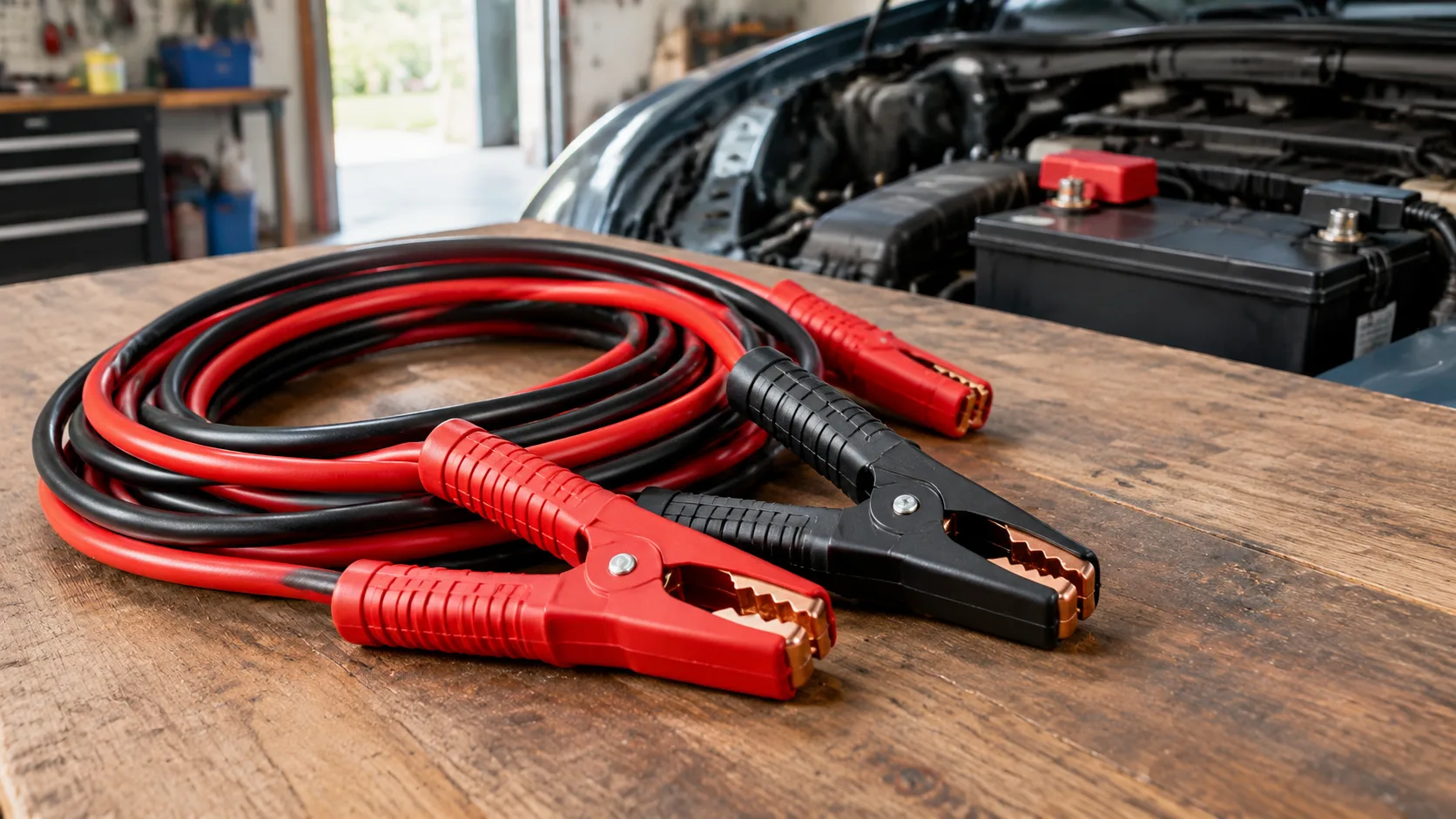
Should you buy jumper cables for this no-start?
Jumper cables let a donor vehicle share cranking current with a dead 12-volt battery. They help when a second car is available, the batteries are reachable, and the symptom already sounds like a weak battery: dim lights and rapid clicking. They do not help a grinding starter, a fuel smell with no fire, or a car that cranks strong and will not catch.
Cables are not a lithium jump starter, and they are not a wall maintainer. If you are alone in a lot, the tool is a jump starter. If the car sits for weeks, the tool is a portable charger. If you need to know whether the pack should be replaced, the tool is a battery tester.
| Situation | Right tool |
|---|---|
| Donor car available, two 12-volt batteries | Jumper cables on this page |
| Alone in a lot | Jump starter |
| Car sits; keep it charged | Portable charger |
| Decide replace versus recharge | Battery tester |
| Dies again soon, battery lamp on while driving | Charging-system test, not thicker cables. See battery light |
| Grinding, or a strong crank with no fire | Stop. No-start triage, not a cable upgrade |
What do gauge and length mean?
Gauge: a smaller number means thicker wire and less resistance under starter load. Length: 16 to 20 feet helps when batteries sit on opposite corners or the bumpers cannot touch. An 8-foot toy set fails awkward parking lots. Clamps: they need to bite a top post and, ideally, a side post. Insulated grips matter when the engine bay is tight.
Match the set to the engine and the climate. A small four-cylinder in mild weather tolerates less cable than a large gas V8 on a 0°F morning. Still prefer an honest 4-gauge set over a bargain 10-gauge pair. Quality copper-clad aluminum is common at retail and is fine when the gauge and clamps are real. Pure copper is heavier and costs more. Thin mystery copper-clad cable with painted jaws is the set to leave on the shelf.
Cables borrow current for one start attempt. They do not refill a battery the way a smart maintainer does, and they do not fix an alternator. If the car dies again soon and the battery lamp stays on while driving, thicker copper will not solve it. See why the battery light is on and how long a car battery lasts.
Which jumper cables should you buy?
These three sets are all 20 feet. Two are 4-gauge household picks. One is 2-gauge for more margin. As an Amazon Associate, we may earn from qualifying purchases. Prices move; use the live listings.
| Model | Amazon link | Gauge and length | Best fit |
|---|---|---|---|
| Energizer 4-gauge | B079LDQVYW | 4 gauge, 20 ft, copper-clad aluminum | Most cars and light SUVs; bag included |
| Cartman 4-gauge | B00F9RNIPI | 4 gauge, 20 ft, copper-clad aluminum | Same duty; dual-connection clamps on the listing |
| Energizer 2-gauge | B0B52D1NWZ | 2 gauge, 20 ft, copper-clad aluminum | Trucks, large SUVs, extra cold-weather margin |
Energizer 4-gauge, 20 feet — the common trunk set
The Energizer 4-gauge 20 ft listing covers cars through light trucks with copper-clad conductors, a thick jacket, and a carry bag. The product copy includes flexibility claims down to low temperatures.
Choose this as the default household set when you want a known brand at 4 gauge and 20 feet, and a second vehicle is part of the plan.
Cartman 4-gauge, 20 feet — alternate clamps
The Cartman 4-gauge 20 ft set lists dual-connection clamps for top and side posts, copper-clad conductors, a cold-flexible jacket, and a carry bag.
Pick Cartman when the Energizer 4-gauge is unavailable or you prefer that clamp design. It is the same duty class, not a thinner bargain cable.
Energizer 2-gauge, 20 feet — heavier margin
The Energizer 2-gauge 20 ft steps the conductor up for larger engines and tougher cold starts while keeping the 20-foot reach and a bag on the listing.
Choose 2-gauge for a full-size truck, a heavy SUV, or a 4-gauge set that felt marginal last winter. It is heavier to coil. That weight is the margin you are buying.
How do you jump with cables without damaging electronics?
Follow the vehicle manual if it names a special jump post. In general for a 12-volt negative-ground car:
- Both cars in Park or Neutral, parking brakes on, ignitions and accessories off.
- Red clamp to the dead battery positive, then red to the donor positive.
- Black clamp to the donor negative, then black to a clean unpainted ground on the dead car, not always the dead negative post.
- Start the donor, wait a minute, then try the dead car in short cranks.
- Remove the cables in reverse order. Do not let the clamps touch each other.
If you see rapid clicking and dim lights, cables are the right job. One solid click with bright lights points at the starter circuit, not at a thicker cable. Hybrids and EVs can still have a 12-volt battery, but the jump points are model-specific. Use only the points in that owner's manual. Do not clamp orange high-voltage cables.
When should you buy a jump starter or a charger instead?
Buy a jump starter when you travel alone, park in lots with no donor car, or do not want to wait for a stranger's battery. Buy a portable charger when the car sits and you can plug into a wall. Buy a battery tester after the emergency, so the next jump is not the maintenance plan.
Many households keep both cables and a pack. Size the cables for the larger engine if two vehicles share one kit. Size the pack the same way on the jump-starter page. Neither tool replaces a load test, and neither fixes an alternator.
When should you not buy jumper cables?
Skip 10-gauge and 12-gauge "compact" sets for a truck or a large SUV. Skip clamps with painted jaws that will not bite. Skip using cables as an overnight substitute for a maintainer. Skip any plan that ignores polarity. Reversed clamps can destroy electronics.
Also skip shopping cables for a no-start that is not electrical. Grinding while you crank, a strong crank with no fire, or a raw-fuel smell needs a different plan. Read why my car won't start before you order a heavier gauge you will not use. If the only vehicle is a hybrid or EV and the manual forbids a generic clamp point, do not improvise from an Amazon photo. Tow it or follow that manual's 12-volt jump point only.
If you already own heavy 2-gauge cables and a reliable second car at home, another set is optional. If you never have a donor car, cables are the wrong insurance. Buy the jump pack, charge it, and still test the battery after you get home.
Quick pick guide
- Most cars and light SUVs: Energizer 4-gauge 20 ft or Cartman 4-gauge 20 ft.
- Large truck or extra cold margin: Energizer 2-gauge 20 ft.
- No donor car: jump starter guide.
- Car sits for weeks: portable charger, then a battery test.
Thick enough, long enough, clamped in the right order. Then find out why the battery was empty.
FAQ
Should I buy jumper cables or a jump starter?
Cables need a second vehicle with a healthy battery and a safe place to park nose to nose. A lithium jump starter helps when you are alone. Many trunks carry both. Size the cables on this page. Size the pack on the jump-starter guide.
What gauge jumper cables do I need?
A lower gauge number means a thicker conductor. 4-gauge, 20-foot cables cover most cars and light trucks. 2-gauge is the step up for large trucks, big SUVs, and cold-weather margin. Avoid thin 10-gauge and 12-gauge emergency sets for a full-size engine.
Are copper-clad aluminum jumper cables OK?
Quality copper-clad aluminum sets are common at retail and work when the gauge and the clamps are real. Pure copper is ideal, and it is heavier and more expensive. Skip mystery-thin copper-clad sets with clamps that will not bite.
Can jumper cables charge a battery like a maintainer?
No. They only borrow cranking current for a start attempt. After a successful jump, load-test the battery and charge it with a maintainer if the car sits. Cables are not an overnight charger. See the battery tester and portable charger guides.