
By Automotive Research TeamUpdated 2026-09-20
How long does a car battery last before it fails
How long does a car battery last is a question about chemistry and driving, not about the odometer. A healthy battery gets old on a calendar. Heat speeds that aging up. Short trips and a weak charging system leave it half full, and a half-full battery ages faster still. The failure you notice is a slow crank, a click, or a no-start. Those are late signs. The useful test happens earlier, at the battery, with a meter, before you are stuck in a parking lot.
AAA's battery guide is explicit that there is no single number. Time, heat, and vibration are the three factors they name. Interstate gives the same band and adds electrical load and drive time. Neither source treats a replacement sticker as a promise. This guide uses their numbers, then sorts the cases where the band is the wrong thing to wait for.
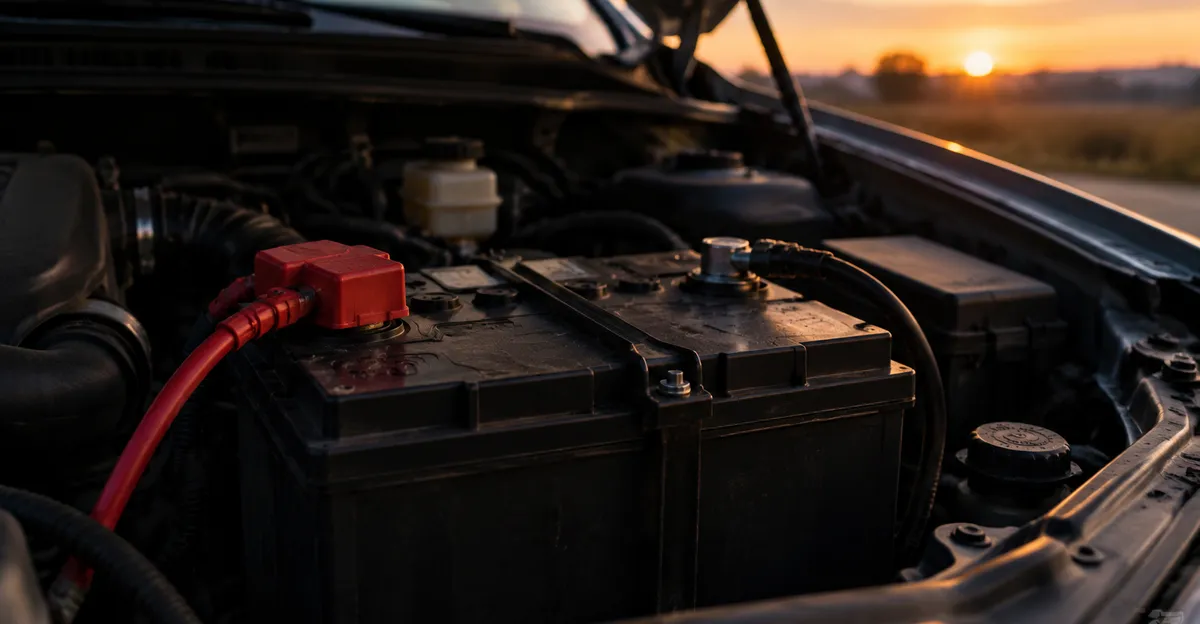
A normal span is a range, not a date
How long does car battery last is the short form of the same question, and the published answer is still a range. AAA says batteries wear until they cannot start the engine, and that wear can take three to five years. How you drive is one of the things that moves a battery toward the short end or the long end of that range. Interstate says the same three to five years, and names hot and cold extremes, high electrical use, and drive time as the things that move it.
A battery that starts the car every morning is not proof that it has years left. AAA says deterioration is gradual. Capacity falls before the starter refuses to turn. That is why both AAA and Interstate tell you to test on a schedule instead of waiting for the morning the key does nothing.
How long do car batteries usually last
Climate is the split. AAA says a battery in a cooler northern climate may last five years or longer. In hot southern locales, about three years is typical. The same battery, same driving, different climate, different result. Heat is not a minor footnote on that page. AAA calls it one of the three factors that set the life of the battery, along with time and vibration.
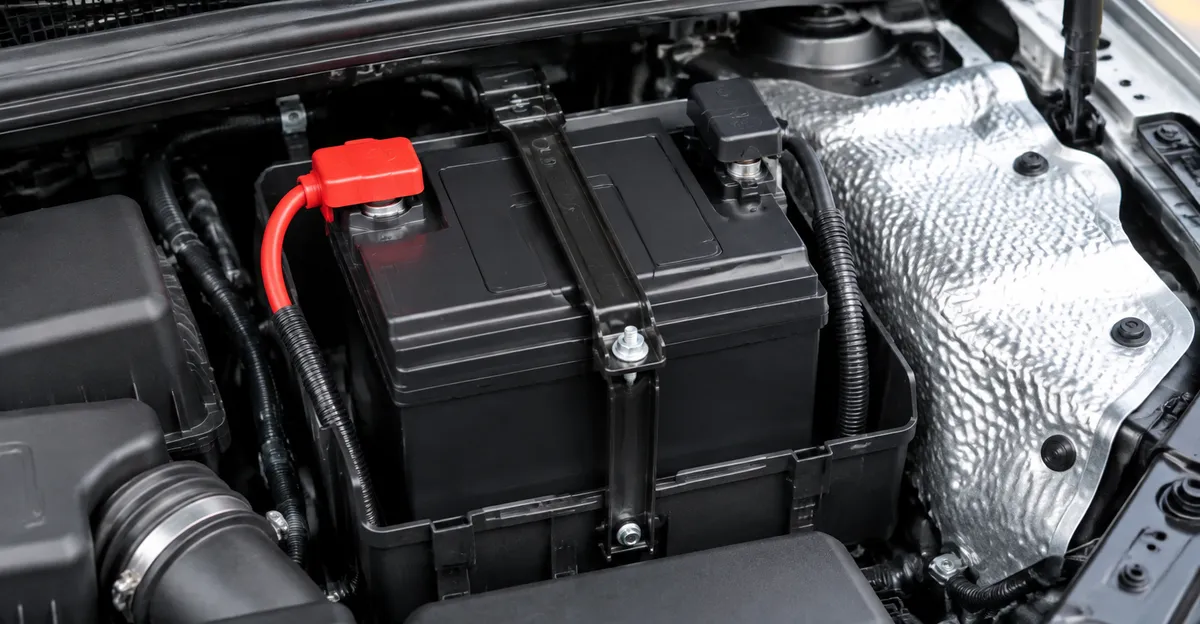
Under the hood, AAA says temperatures can easily exceed 200 degrees Fahrenheit in hot weather. Heat speeds the chemical reaction that makes electricity, and it also speeds the reactions that destroy the plates. Automakers answer that heat by isolating the battery, putting a heat shield over it, or moving it out of the engine bay, often under the back seat or the trunk floor. If your battery is not sitting in the open next to the radiator, that is a design choice, not a hiding place for a different part.
Cold does not get the same credit for killing the battery, and it should not. Interstate lists cold extremes as a life factor because a cold engine is harder to turn and a cold battery cannot deliver the same current. The industry rating that measures that current, cold cranking amps, is defined at zero degrees Fahrenheit. AAA uses 650 CCA as an example of that rating, and warns not to confuse it with cranking amps, which comes from an easier test and prints a bigger number. A battery that still starts on a mild afternoon can fail the first hard freeze, because the cold morning is when you finally ask for the current the heat already took away.
How long does a car battery last on average
The published band is three to five years, from both AAA and Interstate. It is not a midpoint you can pencil onto a calendar and forget. AAA's replacement guide calls three to five years the rule of thumb for when to replace, then says a five-year-old battery is nearing the end. Some last longer with maintenance. AAA still says it is wise to start considering a replacement at five years, and to have the battery tested if you are unsure.
The test schedule is tighter than the replacement guess. AAA says that once a battery reaches its third year, have it tested every year. Inspect it at every oil change: cable connections clean and tight, hold-down hardware secure. Interstate is stricter on the test itself. They recommend a test at least twice a year, or every time the oil is changed. Use the stricter habit. A yearly test that you skip because the car still starts is how a three-year-old battery becomes a roadside call.
Usage moves the average more than the brand name on the case. AAA says cars driven mostly on short trips may never fully recharge the battery, and cars parked for long stretches self-discharge. In either case they point to a maintenance charger, such as their Battery Tender, to keep the battery full and stretch its service life. A battery that lives in a mild climate and gets a real drive several times a week is the battery that can use the long end of the range. A battery that only starts the car for a two-mile commute, in a hot city, is already on the short end. Do not average those two cars into one number and then argue with the meter.
| What you notice | What it usually means | First check |
|---|---|---|
| Starts fine, battery is three years old | Calendar wear that may not show yet | Yearly test, as AAA recommends after year three |
| Slow crank only on cold mornings | Heat has already cut capacity; cold exposes it | Resting voltage, then a load test |
| Dies after a week of short trips | Alternator never finished the recharge | A longer drive, or a charger, then retest |
| Dies after the car sits | Self-discharge, or a drain while parked | Charging-system and parasitic-draw test |
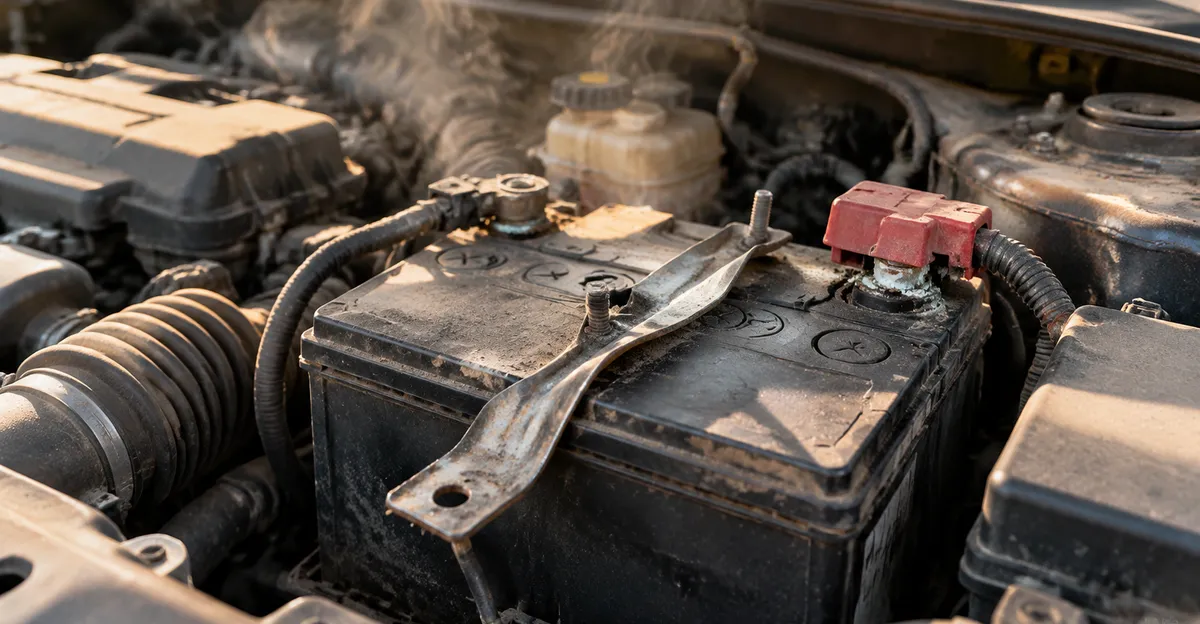
| Case is hot, swollen, or smells of sulfur | Overcharging or a failed cell | Stop charging it. Test the engine charging rate |
| Battery light stays on after start | Charging fault, not just a weak battery | See warning lights, then measure running voltage |
Heat, trips, and a loose hold-down
How long do batteries last in a car is decided more by those three conditions than by the date stamped on the case. AAA puts heat and vibration next to time. Interstate adds high electrical use and how long you actually drive. A battery can be two years old and already finished, or five years old and still pass a load test. The conditions below are how you tell which car you have.
Heat is the one people misread, because the no-start happens in winter. The damage AAA describes is the summer under-hood temperature, the 200-degree environment, the faster chemistry. Winter is when the starter asks for current the damaged battery no longer has. Replacing the battery in January does not mean January killed it.
Vibration is the quiet one. AAA says it breaks internal parts down. The countermeasure is the hold-down: the bracket, the bolt, the tray that stops the case from walking around. Missing or loose hardware can significantly shorten life. A battery that was "just set in there" after the last swap is not a small oversight. Every mile shakes the plates. If you open the hood and the case shifts when you push it, fix the hold-down before you talk about a new battery. The same visit should put the heat shield back if the car had one. AAA notes that matching the original group size is what lets that shield go back on.
Short trips starve the battery in a different way. Starting the engine takes a large current. Putting that current back takes time at charging voltage. Interstate says that under normal conditions, 15 to 20 minutes of driving is an adequate charge. At idle, alternator current is lower and may not be enough. A pattern of start, drive two miles, shut off, and repeat never gives the battery that 15 minutes. The battery spends its life partly discharged. AAA says that pattern may never fully recharge it.
A deep discharge is worse than a short trip. Interstate says the voltage needed to refill a deeply discharged battery is higher than the alternator is willing to produce, because the alternator stays on the low side to protect the car's electronics. Many hours of driving may still not finish the job. If the car had to be jump-started, Interstate says the battery may never reach a full charge unless you use a charger. AAA is blunt about the cost of letting it go all the way dead: that event takes a big chunk out of the lifespan even if you recharge the battery and put it back in service. A jump-start that "fixed it" often just postponed the replacement and shortened whatever life was left.
Electrical load does the same thing from the other direction. Interstate lists constant demand beyond what the alternator can supply as a reason batteries keep dying. Lights, heaters, and accessories that stay on while the engine is off are a drain. So are loose or corroded connections, which waste the current you do have. A battery that is new and still dies every week is not a lifespan story. It is a drain or a charging fault. Testing the battery alone will keep selling you batteries.
AGM batteries, the absorbent-glass-mat type, change the charging rules. AAA says they handle repeated discharge and recharge better than a conventional flooded battery, which is why stop-start cars use them. The charging system is tuned for that chemistry. AAA says some newer cars even change the charging strategy as the AGM battery ages, and that the replacement should be the same type the car came with. Putting a flooded battery into a car that expects AGM, or the reverse, is not a bargain. AAA says the wrong battery can hurt the electrical system, and that terminal locations that do not match can short against nearby metal.
How often to replace car battery
The practical version of the range is a test schedule, not a birthday. Interstate says typically three to five years, and that climate and how you drive decide where you land. They do not tell you to throw the battery out on its third birthday. They tell you to watch for a slow crank, a battery warning light, and headlights or interior lights that dim, and to get a test if you see those or if you simply do not know the age.
AAA's version of the same schedule is the inspection, not the automatic swap. After three years, test yearly. At every oil change, look at the connections and the hold-down. At five years, start planning the replacement even if the car still starts, because that is the far end of the band they publish. A test that says the battery is still strong is a reason to wait. A test you never do is not.
Replace sooner than the band when the battery has been deeply discharged, when it lives in a hot climate and is already around three years old, or when the case is swollen or smells of sulfur. Those are not "see you at the next oil change" findings. AAA lists a rotten, sulphuric smell and a bulging case among the signs of a battery that is already damaged. Interstate says a battery that swells and is hot to the touch is overcharging, and that an overcharged battery can be dangerous and can explode. Shut the car off. Do not put a charger on a swollen case to "see if it comes back."
Replace on the test, not on a coupon, when the battery is younger than three years and the car has been stranding you. A new battery that dies in months is almost never "bad luck on the lifespan." Interstate's list for a battery that keeps dying is loose or corroded connections, a persistent electrical drain, a charging problem, more load than the alternator can cover, and extreme weather. Fix the item on that list or the next battery will follow the last one.
When you do buy, AAA says buy from a high-volume seller with fresh stock. A battery that has been sitting on a shelf has already spent part of its service life. The date that matters is the date it was activated or installed, not the date you felt like shopping. Match the original type, the group size, and a cold-cranking or amp-hour rating that meets or exceeds what the manufacturer specifies. AAA says a higher rating can fit and still have a shorter life in a hot climate, so "the biggest number on the shelf" is not an upgrade. A lower rating than the car asks for is how you buy a no-start on the first cold morning.
Signs it is finished before the no-start
A dying battery often gives you a list. It does not always give you one. AAA says not every failing battery shows an obvious symptom, which is the reason for the oil-change inspection and the test after year three. If you do get a symptom, treat it as a reason to test this week, not as a story to confirm on the highway.
AAA's warning list, and Interstate's shorter one, line up like this:
- The starter turns slowly. AAA also flags a clicking sound when you turn the key, and notes that a click can be a bad connection rather than a battery that is simply empty.
- Headlights look dim, especially at idle, on older cars with incandescent bulbs. Interstate includes interior lights that dim. If the lights brighten when you raise the engine speed, the charging rate at idle is part of the story, not only the battery.
- The battery or charging lamp stays on. Interstate says a lamp that stays lit for a long time after the engine starts belongs in the same visit as a slow crank. That lamp is not a suggestion to buy a battery on the way home. It is a charging-system fault until a meter says otherwise.
- You have needed a jump more than once. AAA calls repeated jump-starts a clear sign the battery is struggling. Combined with Interstate's note that a jump-started battery may never refill from the alternator, the second jump is the point where a charger and a test beat another set of cables.
- Electrical accessories misbehave: windows, locks, a radio that resets. AAA groups these as electrical issues that can mean a weak battery. They can also mean a connection. Clean, tight cables come before a new battery.
- The clock loses time after the car sits for several days. Interstate lists that specifically, and says there may be little or no other warning.
- The case smells like rotten eggs, or the case is swollen. Smell at the battery, with a slow crank, is the battery. A smell only at the tailpipe while you drive is a different problem. A hot, swollen case is the overcharge case. Do not keep driving it to "get one more day."
A single slow crank on a very cold morning, in a battery that is a year old and otherwise normal, can be the cold asking for more current than a marginal state of charge can give. Charge it, then test it. Do not make that one morning into a replacement if the load test is strong and the charging voltage is in range. Do make a pattern of slow cranks into a test the same week. Patterns are the battery aging. One cold morning can be a low state of charge.
Corrosion on the posts is evidence, not a cleaning project you do with the engine running. Interstate's cleaning order is gloves and glasses, negative cable off first, then the positive, then a baking-soda mix on the posts, rinse, dry, and the positive cable back on first. Caps stay on so the mix does not get into the cells. If the case is crusted and the car has been slow to start, clean the posts and then test. A pretty battery can still be finished inside. A filthy one can still be fine if the test says so. The white powder does not pick the invoice.
The charging system fails with it
A battery that is asked to start the car and then never gets a full charge will look like a bad battery. The alternator, the regulator, and the cables are the other half of that job. AAA says a malfunctioning charging system is less common than time, heat, and vibration, and that it still shortens life. Persistent undercharging or overcharging ages the battery. Letting it go completely dead takes a large piece of the remaining life even after a recharge.
Interstate publishes the voltages that make this checkable. A charged battery at rest should measure 12.6 volts or higher. With the engine running, they want something between 13.7 and 14.7 volts. At 11.9 volts or below, they call the battery dead. Their hands-on meter test is slightly different on purpose: headlights on for about two minutes, then off, then a resting reading around 12.5 volts. That two-minute load knocks a surface charge off so you are not reading a lie. After you start the engine they want more than 13 volts. Below 13 volts with the engine running, they say you could have a bad alternator or a bad battery. Cleaning the connectors or charging the battery is the first split. If a charged battery still will not show a charging voltage above 13, the alternator side is the suspect, and a new battery will not stay new.
Overcharging is the dangerous direction. Voltage stuck high cooks the battery. Interstate says swelling and heat are the direct result, and that the case can explode. AAA's bulging case and sulfur smell are the same failure from the driver's side. The regulator is the usual reason, and it lives with the charging system, not inside a replacement battery. Install a new battery on a car that is overcharging and you will buy another battery. Measure the running voltage before you pay for the part.
Undercharging is the slow direction. Idle current that cannot cover the blower, the lights, and the rear defroster leaves the battery lower at the end of the trip than at the start. Interstate says that at idle the alternator's output may be inadequate, and that 15 to 20 minutes of actual driving is what refills a normal discharge. A car that only idles in traffic is electrically closer to a parked car than to a highway car. If the running voltage is already below 13.7 volts on the open road, do not blame the commute. The charging rate itself is short.
A drain while parked is the third pattern. The car starts fine after a drive and is dead in the morning, or dead after a weekend. Interstate lists persistent electrical drains separately from a weak battery. The clock losing time after several days of sitting is their hint that something is drawing current with the key off. A shop measures that draw with the car asleep. Pulling fuses in the driveway until the car starts is how you create a second problem. Say "it dies after it sits" and let the meter find the circuit.
AGM cars need the test read in the context of the charging strategy. AAA says the automaker may alter that strategy as the battery ages. A voltage that looks "a bit low" against a generic 14-volt expectation can be the car doing what it was designed to do, or it can be a fault. That is a reason to use a tester that knows the battery type, not a reason to ignore a battery light. The lamp on the dash is still the car telling you the strategy has left its normal range. Read it on the warning lights page as a charging fault first.
Test it before you buy the next one
A voltage reading is a start. It is not the whole decision. AAA's replacement article says a battery often needs replacement when charge falls below about 25 percent, around 11.8 volts at 80 degrees Fahrenheit, and then warns that this is not always the best indicator. A battery can show a full charge and still be damaged inside so that it will not hold or deliver that charge. Age, driving, and climate belong in the decision. Performance and age beat a single voltage number.
Use Interstate's meter steps if you have a multimeter and the battery is in reach:
- Headlights on for about two minutes, then off. This is the surface-charge step.
- Meter on the 20-volt DC range. Red lead on the positive post, black on the negative.
- Around 12.5 volts at rest is what they want after that headlight load. Their separate "charged battery" figure is 12.6 volts or higher. At or below 11.9 volts they call it dead. AAA's 11.8-volt figure is the same neighborhood, framed as a deeply low state of charge rather than as proof the battery cannot be saved.
- Start the engine. You want more than 13 volts running, and their fuller spec is 13.7 to 14.7. Below 13, charge the battery or clean the posts, then repeat. If it still will not climb, the charging system is in the job.
A load test is the step a voltmeter does not replace. AAA says a proper battery test shows how far the deterioration has gone, so you know whether it is time to replace. That test pulls current the way the starter does. A battery can sit at 12.6 volts and fall on its face when the starter asks for hundreds of amps. If you only own a meter, the open-circuit reading tells you whether to charge it. The shop test tells you whether to keep it.
Do not load-test a frozen or swollen battery. Interstate says a fully charged battery will not freeze unless the temperature is about 75 degrees Fahrenheit below zero. A discharged battery can freeze at 15 degrees Fahrenheit. A frozen case is a reason to stop, not a reason to hook up cables. The same is true of a case that is hot and bulging. Testing comes after the dangerous condition is dealt with, and sometimes the only safe next step is a tow.
A maintenance charger is the tool for the car that sits, not a cure for a battery that has already failed a load test. AAA recommends one for short-trip cars and cars parked for long periods, because both self-discharge or never get full. Interstate says a standard charger needs about 2 to 4 hours to put back enough charge to start the engine, and about 10 to 24 hours to charge the battery completely. "It started after twenty minutes on the charger" is not a full charge. Put it back on the car at that point and you have recreated the deep-discharge case their alternator cannot finish.
Shelf life belongs in the buying decision. AAA's mobile service, described on their lifespan page, sends a technician to test the battery and the starting and charging systems, and to install a replacement on the spot if you need one. The point of that order is the test first. A parts counter that sells you a battery because the car is five years old has skipped the measurement AAA says identifies the deterioration. Buy fresh stock, same type, same group, CCA or amp-hour rating at or above the specification. Some import cars are rated in amp-hours, and AAA's example is 78 Ah, based on how long the battery can supply a current, typically 20 amperes. A few cars, AAA says, can only take the factory battery because of how they are built. In those cases a "universal" group that almost fits is the wrong part.
How long does it take to replace a car battery
The job is a question of access and of the test that should happen first, not a single shop timer. Interstate describes the physical swap as a short sequence, not as an afternoon project, and AAA describes a technician who tests and then installs on the spot. Neither page publishes a minute count that applies to every car. Treat any "it takes X minutes" line that is not about your car as a guess.
The sequence Interstate prints, once the engine is cool, is:
- Negative cable off first, then the positive cable.
- Hold-down and hardware off.
- Old battery out.
- New battery in, hold-down back on.
- Positive cable on first, then the negative.
That order is the whole job on a battery that sits in the open, in a tray, with cables you can reach. It is not the whole job when the manufacturer moved the battery to get it out of the heat. AAA says that move is often under the back seat or the trunk floor, with a heat shield. Seats, panels, and a shield add steps the "two bolts and a wrench" version does not have. The hold-down still has to come off and go back on. A missing bracket is how the new battery inherits the vibration problem that shortened the old one.
The test is part of the time, and it should be. AAA's description of a mobile visit is a diagnostic of the battery and of the starting and charging systems, then an install if the battery failed. Skipping the charging check to "get it done faster" is how a bad alternator eats the new battery. If the running voltage is outside the 13.7 to 14.7 volt band Interstate publishes, the visit is not finished when the clamp is tight.
Registration and memory are the other add-on, and they are car-specific. A radio preset or a clock that resets is annoying. A car that must be told it has a new battery, because the charging strategy AAA describes is built around battery age, needs a scan tool. That is a dealer or a shop step, not a parking-lot step. If the car is stop-start and came with AGM, the replacement type has to match before anyone talks about coding. The wrong chemistry is not fixed by a software button.
What you should have ready, so the job is the swap and not a second trip:
- The group size and the terminal layout of the battery that is in the car. Same group is what lets the hold-down and the heat shield fit, in AAA's account.
- A CCA or amp-hour rating that meets the manufacturer's figure, not a smaller one that was on sale.
- The same chemistry the car left the factory with. Flooded, AGM, or the enhanced flooded type AAA notes is becoming more common. Lithium, where a car actually uses it, is not a substitute you pick off a rack.
- A plan for the old battery. Interstate will take it for recycling. Do not leave a lead-acid case in a trash bin.
Do the cables in their order even if you are in a hurry. Negative off first when you remove, positive on first when you install. Reversing that is how a wrench from the positive post to the body becomes a weld. If the posts are corroded, clean them before the new battery goes in. A new battery on dirty posts is a voltage drop you just paid to keep.
After the swap, start the car and read the running voltage. Above 13 volts is Interstate's pass for that quick check, with 13.7 to 14.7 as the fuller window. If the battery light is still on, the new battery did not fix the fault. Shut it off and test the charging system before you drive away congratulating yourself. A maintenance charger still belongs in the garage if the car will sit or if your trips are shorter than the 15 to 20 minutes Interstate says a normal recharge needs. The new battery is not immune to the pattern that killed the last one.
FAQ
how long is the warranty on a car battery
AAA says to look for free replacement for three or more years, and to avoid a warranty that switches to pro-rated coverage early. After the free term, a pro-rated warranty means you pay part of the price of the next battery. The free term is the number that matters on the day it fails. Interstate's process is the original battery, fully charged, presented to an authorized dealer or an All Battery Center that has a replacement in stock. They will test it. The warranty is nationwide, so the store that sold it is not the only place that can honor it. A battery that fails because the alternator overcharged it can fall outside a defect warranty. That is another reason to measure charging voltage before you haul the case back and argue about the date.