
By Zeng FengMyCarWhy EditorialUpdated
Prius Hybrid Battery: Pack, 12V, or Replace?
A prius hybrid battery complaint is three different parts wearing one name. The high-voltage pack, the 12-volt auxiliary battery, and a cooling-fan fault that sets the same warning do not cost the same money, and they do not take the same next step. If the cluster is dark and READY never appears, start with the 12-volt battery. If READY is on, the car still moves, and a hybrid warning or P0A80 is stored, a jump pack will not rebuild the high-voltage pack. Price a replacement only after that split, and only after a dealer or hybrid shop checks whether your year and mileage are still inside Toyota's hybrid battery warranty.
A late-October 2026 spike in Japanese searches for the Prius name is model news. It is not a reason to treat every US Prius as a dead pack, and it is not a Japan shopping page. The decision here is the one US owners actually pay for: which battery failed, whether a prius jump start is even the right tool, and what a replacement quote is allowed to include.
What a Prius hybrid battery does — and which battery failed
The high-voltage pack is the hybrid half of the drivetrain. It feeds the electric motor, takes energy back when you slow down, and lets the gasoline engine stop and start while you sit in traffic. It is not the small battery that runs the radio with the car "off," and on a standard Prius it is not something you top up from a household outlet. A plug-in Prius Prime uses a different pack and a charge port. A listing that only says "Prius battery" without your year, and without saying whether the car is a Prime, is the wrong part until you match it.
Toyota's second-generation emergency response guide describes that era's pack as a sealed nickel-metal hydride assembly around 201 volts, built from 28 modules, with orange cables carrying high-voltage current between the pack and the inverter. Later Prius years changed chemistry and voltage, including lithium-ion packs on newer cars. Use the 201-volt figure for that generation's layout only. Do not order a pack, or refuse a quote, because a number from a 2004 guide does not match the label on a 2023 car.
The other battery is the one owners forget until the car is silent. The same emergency guide calls it the 12V auxiliary battery: a lead-acid battery that powers ordinary electrical equipment and the computers that close the high-voltage relays. Those relays are normally open. When the car is shut off, they disconnect the pack. If the 12-volt battery is discharged or disconnected, the guide says the car cannot be started and cannot be shifted out of Park, because the shifter is electronic. There is no mechanical Park override except a jump of that 12-volt battery. The guide is explicit on the line that saves people from a dangerous mistake: the high-voltage pack cannot be jump started.
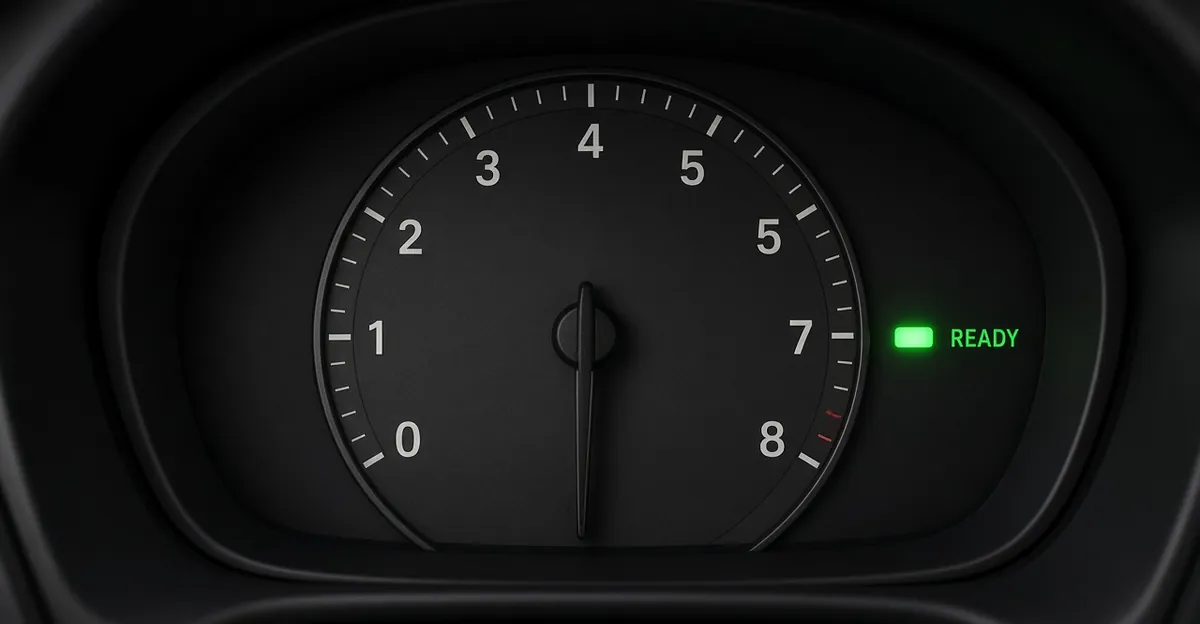
READY is the signal that the hybrid system actually woke up. The emergency guide tells drivers the gasoline engine may be stopped while READY is lit, and that a quiet engine does not mean the car is off. Look at the lamp, not the sound. A Prius that "seems dead" in a parking lot is often a 12-volt problem wearing a hybrid costume. A Prius that shows READY, then sets a hybrid warning on the way home, is a different repair.
| What you already know | Which battery to suspect | Do not do this yet |
|---|---|---|
| Dark cluster, no READY, doors or hatch acting locked | 12-volt auxiliary battery | Approve a high-voltage pack |
| READY on, car drives, hybrid warning or P0A80 stored | High-voltage pack, or the fan fault Toyota ties to that code | Clear the code and keep commuting |
| READY on, no high-voltage code, inverter or control-module fault instead | Hybrid control parts, not automatically the pack | Buy a pack because the warning triangle is on |
| Crash damage, burnt smell, or exposed orange cable | Stop. High-voltage hazard | Open covers or clamp a jump pack on orange cable |
The battery guides on this site are written for the 12-volt case: age, a battery lamp, a jump, a load test. Use them when the Prius sort lands on the auxiliary battery. They do not price a high-voltage pack.
Symptoms: READY, a hybrid warning, and P0A80
Sort the dashboard before you sort the invoice.
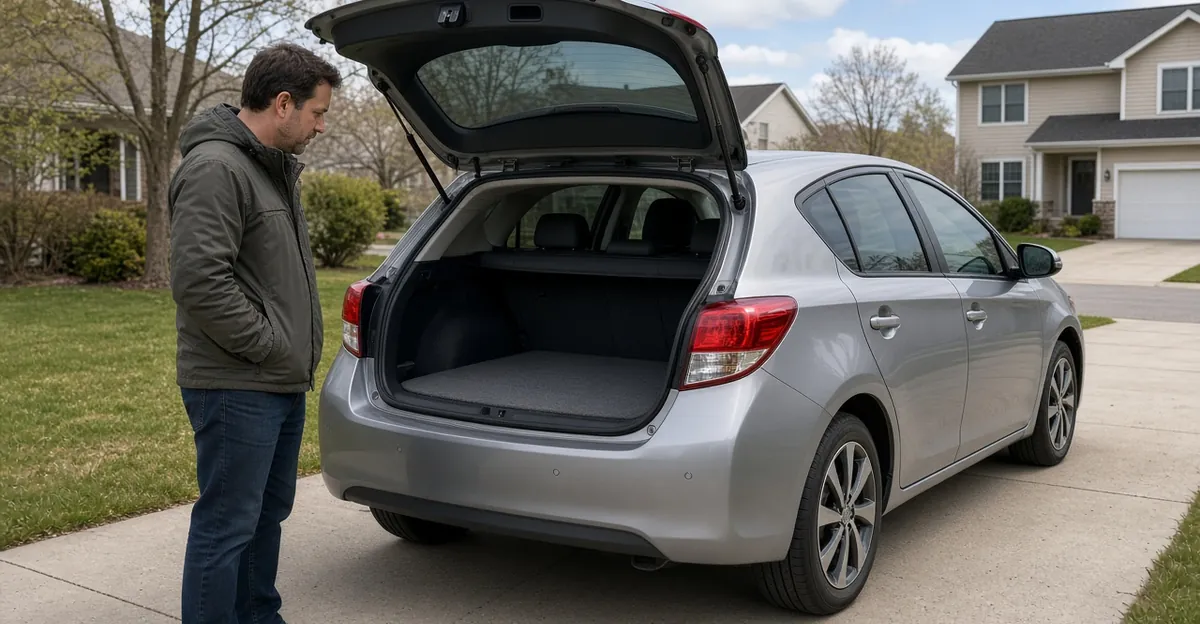
A missing READY light with a dark or flickering cluster points at power for the computers. On the second-generation car the 12-volt battery sits in the cargo area, and the emergency guide warns that the rear hatch will not unlock if that battery is flat. Toyota provided a remote positive terminal in the engine-compartment junction block for that reason. If you cannot open the hatch, that is a clue, not a reason to pry interior panels off the pack.
A lit READY light plus a hybrid warning is the pack branch, or a close cousin of it. Toyota's hybrid battery system chart for the nickel-metal hydride layout defines P0A80 as "Replace Hybrid Battery Pack." The detection condition is a voltage difference between battery blocks higher than the standard. It is a two-trip monitor: the malfunction has to show up across trips before the light is set. The trouble areas on that chart are the HV battery assembly and the battery ECU, not the 12-volt battery in the trunk. The fail-safe line matters for the driveway: for P0A80 the chart says the car turns the READY light on and drives normally. You can have a "replace the pack" code and still roll into the shop under the car's own power. That is not permission to ignore it. It is permission to skip the panic jump.
P0A7F on the same chart is Hybrid Battery Pack Deterioration, and the fail-safe line also says the car can drive normally. Cooling-fan codes (P0A81 and P0A82 in that chapter) sit beside them. Write down every code. A single P0A80 and a fan-only code are different conversations, and a scan tool that only displays the first one is an incomplete note for the advisor.
Toyota bulletin T-SB-0074-20 covers some 2003–2020 Prius, Prius c, and Prius v models (and several other Toyota hybrids) that store P0A80 or P0A7F, including the later code labels P1AC000 and P1A8000, because dust and debris built up in the HV battery cooling fan or its filter. The bulletin does not stop at "vacuum the fan and clear the light." When those codes are stored, it tells the technician to replace the HV battery and continue with the fan and filter procedure. A clogged intake is a known companion of the code. It is not a Saturday cure that lets you decline the pack.
Greentec Auto, a specialist that sells hybrid pack replacement, lists the complaints it sees with P0A80: hybrid system warning, hesitation or a car that will not keep moving, less power, a fuel-economy drop it describes as 20–40 percent, and an engine that runs more often or will not shut off at low speed. Treat the percentage as that shop's symptom list, not as a measurement of your car. The useful part is the pattern. The engine cycling constantly while READY is on means the hybrid system is leaning on gasoline because the pack is not sharing the work. That is a pack conversation. It is not fixed by a new 12-volt battery you bought because the cabin lights looked dim once.
Do not clear P0A80 to "see if it comes back" and then sell or commute as if the test passed. The diagnostic chart is a voltage-difference fault in the pack or the battery ECU. Greentec's own FAQ says a clear does not repair the hardware and the code returns. Ask the shop for the stored codes and, if they test modules, the weak-block note in writing. A phone photo of a single code on a parts-counter screen is a start. It is not a quote.
Prius battery replacement: new, repaired, or refurbished
Prius battery replacement is the shopping phrase, and it still has to name which battery. A 12-volt auxiliary battery is a normal parts-store job after a test says the auxiliary battery is finished. The high-voltage pack is a hybrid-shop or dealer job. Mixing those quotes is how a small auxiliary-battery invoice gets buried inside a pack estimate, or how a failing pack gets "fixed" with a battery that only wakes the dash.
Use this order before anyone removes a seat.
- Confirm READY behavior and the exact codes. P0A80 or P0A7F keeps the pack on the list. A dark car with no hybrid code keeps the 12-volt battery on the list.
- Ask the dealer to check warranty on the VIN. The 2024 Prius Warranty & Maintenance Guide states a Hybrid Battery Warranty of 10 years or 150,000 miles from the in-service date, whichever comes first, for defects in materials or workmanship. The same book covers the hybrid battery control module, the hybrid control module, and the inverter with converter for 8 years or 100,000 miles. A warning light is not automatically the pack, and an out-of-warranty pack is not automatically a defect Toyota must pay.
- For an older Prius, do not borrow the 2024 clock. Bulletin T-SB-0074-20 spells its own windows for that fan-and-pack repair: 10 years or 150,000 miles for 2020 vehicles; 10 years or 150,000 miles for specified 2004–2017 Prius models that are California-specification and were sold, registered, and operated in the states the bulletin lists; and 8 years or 100,000 miles otherwise. Those state lists and model-year cutoffs are easy to misread. Have the dealer apply the booklet and the VIN. A 2007 car in one state is not on the same warranty page as a 2024 car.
- Then, and only then, compare a new pack, a module-level repair, and a refurbished pack that matches the year and the chemistry.
A new dealer pack is the straightforward part: Toyota Genuine, installed by people who already have the service information, with whatever warranty remainder or parts warranty the dealer can actually print. Toyota's warranty text says parts that are not Toyota Genuine Parts, and damage from using them, are not covered by any Toyota warranty. That does not make an independent pack illegal. It means you should know you are leaving Toyota's parts warranty when you leave Toyota's parts.
A module repair replaces the weak blocks and leaves the rest of the pack in the car. Greentec argues that cells age together and that replacing one module often brings the code back within 6 to 12 months from a different cell. That is a vendor's experience, not a law of physics for every VIN, and it is a fair question to make any shop answer. Ask which blocks are out of range, whether the others were capacity-tested or only voltage-checked, and what the written warranty does when a second block fails. A cheap single-module patch with no retest is how people buy the same job twice.
A refurbished full pack is the third quote. Shops disassemble a used pack, replace weak modules, and sell the assembly with their own warranty. Mail-order rebuilt nickel-metal hydride packs for older Prius years — the Green Bean-style listing people see beside "2007 pack" searches — belong in that lane. They are a commercial option on cars long past the original warranty. They are not the first buy on the night the car will not enter READY, and they are not interchangeable with a lithium-ion pack from a later generation. Match the year. Ask who installs it, whether a core charge comes back, and whether the warranty is labor or parts-only when you are a thousand miles from the seller. A pack shipped to a driveway is not installed, and the high-voltage case is not a home project.
Toyota's emergency guide is blunt about the case. The modules sit in a metal enclosure. The guide tells emergency crews the cover should never be breached or removed, including during a fire, because of shock and chemical exposure. Orange high-voltage cables are never cut or opened. After the car is shut off, the guide says power can remain in the high-voltage system for about five minutes. None of that is a DIY disassembly tutorial. If the quote requires the pack to come out, a shop that already works on hybrids does that work.
How to jump start a Prius without touching the hybrid pack
How to jump start a Prius is a 12-volt procedure. It belongs on the branch where the cluster is dark, READY never lights, or the car sat long enough to flatten the auxiliary battery. It does not belong on the branch where READY is already on and P0A80 is stored. Extra 12-volt current will not balance high-voltage blocks.
A prius jump start also has to respect a layout that changed over twenty years. Do not follow a single photo from a different generation. Read the jump-start pages in the owner's manual for your year, then use those posts.
On the second-generation car, Toyota's emergency response guide gives this pattern, because the auxiliary battery is in the cargo area and a flat battery can keep the hatch shut:
- Open the hood and remove the junction-block cover.
- Connect the positive cable to the remote positive terminal in that block.
- Connect the negative cable to the ground nut, not to an orange cable and not to a painted surface you had to scratch down to metal.
- The guide states the high-voltage pack cannot be jump started.
Later years moved the 12-volt battery and the posts. Some put the posts under a cover on the engine, some still hide the battery in the back. The rule that does not move: positive to the manual's positive point, negative to the manual's clean unpainted ground or negative point, donor vehicle or jump pack on the 12-volt system only. If you do not see the point the manual draws, stop. Guessing under a cover is how orange cables get a clamp.
After the 12-volt system has enough power, press the brake and the power button once and look for READY. The emergency guide's start check is that lamp, not engine noise. If READY comes on, the hybrid system can recharge the auxiliary battery as you drive, but a car that needed a jump still needs a test of that 12-volt battery. A second flat battery in a week can be a tired auxiliary battery, something left on, or a charging path from the hybrid system that is not refilling it. That last one is a shop question. It is still not an automatic pack replacement unless the codes say so.
If READY does not come on after a correct 12-volt boost, stop adding cables. You are past the jump. Tow it to someone who can read hybrid codes without opening the pack in a parking lot. Do not push the car to start it. The emergency guide says a dead 12-volt battery leaves you without a shift override; pushing a Prius is not a starter motor.
Other hard stops from the same guide: never touch, cut, or open an orange cable or a high-voltage component. Do not put a jack or a tow strap where high-voltage cables run under the floor. If the car was in a crash, or you smell something sharp and chemical from the pack area, leave it and call for help. The why my car won't start guide sorts ordinary click, crank, and silence cases. Use it for the 12-volt branch. A Prius does not have a conventional starter to grind, so a no-READY hybrid is not that cranking diagnosis.
If the car sits between drives and the auxiliary battery is the part that goes flat, a wall maintainer on the 12-volt battery is the tool in best portable car battery charger. It is not a charger for the high-voltage pack.
Tools that answer the code before you buy a pack
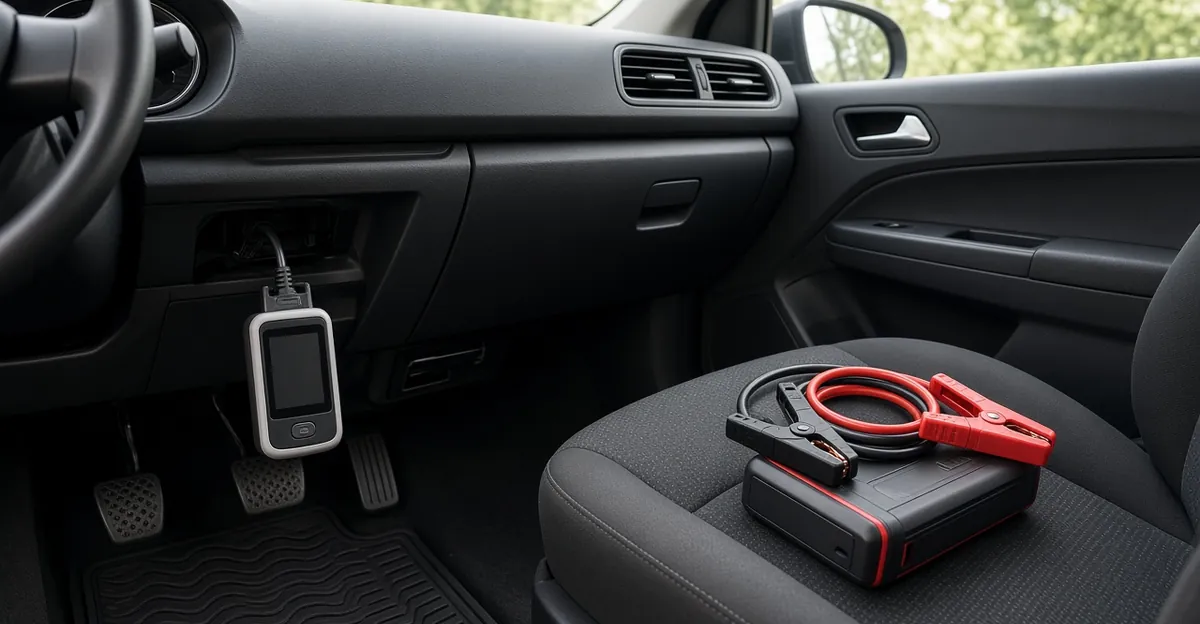
These are optional buys after the READY sort, not a required kit and not a way to open the pack. None of them is a high-voltage block balancer. A consumer 12-volt analyzer does not measure the hybrid pack, and this page does not send you shopping for one as if it did. As an Amazon Associate, we may earn from qualifying purchases. Specs below are the ones already used on our scanner, tester, and jump-starter guides. Prices move. Use the live listings.
| Job | Tool | Amazon | Skip it when |
|---|---|---|---|
| See whether P0A80 or another powertrain code is stored | BlueDriver Bluetooth Pro | B00652G4TS | You need block-by-block hybrid voltages. That is a shop Toyota tool |
| Phone-free read of an engine/emissions code | ANCEL AD310 | B01G5EA74I | The hybrid warning is on and this reader stays blank |
| Test the 12-volt auxiliary battery after a jump works | ANCEL BA101 | B01M0ARG3X | You are trying to condemn the high-voltage pack |
| Boost a flat 12-volt battery with no donor car | NOCO Boost GB40 | B015TKUPIC | READY is already on and the code is P0A80 |
The BlueDriver Bluetooth OBD2 Scanner is the household scanner already on our check-engine guide: phone app, repair reports, and enhanced reads such as ABS, SRS, and TPMS on supported vehicles. Use it here to capture the stored code before you authorize a pack. Do not expect the app to replace the module-level voltage test a hybrid shop runs inside the pack. If the hybrid warning is on and the reader never shows a code, take that negative result to the shop. Do not buy a second random dongle and call it a diagnosis. The ANCEL AD310 is the plug-in reader from the same guide when you want a screen and no phone. Our write-up of that listing is clear that it is an engine and emissions reader, not an ABS or airbag tool. If it cannot display the hybrid code, it has done its job by telling you the limit.
The ANCEL BA101 is the 12-volt tester from best car battery tester. It estimates CCA and state of health on a 12-volt lead-acid battery, including the auxiliary battery in the Prius, after you enter the rating from the label. It does not see inside a 201-volt nickel-metal hydride pack or a later lithium-ion hybrid pack. A "Replace" result on the BA101 means the small battery, tested the way the manual describes, including an out-of-vehicle retest if the in-car reading looks harsh. It is not a pack quote. TOPDON BT100 is the alternate 12-volt tester on that same page if you prefer its screen. Same limit.
The NOCO Boost GB40 is the mid-tier portable jump starter this site already points at for most US cars in best jump starter for a dead car battery. On a Prius it is only a 12-volt boost, used on the manual's posts, with the same "READY must come on" check as booster cables. If a second car can park safely nose-to-nose, size the clamps in best jumper cables instead of buying a pack you will use once. Either tool is the wrong purchase when the hybrid warning is already on and the car drives.
What a Prius hybrid battery replacement tends to cost
Prius hybrid battery replacement is the expensive reading of the shopping phrase, and the honest price is a range you should not memorize from a single ad. Start with warranty, because a covered pack costs you a deductible conversation instead of a parts invoice. Then separate the 12-volt job from the high-voltage job so they cannot be added together by accident.
For a 2024 Prius, Toyota's warranty guide is specific. The hybrid battery warranty is 10 years or 150,000 miles from the in-service date, whichever comes first, for defects in materials or workmanship of the Toyota-supplied hybrid battery. The inverter and the hybrid control computers named in that book are on the shorter 8-year or 100,000-mile hybrid-system list. Abuse, lack of maintenance, and non-genuine parts sit under the "what is not covered" rules in the same booklet. Warranty is not a promise that every aged pack is free, and it is not a promise that an independent rebuilt pack inherits Toyota's coverage.
For cars before that booklet, use the VIN. T-SB-0074-20's warranty block is the clearest public split we can cite without pretending every state matches: 120 months or 150,000 miles for the 2020 models in that bulletin, a 10-year or 150,000-mile window for certain older California-specification Prius vehicles in the states and model years the bulletin names, and 96 months or 100,000 miles for the other vehicles that bulletin lists. Emissions coverage can run longer than the basic hybrid warranty on some California-certified cars. It varies. Ask the service advisor to print the applicable warranty for your VIN rather than arguing from a forum signature.
Out of warranty, Greentec Auto publishes a dealer band of $3,500 to $5,000 for P0A80 replacement and advertises its own installs starting at $1,399 with the warranty terms on that page. Quote those sentences as one company's marketing, checked when this page was written, not as a survey of US dealers. Your number moves with the year, nickel-metal hydride versus lithium-ion, tax, labor time to remove the pack, and whether the cooling fan and filter are on the same repair order. Toyota's bulletin puts fan service on that order when P0A80 is stored for dust. A quote that replaces the pack and leaves a packed-solid fan in place is an incomplete reading of that bulletin. A quote that only cleans the fan and clears P0A80 is an incomplete reading too.
Ask for the quote in lines:
| Line on the estimate | Why it changes the bill |
|---|---|
| Codes stored, including P0A80, P0A7F, and any fan code | Confirms pack versus fan-only versus a control-module fault |
| Warranty yes or no, printed for the VIN | A covered defect is not the same invoice as an aged pack |
| New Toyota pack versus refurbished pack versus module repair | Parts source and who stands behind the second failure |
| 12-volt auxiliary battery, tested, separate | Stops a small battery from being bundled into the pack price |
| Cooling fan and filter | Toyota's dust bulletin treats them as part of the same visit |
| Labor, tax, core charge, and what the warranty actually pays | Mail-order parts warranties often skip labor far from the seller |
A 2007 Prius is the version of this quote people still shop: nickel-metal hydride, original warranty long expired for almost every owner, refurbished packs widely offered, and no excuse to install a later chemistry because the listing photo looks close. Bring the year and the codes. Decline any estimate that will not say which battery it is replacing.
The warning lights hub is the place to start when the lamp on your car is a tire, brake, or battery icon rather than a hybrid message. A red battery lamp on a Prius can still be the 12-volt charging path. That sort lives in why is my battery light on and in how long a car battery lasts. Neither page replaces a hybrid-pack diagnosis.
FAQ
What does P0A80 mean on a Prius hybrid battery?
Toyota's hybrid battery diagnostic chart defines P0A80 as Replace Hybrid Battery Pack: the voltage difference between battery blocks is higher than the standard, it uses two-trip detection, and the trouble areas listed are the HV battery assembly and the battery ECU. On that chart the car can still turn the READY light on and drive. Clearing the code does not balance the blocks. Toyota bulletin T-SB-0074-20 also ties P0A80 to dust in the HV battery cooling fan on some 2003–2020 Prius models and still tells technicians to replace the HV battery when the code is stored.
Is a Prius battery replacement the 12-volt battery or the hybrid pack?
It can be either, and the price is not the same job. The high-voltage pack drives the hybrid system. The 12-volt auxiliary battery wakes the computers and lets the car enter READY. Toyota's second-generation emergency response guide says a discharged 12-volt auxiliary battery keeps the car from starting and from shifting out of Park, and that the high-voltage pack cannot be jump started. Read the code and the READY light before you approve a pack.
How to jump start a Prius that will not show READY?
Jump only the 12-volt auxiliary battery, at the posts in your year's owner's manual, and never on orange high-voltage cables. On the second-generation layout Toyota's emergency guide puts a remote positive terminal in the engine-compartment junction block and a ground nut for the negative, because the cargo-area 12-volt battery can leave the hatch locked when it is flat. Confirm READY. If READY never comes on after a correct 12-volt boost, stop and have a hybrid shop diagnose it.
Should you buy a new Prius pack or a refurbished one?
Ask for three numbers in writing: whether Toyota warranty still covers this VIN, the price of a new pack installed, and the price of a refurbished pack that matches your year and chemistry. Mail-order rebuilt nickel-metal hydride packs (the Green Bean-style lane) are a real third quote on older cars. They are not a diagnosis. Greentec Auto, a hybrid specialist, advertises dealer replacement in a $3,500–$5,000 band and its own installs starting at $1,399. Those are that company's figures, not a national invoice.
Can you keep driving with P0A80?
Toyota's fail-safe chart for P0A80 says the car turns the READY light on and drives normally, so the code is not the same event as a dark dashboard. Greentec Auto tells owners the code returns after a scan-tool clear and that fuel economy and power can fall while you wait. Driving until the car will no longer enter READY trades a planned repair for a tow. If the cluster is dark, sort the 12-volt auxiliary battery first.
Disclaimer
This page is general educational information for US drivers. It is not a repair procedure, not remote diagnosis, and not a promise that Toyota or any shop will cover your car. High-voltage hybrid work — opening the pack, cutting orange cables, or testing inside the case — belongs with a qualified hybrid technician. Jump-start steps differ by model year. Follow the owner's manual for your car, and have a dealer confirm warranty on the VIN. State emissions coverage is not the same in every state. Amazon links use tag screenissues-20. A commission does not change the sort, and you do not have to buy anything listed here to use the decision table.