
By Zeng FengMyCarWhy EditorialUpdated
When to Switch to Winter Tires — Temperature, Pressure, and Studded Rules
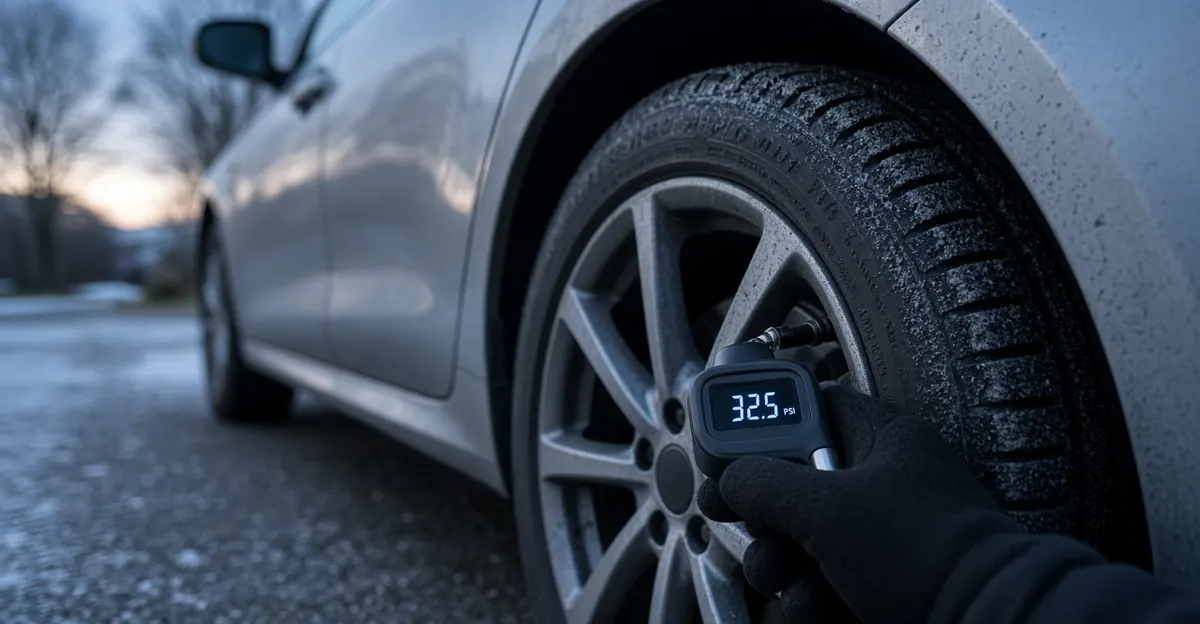
When to switch to winter tires is a temperature and surface decision, not a date on a wall calendar. A widely used rule of thumb is to change when daily highs hover near 45°F (about 7°C) and cold mornings keep the rubber hard for the commute. Pair that swap with a cold tire-pressure check: the same cold snap that makes all-seasons feel like plastic often lights the TPMS horseshoe even when you do not have a puncture.
This is a US-facing checklist with verified Amazon tool links (tag=screenissues-20). Studded-tire bans and mandatory winter-rubber seasons in places like Sweden or Turkey are useful context for why seasonal tire laws exist—they are not a reason to build a Swedish or Turkish landing page here. Confirm your own state or provincial rules before you buy studs.
Temperature first: the ~45°F / 7°C window
Rubber compounds stiffen as they cool. Winter tires stay pliable in that range; many all-season compounds do not. Use this sort before you argue about October versus November:
| What the week looks like | Likely move | Why |
|---|---|---|
| Daily highs near or below ~45°F / 7°C, cold mornings | Mount winter tires (or confirmed all-weather / 3PMSF set) | Compound and siping matter before the first storm |
| Mild highs, but you already hit ice or packed snow | Switch now | Surface beats the average high |
| Rare frost, no snow, healthy all-seasons | Stay on all-seasons; watch pressure | Swap cost may not pay if ice never shows |
| One cold night, then a warm week | Check pressure; wait on the full swap if highs rebound | One night is a pressure event, not always a tire event |
| Mountain pass / ski commute starts | Switch ahead of the route, not the city forecast | Elevation and shade keep rubber cold |
"When to change to winter tires" and "when to switch to winter tires" are the same intent: do not wait for the first white-out if the thermometer has already lived in the winter window for several days.
Winter vs all-season vs all-weather (quick sort)
| Tire type | Mark to look for | Best when | Skip when |
|---|---|---|---|
| Winter / snow | Three-peak mountain snowflake (3PMSF) | Regular ice, deep cold, unplowed streets | You never see freezing roads |
| All-season | M+S only on many US tires | Mild winters, mostly wet roads | You need ice traction every week |
| All-weather | Often 3PMSF + year-round use claim | One-set drivers in mixed climates | Severe ice and deep cold every day |
| Studded winter | Metal studs + seasonal legality | Hard ice where studs are legal | Stud bans, bare pavement wear, noise limits |
Buy the compound and siping for your roads. A cheap no-name "snow" listing without 3PMSF is not the same as a true winter tire. Size must match the door placard or a shop-approved alternative—do not guess from a photo.
Cold tire pressure: the checklist that rides with the swap
Cold mornings are when tire pressure light searches spike. Air contracts; pressure falls about 1–2 psi per 10°F. A 30–40°F overnight drop can pull four tires under the TPMS threshold with no nail in sight.
Do this before you blame a sensor:
- Read the door-jamb placard cold PSI (not the max on the sidewall).
- Check pressure when tires are cold—car parked at least three hours, or driven under a mile.
- Inflate to placard with a known gauge or a compressor that can preset and auto-stop.
- Recheck after the next cold night. A single tire that keeps dropping is a leak, not weather.
- If the lamp flashes for about a minute then stays on, treat it as a TPMS fault, not only low air—start with what does the exclamation mark mean on a car.
Underinflation in cold weather steals wet and snow traction you just paid for with winter rubber. Pressure is the cheap half of winter readiness.
Studded bans and winter-tire laws (context, not a locale page)
FindNews-style spikes around Swedish studded-tire rules (dubbdäck) and Turkish winter-tire enforcement (kış lastiği) show the same driver question in different languages: when does the law or the weather force a seasonal tire?
In the US:
- Some states allow studs only inside a dated winter window.
- Some restrict or ban studs on certain roads.
- Many snow-belt drivers use studless 3PMSF winters to avoid legality and pavement-wear fights.
Always verify with your state DOT / DMV. This site stays on English, US Amazon tools—no SE/TR locale landings. If you travel across borders, treat local winter-equipment signs as mandatory, not optional blog advice.
Pre-first-snow DIY checklist
| Step | Done when | Fail if |
|---|---|---|
| Confirm winter or 3PMSF fitment for your size | Sidewall size + load/speed match shop or placard path | You ordered "close enough" |
| Mount and balance all four (same type) | Shop ticket or careful DIY with torque specs | Mixing winter fronts with worn all-season rears |
| Set cold placard PSI | Gauge reading matches door sticker | You copied sidewall max PSI |
| Pack a gauge + 12V inflator | Both live in the car, not the garage | Compressor stays at home |
| Check tread depth on the set you leave on | Winter tread still above wear bars; all-seasons not bald | Smooth centers on a "good enough" set |
| Cabin glass readiness | Defroster and wipers work; see how to stop car from fogging up | You can barely see and still skip pressure |
If the car pulls or shakes after a fresh mount, sort alignment and brake issues with how long does it take to align a car and car shakes when braking—do not assume "winter tires just feel weird" forever.
Tools that earn a spot before the tire aisle
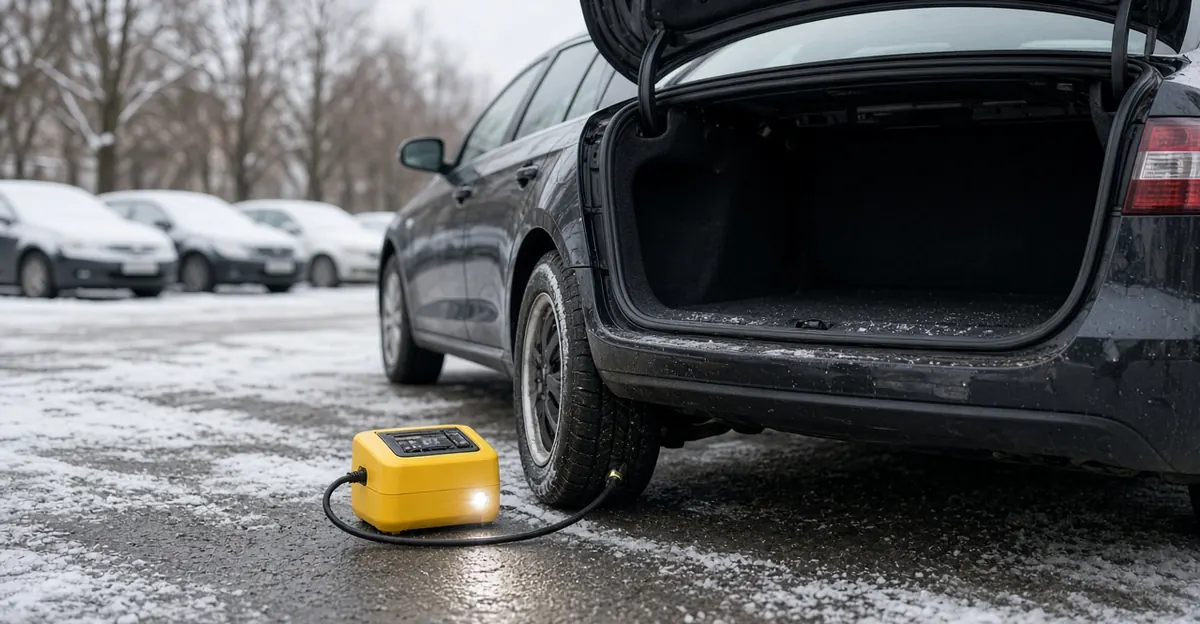
Winter tire SKUs are size-specific; wrong ASIN returns are expensive. These verified US Amazon tools cover the pressure half of the job (tag screenissues-20). Prices move—use the live listings.
| Need | Product | Amazon |
|---|---|---|
| Glovebox digital gauge | AstroAI Digital Tire Pressure Gauge 150 PSI (silver) | B01J8DLGU2 |
| Hose + shop-style accuracy | JACO ElitePro Digital Tire Pressure Gauge 100 PSI | B07VV78RZ1 |
| 12V preset inflator for cold snaps | AstroAI AIRUN H portable compressor | B07QR4Q42L |
- AstroAI Digital Tire Pressure Gauge 150 PSI — compact Schrader gauge with backlit LCD; good for monthly cold checks and confirming a station hose.
- JACO ElitePro Digital 100 PSI — hose chuck and bleeder when you want finer control topping off without a compressor.
- AstroAI AIRUN H 12V compressor — cigarette-lighter pump with digital preset and auto shut-off for the first cold-snap TPMS morning; not for air mattresses or heavy truck tires.
As an Amazon Associate, we may earn from qualifying purchases. Specs come from the linked listings. For tire purchase itself, search by your exact size on Amazon or buy locally for mount and balance—do not force a random ASIN.
What not to do
- Wait for the first blizzard after a week of sub-45°F mornings.
- Set pressure to the sidewall maximum.
- Mix one winter tire with three worn all-seasons.
- Ignore a flashing-then-solid TPMS lamp as "just weather."
- Buy studs without checking whether your state still allows them this month.
FAQ
When should I switch to winter tires?
Use temperature, not the calendar. A common rule of thumb is to mount winter tires when daily highs stay near or below about 45°F (7°C) and overnight lows keep rubber cold for the commute. Switch earlier if you already drive on packed snow or ice. Do not wait for the first blizzard if mornings are already below that window.
Do I need winter tires if I have all-season tires?
All-season tires are a compromise compound. Below the mid-40s °F they harden and lose grip compared with a true winter (three-peak mountain snowflake) tire. If you regularly see ice, unplowed side streets, or mountain passes, winter tires earn the swap. Mild, no-snow climates can stay on all-seasons if tread depth is healthy and pressure is correct.
Why does my tire pressure light come on when it gets cold?
Air contracts as temperature drops. Tire makers and NHTSA-style guidance put the effect near 1–2 psi for every 10°F drop. A solid overnight cold snap can push four tires under the TPMS threshold even with no leak. Set cold pressure to the door-jamb placard with a gauge, then drive. If the lamp flashes then stays on, that is a system fault path—see the exclamation-mark / TPMS sort.
Are studded tires legal where I live?
It depends on your state or country. Some U.S. states allow studs only in a winter window; others ban or limit them. Nordic and Turkish winter rules (studded bans, mandatory winter rubber dates) are regional law examples, not a U.S. default. Check your DMV or highway agency before you buy studs. Many drivers get better year-round legality from studless winter tires with the three-peak mountain snowflake mark.
Should I buy winter tires online without knowing my size?
No. Size, load, and speed rating must match the placard or a shop fitment for your wheel. This page links gauges and a 12V compressor for pressure work—not a random tire SKU. Get the sidewall size (for example 225/65R17), confirm winter availability, and prefer a local mount/balance when you can.
Winter switch wrap
When to switch to winter tires is: watch ~45°F / 7°C, respect ice when it shows up early, and set cold placard pressure the same week the TPMS light starts playing weather games. Use studded-tire law research only to stay legal—not as a reason to skip real winter rubber or a gauge. Keep warning-light / TPMS sorting and fogged-glass habits in the loop so the first cold week is boring instead of scary.