
By Automotive Research TeamUpdated 2026-09-25
How to Stop Car From Fogging Up
how to stop car from fogging up is a settings problem first and a parts problem second. Humid cabin air hits glass colder than the dew point. Water sticks to that glass. You cannot drive safely until you either dry the air, warm the glass above that dew point, or both. AAA Club Alliance treats fogged glass as a visibility and safety issue, and notes that driving with an obstructed view can be illegal in some states. Clear the glass before you leave the driveway when you can. Pull over if the fog returns while you are already moving and you cannot see lane markings.
The fastest clear on most cars is front defrost, heat up, A/C on, and recirculation off. Use that stack first. Then sort the follow-ups that still leave drivers stuck: how to tell which side of the glass is wet in five seconds, what to do when the A/C compressor will not run in extreme cold, why fog clears and comes straight back, and when the next stop is a cabin filter versus a heater-core leak. Repair pricing for a failed A/C loop lives on the car AC repair guide. Nothing here replaces a gauge reading on your car.
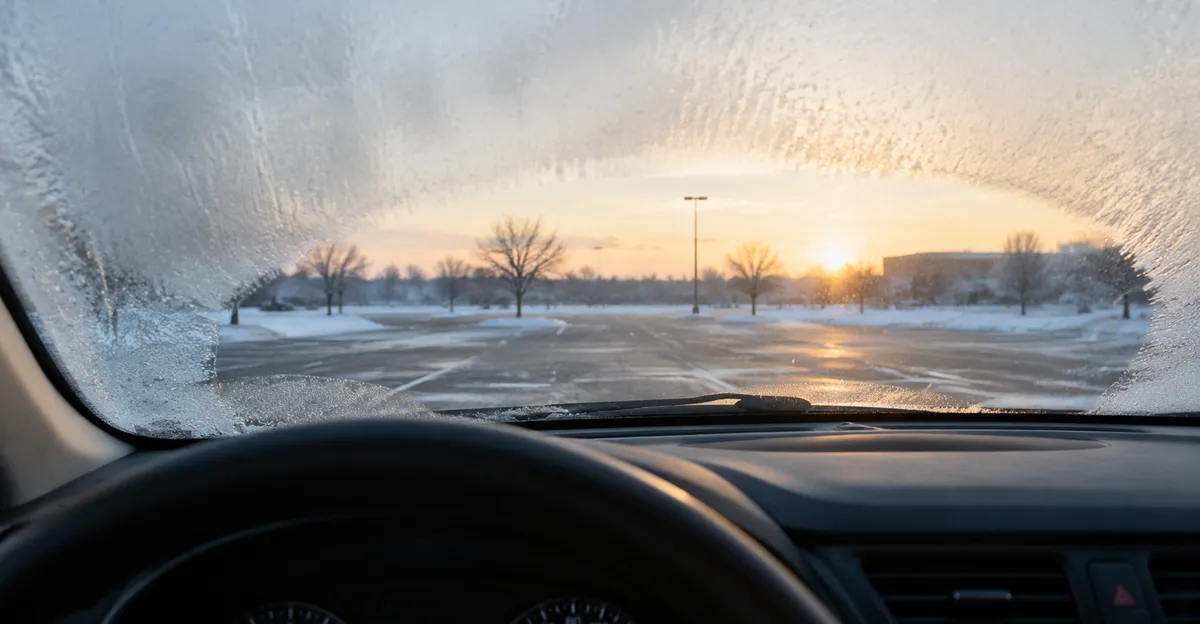
Why Car Windows Fog
Fog is condensation. NOAA's weather education materials describe the dew point as the temperature where air becomes saturated and water vapor turns into liquid. When cabin air is warmer and wetter than the glass, droplets form on the inside. When outdoor air is humid and the glass has been chilled by A/C, droplets form on the outside. AAA Club Alliance uses the same split: winter fog is usually inside, summer fog is often outside.
Moisture inside the cabin is not mysterious. Breath, wet coats, snow on boots, damp floor mats, and pets all raise humidity. Filterbuy notes that several people breathing on a short commute can load the cabin fast, and the windshield is usually the coldest surface that air can find. AAA's Car Doctor, John Paul, told AAA Northeast that damp carpets after a week of snowy boots are a common moisture source, and that wet-vacuuming the interior after that pattern is worth doing. Leave wet umbrellas and gym clothes in the trunk when you can. Every bit of standing water in the cabin becomes vapor the next time the heater runs.
Dirty glass makes the same humidity look worse. AAA Northeast spokesman Robert Sinclair Jr. told AAA that fog forms more easily on dirt and the film left from smoking, and that a weekend clean of the inside glass helps. Consumer Reports, cited by Filterbuy, warns against wiping with a hand or sleeve because streaks scatter headlight glare and can leave you worse off than the fog you started with. Oils from skin stay on the glass. The next condensation clings harder.
| What you see | Typical weather | What it means | First move |
|---|---|---|---|
| Soft film on the inside | Cold morning, rain, full cabin | Cabin humidity on cold glass | Defrost + heat + A/C + fresh air |
| Film on the outside | Warm, humid day with A/C on | Outdoor humidity on chilled glass | Wipers; ease cabin temp up |
| Clears, then returns in under a minute | Any | Moisture still entering the cabin | Dry mats; check leaks and filter |
| Oily smear with a sweet smell | Any | Possible heater-core leak | Stop DIY filter shopping; see a shop |
That table is the sorting tool. The rest of the page follows the rows.
How to Stop Car Windows From Fogging Up
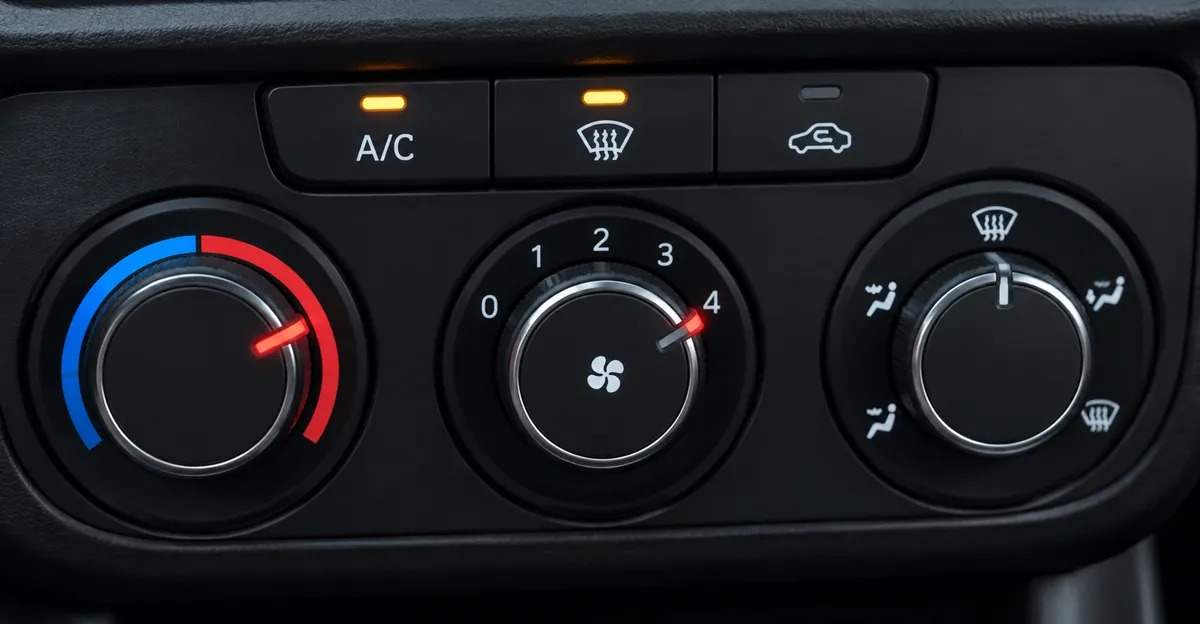
how to stop car windows from fogging up starts with the climate panel, not with a spray bottle. Filterbuy's fast sequence is front defrost, heat turned up, A/C on, and recirculation off, with an optional crack of a window when the weather allows. AAA Club Alliance's winter advice matches the heat-and-fresh-air half: aim full heat at the glass and turn off the recirculation button (the car outline with a looping arrow). AAA Northeast's Car Doctor makes the same recirculation point: with recirculate off, the car pulls drier outside air instead of looping moist cabin air.
Most modern cars already try to help. Mazda's U.S. owner manuals for automatic climate systems state that selecting windshield defrost automatically turns the air conditioner on and selects fresh-air mode. Those manuals also warn drivers not to recirculate cabin air in cold or rainy weather because fogging can block vision and lead to a serious accident. If your defrost button lights the A/C indicator for you, leave it alone. If your A/C button is separate and dark, press it on even when you want heat. The evaporator is a dehumidifier. The heater core then warms the dried air so the glass rises above the dew point.
Use this sequence when the fog is on the inside:
- Start the engine. Set the fan high.
- Press front defrost so air aims at the windshield and side glass.
- Turn temperature toward hot.
- Confirm A/C is on.
- Confirm recirculation is off (fresh air).
- Wait. Clear glass usually starts from the bottom of the windshield and climbs.
If the fog is on the outside of the windshield, AAA Club Alliance says a wiper pass is often enough. For side windows and mirrors that fog outside in heat, AAA suggests easing the cooling intensity so cabin glass is not ice-cold relative to humid outdoor air, and cracking windows when it is not raining so temperatures equalize. TheDailyAutomotive's scenario guide flips recirculation on only for outside fog so the cabin stays cool and dry while you warm the glass slightly. That is the one case where recirculate can help. For inside fog, leave it off.
Five-Second Inside-Versus-Outside Check
Ranking pages name both kinds of fog. Few spell out a driving-speed test. Do this before you change every setting at once.
Touch the glass with a clean fingertip from the inside at a spot that looks wet. If your finger smears a clear streak through the film, the fog is inside. If the film stays and your finger stays dry, the fog is outside. From the driver's seat, you can also lean forward: inside fog sits between your eyes and the glass surface you can touch; outside fog sits beyond the glass, and wipers will move it on the windshield.
Do not wipe a large patch with your palm. AAA Northeast says hand oils make later fog worse. If you must clear a viewing hole in an emergency, use a clean microfiber cloth, then let the defroster finish the job.
When the A/C Button Is On but the Glass Stays Wet
On many cars the compressor locks out below a cold outdoor temperature so the system does not damage itself. Defrost mode may still light the A/C indicator even when the compressor is not pumping. Mazda manuals warn that turning the air conditioner off or switching to recirculate while defrosting invites fog. They also warn against lowering airflow temperature while defrosting, because the outside of the windshield can frost and cut visibility.
If outdoor air is bitterly cold, the compressor may stay off no matter what the button shows. Then you are on heat, high fan, fresh air, and time. Crack a window a half inch if the weather allows so humid cabin air can leave. Expect two to three minutes instead of thirty seconds. If the car is an EV, the U.S. Department of Energy notes that cabin heating is a major cold-weather range drain; precondition while plugged in when you can so the glass is warm before you unplug. Heated seats warm you. They do not clear fog. Only airflow across the glass does that.
If the A/C never cools in warm weather either, stop treating this as a fog settings problem. Move to the warm-vent diagnosis on why is my car AC blowing warm air and the repair path on car AC repair. A dead compressor, a low charge, or a stuck blend door will leave you with wet glass no matter how carefully you press defrost.
Fog That Clears, Then Returns
how to stop windows from fogging up in car when the film vanishes and then redraws in under a minute is a moisture-source problem, not a patience problem. Filterbuy's one-minute checks are the right order: airflow at the vents, whether the clear patch stays clear, and whether the carpet is wet.
Hold your hand at the center defrost vent on high. Loud blower with weak air usually means restriction. AAA's cabin-filter guidance lists foggy windows that take longer to clear as a clogged-filter symptom, along with musty smells and weak vent pressure. Most filters sit behind the glove box. Replacement intervals in manuals commonly land near 12,000 to 15,000 miles or about once a year; dusty roads, wildfire smoke, and heavy pollen shorten that. A filter that looks gray and blocks light when you hold it up is overdue.
If airflow is strong and the fog still returns, press the passenger footwell carpet. Musty dampness points at water that never left: a clogged evaporator drain, a leaking door seal, or a sunroof drain. Sweet smell plus an oily film on the glass is Filterbuy's heater-core flag. No cabin filter fixes a heater core. That is a shop visit. Coolant in the cabin is a health and visibility problem, not a detailing tip.
Recirculation alone can recreate the loop. Mazda's manuals call recirculating in cold or rainy weather dangerous because windows fog and vision drops. If fog appears only when recirculate is on, you already have the fix: fresh air. Use recirculate for tunnels and heavy exhaust, then switch back.
| Symptom | Likely cause | Next step |
|---|---|---|
| Weak air on high fan, slow clear | Clogged cabin filter | Replace filter; retest defrost |
| Musty smell, damp carpet | Drain or seal leak | Dry carpet; find water path |
| Sweet smell, greasy film | Heater core | Shop diagnosis; do not delay |
| Fog only with recirculate on | Humid air trapped | Fresh-air mode |
| Defrost blows cold at full heat | Blend door or low coolant | Shop; check temperature gauge |
Winter Mornings, Rain, and Full Cabins
Cold glass plus wet boots is the classic U.S. winter pattern. AAA Club Alliance describes winter fog as warm, humid cabin air against glass chilled from outside. AAA Northeast adds that blasting heat alone evaporates moisture near the glass but can be temporary if you never dry the air. Running A/C with heat, when the compressor will engage, is how you remove water instead of only relocating it.
How to Stop Car Windows From Fogging Up in Winter
how to stop car windows from fogging up in winter is the same four-button stack with winter moisture habits on top. Knock snow off boots before you sit. Shake coats. Put wet gear in the trunk. Run the rear-window defogger for the back glass; that grid heats the glass directly and does not replace front defrost for the windshield. If ice has formed on the inside overnight, scrape the worst of it with a plastic scraper, then run defrost. Do not pour hot water on glass. Thermal shock can crack a cold windshield.
In rain, the glass cools from outside while wet shoes raise cabin humidity. Filterbuy's rain FAQ and Mazda's cold-or-rainy recirculation warning land on the same button: fresh air. Leave recirculation off. Keep A/C on so the evaporator keeps stripping moisture even when you want the cabin warm.
Full cabins add breath faster than a solo commute. Filterbuy notes multiple passengers load humidity quickly. Crack a rear window briefly if noise and weather allow, or accept a longer defrost cycle before you pull into traffic. Visibility beats a punctual departure with a blind windshield.
After a week of snowy boots, follow John Paul's AAA advice and wet-vac the carpets. A moisture absorber or a sock of silica gel can help over days, not minutes. AAA Northeast has covered the kitty-litter sock tip as a moisture helper. It will not clear a fogged windshield in thirty seconds. It will not fix a leak under the carpet.
When Settings Fail
If defrost, heat, A/C, and fresh air still leave you wiping glass every morning, stop buying sprays and start measuring.
Weak airflow after a fresh cabin filter points deeper into the HVAC case: a failed blower, a blocked intake under the cowl, or leaves packed against the filter housing. The engine bay cowl drains and the cabin intake sit near the base of the windshield. Leaves there choke the system the same way a dirty filter does.
Cold air at full heat on defrost is a temperature-control problem. Low coolant, a stuck blend door, or a heater core that is not getting hot leaves the glass below the dew point. Check the temperature gauge. An overheating or cold-running engine changes what the heater can do. Do not ignore a climbing gauge to chase fog.
Warm vents in summer with a fogged windshield usually mean the A/C is not drying air. That is the same warm-air branch covered in the AC guides: refrigerant leak, compressor not engaging, or condenser airflow blocked. A DIY can that cools the cabin for a week and then dies is EPA's leak pattern, not a finished repair. See car AC repair before you approve another top-off.
Door seals and a door that lets rain drip onto the carpet are mechanical moisture sources. If only one side of the cabin stays wet after storms, inspect that door's weatherstrip and drain holes before you replace another filter.
What Not to Do, and When to Pull Over
Do not wipe the windshield with your hand. AAA Northeast is blunt: skin oils transfer and make later fog worse. Keep a clean microfiber cloth for emergencies, then clean the glass properly later with an automotive glass cleaner sprayed on the cloth, not soaked onto the dash.
Do not leave recirculation on for a cold or rainy commute. Mazda's owner manuals call that pattern dangerous. AAA's Car Doctor calls fresh air the path that pulls dry outdoor air across the glass.
Do not treat outside fog with a full-heat winter blast as your only tool. AAA Club Alliance says wipers clear the windshield; easing cabin temperature helps side glass. Wrong settings waste time and can frost the outside further if you dump cold air onto an already wet exterior.
Anti-fog treatments are optional helpers, not a substitute for settings. AAA Club Alliance describes cleaning glass with an ammonia-free cleaner when tint is present, then applying an antifog spray such as products in the Rain-X family, allowing a short cure, and buffing with microfiber. Follow the product label. Do not invent a homemade chemistry experiment on the glass you need for night driving. If a product warns about haze or glare, keep it off the windshield and limit it to side glass.
If fog drops your view of lane lines, brake lights, or cross traffic, pull over when it is safe. AAA Club Alliance notes that obstructed vision can make driving unsafe or illegal in some states. Hazard lights, a safe shoulder or lot, then the four-button fix. Do not keep rolling with a sleeve-sized peephole because you are late.
Prevention Habits That Actually Matter
Clean the inside of the glass on a schedule. AAA Northeast ties film and smoke residue to easier fogging. Monthly is a reasonable default for a daily driver; sooner if people smoke or vape in the cabin.
Replace the cabin filter on the manual's interval, sooner in dust or smoke. AAA lists foggy windows among the symptoms of neglect.
Dry the cabin. Trunk wet gear. Shake boots. Fix carpet dampness instead of masking it with fragrance. A musty evaporator is a different smell problem from a heater-core sweet smell; describe the odor accurately at the shop.
Precondition when you can. Remote start or scheduled climate on a plug-in EV warms the glass before you sit down. On a gas car, a short defrost cycle before you shift into drive is cheaper than a near-miss in the first block.
Know your buttons before the next storm. Find recirculate, A/C, front defrost, and rear defogger in daylight. Muscle memory beats a fogged panel at 6 a.m.
FAQ
how to stop my car windows from fogging up
AAA Club Alliance says to put the climate system on full heat aimed at the glass and turn off recirculation so the car pulls in drier outside air. Confirm the A/C button is on so the evaporator can strip moisture. If the fog returns within a minute, remove wet mats and coats, then check cabin-filter airflow before you assume the defroster is broken.
why do my car windows fog up in the rain
Rain cools the glass while wet shoes and umbrellas load the cabin with moisture. Filterbuy and Mazda owner manuals both push fresh-air mode in wet weather: recirculation traps that humid air and the glass fogs again. Defrost plus heat plus A/C plus recirculation off is the same four-button fix as a cold morning.
can a dirty cabin air filter cause foggy windows
Yes. AAA notes that clogged cabin filters cut airflow and slow defogging. Filterbuy adds that every cubic foot of defroster air passes through that filter first, so a packed filter both weakens the blast at the glass and leaves the air wetter than it should be. Replace on the schedule in your owner's manual, commonly about every 12,000 to 15,000 miles or once a year.
is fog on the outside of the windshield different
Yes. AAA Club Alliance says summer outside fog forms when humid outdoor air meets glass cooled by A/C. Use the wipers on the windshield. For side glass, ease the cabin toward a slightly warmer setting so the glass is not ice-cold relative to the air. Do not treat outside fog with the same full-heat blast you use for inside fog.