
By Automotive Research TeamUpdated 2026-09-21
Car AC Repair: Hot Air, a Leak, or No Cold Air
Car AC repair starts with what the vents are doing, not with a parts list. Air that never moves is a different job from air that moves and is hot. Air that was cold last month and is only cool today is a third job. The engine turns the compressor. The refrigerant loop does the cooling. The blower only moves cabin air across that loop. Mixing those three up is how a recharge gets sold for a dead fan, and how a condenser gets sold for a loose fitting.
You should leave with a short list for the counter: whether air is moving, whether every vent is the same temperature, whether the cold air faded after a previous charge, and whether you can see an oily film on a hose. Nothing here replaces a gauge reading and a leak check on your car. Pressures and the amount of refrigerant belong to the label under the hood, not to a guess from the driver's seat.
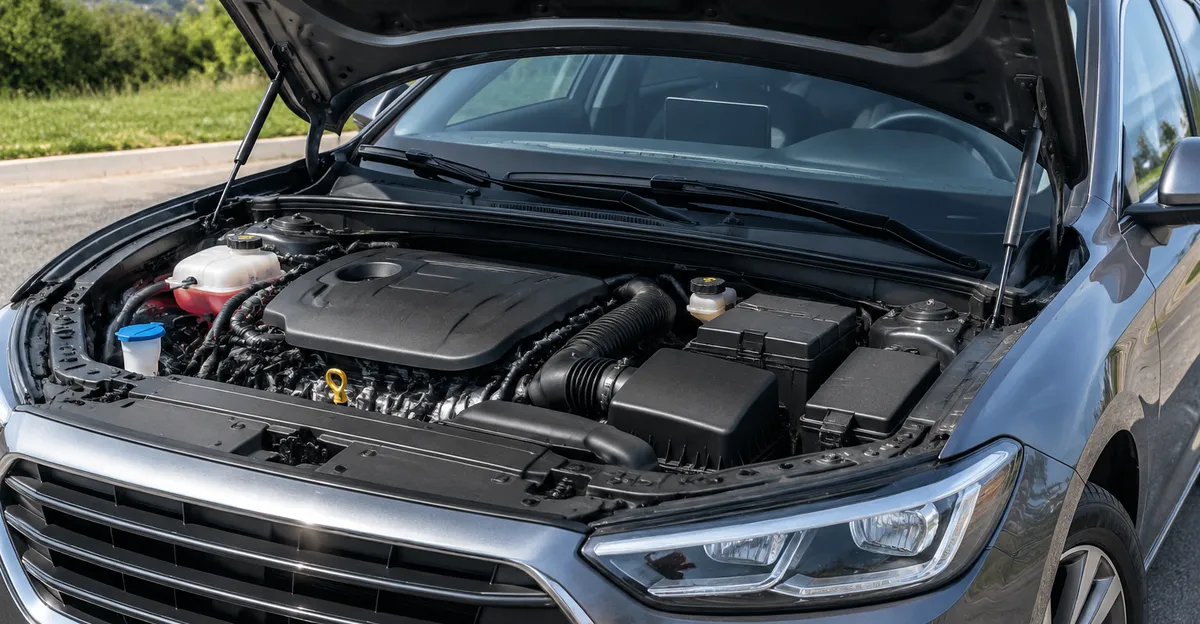
AC Not Working in Car
An ac not working in car complaint has to be split before anyone opens a refrigerant can. "Not working" covers a blower that is silent, a blower that runs and blows warm, and a system that cools for a few minutes and then quits. Those are not the same invoice.
AAA Club Alliance treats weak airflow as its own symptom. The usual suspects they name are a broken compressor, clogged refrigerant tubing, a blown fuse, or a broken blower motor. A fuse or a blower motor means the fan is not pushing air. Refrigerant will not fix that. Sit in the car, engine running, fan on high, temperature set to cold. If you hear nothing at the vents and feel nothing on your hand, stop the AC diagnosis and find out why the fan is dead. A can of refrigerant charged into a system with a dead blower only hides the next problem.
If the fan runs, the next question is whether the compressor is turning. AAA notes that the system is powered by belts and pulleys on the running engine, so a belt that has glazed, cracked, or come off can shut the AC down while the rest of the car still drives. Look at the belt with the engine off, then listen for the clutch click when a helper turns the AC on. No click, with the fan still blowing, is an electrical or clutch problem, or a pressure switch that has opened because the charge is too low to be safe to run. It is not proof that the compressor is ruined. A shop that replaces the compressor because the clutch did not click, without measuring pressure, is skipping the test.
The battery belongs in this split only when the car is also cranking slowly or the blower is weak along with other electrical loads. The blower and the compressor clutch both need power. A battery problem does not make cold refrigerant hot. It can keep the fan or the clutch from running at all. Say that at the counter if it is true. Do not let a slow crank become an AC parts order.
| What you notice | What it usually means | First check |
|---|---|---|
| No air from the vents, fan on high | Blower, fuse, or a control that never commands the fan | Fan noise and a fuse, before any refrigerant |
| Air moves, and it is hot from every vent | Low charge, a compressor that is not pumping, or a clog in the refrigerant loop | Leak check, not a blind top-off |
| Air moves, and only one side is hot | A temperature door that is stuck, not an empty system | Compare driver and passenger vents |
| Cold at first, then warm after a few minutes | A compressor or a low charge that cannot hold pressure | Note how long the cold lasts |
| Cold air that faded weeks after a recharge | Refrigerant left through a leak | Leak check. The last can was not the repair |
| Oily film on a hose, fitting, or the front of the condenser | Refrigerant oil left where the gas escaped | Show the shop the spot. Do not wash it off first |
Write the row that matches the car before you call. A shop that hears only "the AC is broken" will quote an average job. The row tells them which job.
Car AC Blowing Hot Air
The phrase ac in car blowing hot air is the complaint where the fan still works and the temperature does not. AAA Club Alliance describes a system that suddenly blows hot or warm air as a clog that stops refrigerant from moving, or a compressor that is not holding pressure. Both leave you with airflow and no cooling. A low charge does the same thing from the driver's seat, because the compressor's job is to move refrigerant, and it cannot move what has already leaked out.
Heat from the engine and heat from the sun are still in the cabin. The AC's only trick is to pick that heat up at the evaporator and dump it at the condenser, in front of the radiator. If that loop is empty, blocked, or not being pumped, the blower keeps doing its job and the air stays hot. Turning the fan higher does not create cold. It only moves more of the same air.
Do not skip the control setting. Max AC, recirculate, and the temperature knob fully cold are the conditions for the test. Fresh-air mode on a 100-degree day, with the knob in the middle, feels like a failure and is not one. If the air goes cold when you switch to recirculate and full cold, the loop is working and the setting was the problem.
A belt that slips under load can show up here too. The fan runs off the electrical system. The compressor runs off the belt on the engine. A squeal when you request cold, followed by warm air, is a belt or a clutch that is not staying engaged. That is a different repair from a hose leak, and it is visible with the hood open.
AC Not Blowing Cold Air in Car
AC not blowing cold air in car is the lukewarm version of the same loop. The air is not furnace-hot. It is not cold either. AAA's recharge guide treats warm air at the vents as a reason to check charge, and it treats warm air that returns soon after a recharge as a leak. A system that is a little low can still run and still disappoint. That is not a reason to keep adding cans until the air feels right. The U.S. EPA says a technician cannot tell how much refrigerant is already in the system, so a top-off is a guess. Too little and the air stays warm. Too much and performance suffers, and AAA says overfilling can take out the compressor.
Use a thermometer in the center vent if you have one, after the car has idled with the AC on full cold for a few minutes. AAA says a successful recharge often brings vent air to roughly 35°F to 55°F. That is their typical band, not a specification printed for your car. The useful comparison is the vent against the outside air on the same afternoon. A small gap means the loop is barely working. A large gap means it is working and the complaint is somewhere else.
AC in Car Not Blowing Cold Air
AC in car not blowing cold air also gets used for air that is merely weak. Volume and temperature are different measurements. AAA lists debris in the intake and a clogged refrigerant path as separate ways the system stops doing its job. Debris and a tired blower change how hard the air hits your face. They do not, by themselves, make a full refrigerant charge blow hot. If the air is weak and still clearly colder than the outside air, look at the fan, the intake, and a cabin filter before you approve a compressor. If the air is strong and warm, the filter is not the cause. Say which one you have. "It doesn't blow cold" is how those two jobs get written up as one.
One side cold and the other side hot is not a low charge either. The refrigerant loop feeds one evaporator. A door inside the heater box mixes hot heater air with that cold air for each side. If the passenger vent is cold and the driver vent is hot, the door or its motor is stuck. Recharging both sides will not move a plastic door. Tell the shop which vent is wrong.
A Refrigerant Leak Is Not Engine Coolant
An ac coolant leak car search is using the wrong chemical name for the most common failure AAA names. AAA Club Alliance says a refrigerant leak is the most common cause of a broken AC. Refrigerant leaves through a hose, a connector, a seal, or a damaged heat exchanger. It is not the green, orange, or pink liquid in the radiator. Pouring engine coolant into an AC port, or the other way around, does not fix either system. The under-hood label names the refrigerant. That label is the only fluid this repair is allowed to use.
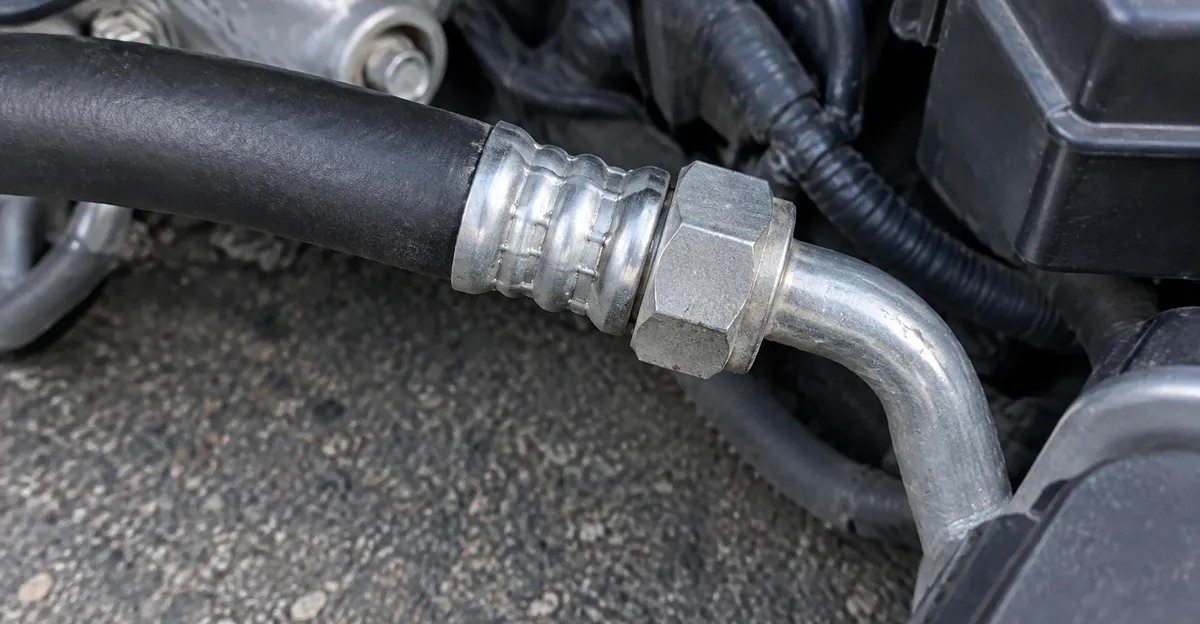
Engine coolant and refrigerant fail in different places. Coolant loss shows up as engine temperature, a low reservoir, or a puddle of colored liquid. Refrigerant loss shows up as warm vents. AAA's recharge article tells you to look for oily spots around the AC parts and to listen for a hiss while the system runs. The oil is there because refrigerant carries oil. The gas itself does not sit in a puddle. If you wipe the oil off before the appointment, you have erased the clue.
The U.S. EPA lists three ways a shop can deal with that leak. They can top off the system. They can recover what is left, recycle it, and recharge to the amount the manufacturer specifies. Or they can repair or replace the leaking part and then recharge. EPA is direct about the first two: topping off or recharging should make the cabin cooler, and neither one permanently fixes a leak. Repairing or replacing the leaking part is the option that lasts.
A top-off is a guess for a second reason. EPA says there is no way for the technician to know how much refrigerant is already in the system when you arrive, so the amount added can be low or high. Either one hurts performance. Evacuation is the visit that lets the shop put back the amount on the specification, because the system is emptied and measured on the way back in. Some shops say federal rules forbid putting your old refrigerant back in the car. EPA says no such rule exists. What does exist is a recycle or reclaim step. Refrigerant has to be cleaned before it goes back, even into the same vehicle.
EPA also says technicians find most leaks with an electronic detector certified to SAE J1627, and that a very small leak can still hide. A full charge is not required for the test. A few ounces, about 10 percent of a normal charge, can be enough, and sometimes refrigerant has to be added before a small leak will show. EPA does not require the leak to be repaired before a system is charged. Some states and cities do. Ask before you pay for a can. Adding refrigerant without finding the leak buys cold air until the new charge leaves.
Do not vent the system to "let it hiss out." Section 608 of the Clean Air Act prohibits intentional release of refrigerant during service, including on a car. The exception EPA names is carbon dioxide, which is not the refrigerant in a typical R-134a or R-1234yf system. A shop that takes payment, including a trade, has to have a Section 609 certified technician and approved recovery equipment. That equipment is how the refrigerant comes out without going into the air.
What the Shop Is Actually Replacing
AAA groups three parts as the hardware that moves refrigerant, turns it from gas to liquid, and cools the air the blower sends into the cabin: the compressor, the condenser, and the evaporator. Any one of them can stop the cooling. That sentence is not an instruction to replace all three. It is a list of what a leak check or a pressure test is allowed to accuse. A worn belt is on AAA's list too, and it is the cheapest item that can make every one of those parts look dead.
The compressor is a pump. If it does not turn, or it turns and does not build pressure, the rest of the loop sits still. Clutch, belt, and a pressure switch that has opened on a low charge all imitate a dead compressor. Measure first. Replacing the pump because the clutch was quiet is how the same car comes back warm.
The evaporator sits in the cabin air path. AAA also ties a musty smell at startup to an evaporator that is holding mold. Smell is not a refrigerant leak. A leak at the evaporator is a warm-air problem plus the oil clue, and it is a larger job because the part is behind the dash rather than in the breeze at the front of the car. Do not approve that job because the cabin smells. Approve it because a detector or dye found refrigerant there.
Car AC Condenser Replacement
Car AC condenser replacement is the repair when the leak check lands on the condenser, not when the vent air is merely warm. The condenser sits in front of the radiator and gives up heat. A rock, corrosion, or a failed seal at the fitting can dump the charge. AAA's point still holds: a leak anywhere in the hoses and connectors lets the refrigerant escape, and a refill does not close the hole. Replacing the condenser because the system is low, without finding where it is low, swaps a large part for a fitting that was the actual leak.
Ask the shop what the detector or the dye showed, and where. "Low on refrigerant" is a result, not a location. A fitting, a hose, a service cap, and the condenser itself are different parts and different labor. A cap with a cracked seal is not a condenser. A hose rubbed through by a bracket is not a condenser. The condenser is the job when the damage is in the condenser.
Debris belongs in the same look. AAA says debris in the intakes, or debris that blocks refrigerant flow, can shut the system down. Leaves packed against the condenser stop it from dumping heat. That is a cleaning job if the metal is intact. It becomes a replacement only after the leak check says the metal is the leak. Bent fins from a car wash are not automatically a new condenser either. Say what you see. Let the test name the part.
How Much to Fix AC in Car
How much does a car ac cost to fix is two bills that get quoted as one. AAA's published number is the recharge. A professional recharge runs about $100 to $300, depending on where you go and whether more work is required. A parts-store kit is about $40 to $60. Both figures are from AAA's recharge guide. Neither figure is a compressor, a condenser, or an evaporator. Those parts are a second quote, written after someone finds the leak. A shop that gives you one number before a leak check is averaging strangers' cars.
EPA explains why the recharge line on an invoice moves around. Because the technician cannot see the amount already in the system, many shops charge a flat fee for a top-off or for an evacuation and recharge. That fee often includes a performance check and may include a leak test. A top-off is cheaper than an evacuation. Some shops split labor from the refrigerant itself, and some add a recycling fee for the recovery equipment the rules require them to own. Others keep the recovered refrigerant instead of charging that fee. Ask which of those you are paying. A flat fee that includes a leak test is a different product from a can and a prayer.
The expensive outcome is a recharge that ignores a leak and then damages a compressor. AAA says overfilling raises pressure enough to ruin the compressor. EPA says an overcharge and an undercharge both hurt cooling. A kit gauge is not a substitute for the specification. AAA says a reading of roughly 25 to 45 psi is a typical low-side band, and that the number depends on the outside temperature and on your car. Below about 55°F outside, the same gauge lies, and AAA says you can undercharge or overcharge because of it. If the weather is cold, wait or let a shop measure by weight. Do not "finish the can" because the air still feels warm.
How much to fix AC in car, as a budget, is the recharge only if the leak check comes back clean and the system was merely short. That is the uncommon case. EPA's position is that the charge does not fix the hole. Budget for the diagnosis first, then for the part the diagnosis names. If the shop cannot say which part, you do not have a repair price yet. You have a guess.
What to Check Before You Approve the Job
Do these checks before you approve a part. They are observations, not a repair. If you are not sure what you are looking at under the hood, stop and let the shop look. Refrigerant can injure skin and eyes. AAA's own recharge steps call for gloves and goggles, and for working where the vapor can dissipate.
- Engine running, fan on high, temperature on full cold, recirculate on. Is air moving? Is it the same at the driver and passenger vents? How does it compare with outside air?
- Did this start right after a recharge, or has it been fading for weeks? A quick return of warm air is AAA's leak clue.
- With the engine off, look for an oily film on hoses, the compressor, and the condenser face. Do not wash it off. Photograph it.
- Read the under-hood label. The refrigerant type is printed there. AAA says to match the kit to the service manual. EPA requires a unique fitting for each approved refrigerant so the wrong chemical is harder to connect. Do not use an adapter to force a can onto the wrong port. Mixed refrigerant is a contaminated system, and EPA says contaminated refrigerant has to be recovered before a repair or a recharge.
- If you do use a kit, keep the can upright so you add gas, not liquid. AAA says liquid from an upside-down can can damage the system. Add in short bursts. Stop if the gauge is already in range. A full can is not the goal.
- Do not open a line, do not remove a Schrader core to "empty it," and do not spray refrigerant to see where it goes. Venting is the act EPA prohibits.
- If someone is charging you, ask for the Section 609 certification and for the leak location in writing on the estimate. EPA does not pick the brand of part. It does require certified people and approved equipment when money changes hands.
One more claim to refuse. A shop may say an older car can no longer be charged with R-134a because of new climate rules. EPA's 2023 technology-transitions rule limits high-GWP refrigerants such as R-134a in newly manufactured light-duty vehicles from model year 2025. The same page says the rule does not restrict servicing existing systems, and that existing vehicles can still be serviced with R-134a. Match the label. Do not retrofit a working system because of a rule that applies to a new car.
Bring the shop the row from the table, the photo of any oil, and the wording on the label. Ask where the leak is before you approve the part that "usually" fails. A condenser, a compressor, and a hose are not interchangeable answers to warm air.
FAQ
How much does ac repair cost car
A recharge is the only AC price AAA prints: about $100 to $300 at a shop, or about $40 to $60 for a kit. That pays for refrigerant, not for a closed leak. EPA says the top-off does not fix the leak, and the amount in a top-off is a guess that can run the system too low or too high. The repair cost is whatever part the leak detector names. Until the estimate says which part, and where the dye or the detector found it, you do not have a repair price. You have a recharge.