
By Automotive Research TeamUpdated 2026-09-29
How to Freshen Car Interior
how to freshen car interior is a source problem first and a scent problem last. A cabin can look tidy and still smell stale when you open the door. Clovis Auto Care puts the rule in plain language: fragrance does not remove a dead animal behind a panel, dry a soaked carpet, or fix a smell that returns every time the blower starts. Consumer Reports’ mechanics use process of elimination for the same reason—spilled food, gym bags, and cigarette smoke are obvious, while water leaks, blocked AC drains, and a neglected cabin air filter hide until you hunt for them. This guide covers the shared floor from those pages and from MOT Checker Blog’s step order—empty, vacuum, clean mats and surfaces, treat seats by material, dry fully, fix vents—then answers the decisions those guides raise and leave hanging: how to sort surface vs moisture vs mechanical smells, what to do when carpet feels dry on top but damp underneath, fabric vs leather vs Alcantara product limits, AC disinfectant that fails after a filter change, smoke and pet paths that need more than baking soda, and when DIY should stop.
Cabin messes overlap with other care guides on this site. Protein spills and enzyme work live on the how to clean throw up out of car page. Sticky crumbs that invite pests belong next to how to get rid of ants in car. Moisture that fogs glass and feeds mildew ties to how to stop car from fogging up. Ownership and cabin-care hubs also list under Ownership & more.
Sort the Smell Before You Buy Another Pine Tree
Competing pages all start the same way: do not scent first. The original decision is which bucket the odor belongs in, because each bucket has a different next move.
| When / where you notice it | Likely bucket | First check | Do not do yet |
|---|---|---|---|
| Strongest when you open the door after parking | Surface or trapped trash | Empty cabin, under seats, cup holders, trunk | Hang a freshener |
| Strongest near the floor or after rain | Moisture | Lift mats, press carpet, check trunk spare well | Spray perfume into vents |
| Strongest when the fan or AC starts | HVAC / cabin filter / evaporator | Cabin filter, plenum intake, drain | Mask with vent clips |
| Burnt plastic or electrical bite | Mechanical / electrical | Stop, look for smoke, warning lights, heat | Treat as a detailing job |
| Sweet or fishy from the vents | Coolant / heater core | Consumer Reports’ heater-core warning | Ignore and keep driving |
| Smoke that clings to fabric and glass | Deep fabric / headliner / HVAC | Full fabric clean + filter, then reassess | One aerosol fog and hope |
Clovis Auto Care splits smells into surface, moisture-related, and hidden mechanical or electrical. Consumer Reports adds the coolant clue: a sweet or fishy odor from the vents can mean a leaking heater core, and delayed repair risks overheating and engine damage. MOT Checker Blog’s smell table echoes the same fork—fuel, burning, and chemical smells are not “stronger air freshener” problems. Write down when the smell peaks. That sentence is what a detailer or service writer needs.
If the odor is raw fuel in the cabin or near the filler, stop treating it as a freshening job and sort safety first with the why does my car smell like gas guide. Rotten-egg exhaust smells are a different path again. This page stays on cabin freshness: trash, fabrics, moisture, vents, and residual smoke or pet odor.
The Shared Floor: Empty, Vacuum, Mats, Touchpoints, Glass
Every fetched guide agrees on the dry sequence before wet chemistry.
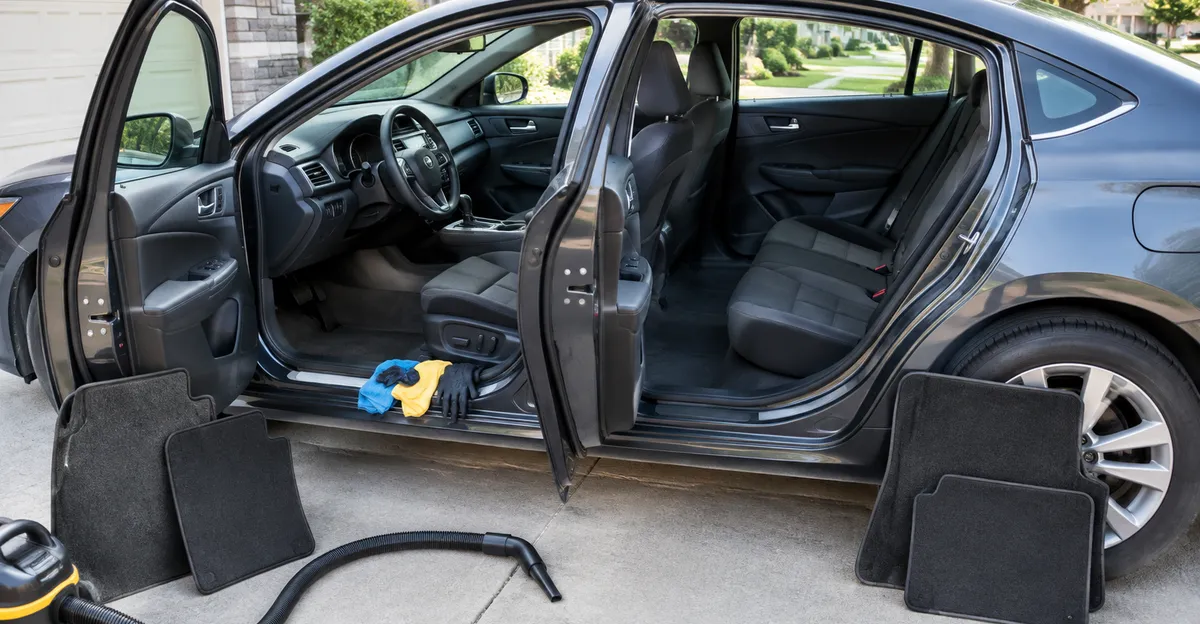
Empty the car. MOT Checker Blog and Clovis Auto Care both list rubbish, bottles, gym bags, wet clothes, loose under-seat items, trunk clutter, floor mats, and seat covers. Look under the front seats around the rails and between the seat and center console. Lift mats completely instead of vacuuming over them. Check the trunk and spare-wheel well when the passenger cabin has no obvious source—Clovis notes that a damp trunk carpet can stale the whole cabin.
Vacuum before you wet-clean. The Mobile Buff’s deep-clean sequence and MOT Checker Blog’s crevice list match: footwells, under seats, seat rails, stitching, door pockets, center-console gaps, pedals, and trunk carpet. Use a crevice tool. For pet hair, MOT Checker Blog suggests a rubber brush, pet-hair tool, or slightly damp rubber glove before the vacuum pass. Applying liquid cleaner over loose dirt turns grit into mud.
Clean mats separately. Rubber mats: shake, rinse, mild scrub, rinse, dry fully. Carpet mats: vacuum both sides, carpet cleaner if needed, dry completely. Clovis Auto Care and MOT Checker Blog both flag the same failure mode—putting damp mats back recreates mustiness overnight. If a mat still smells after a full clean and dry, replace it.
Wipe the surfaces you touch every day. Clovis Auto Care’s touchpoint list includes steering wheel, gear selector, door handles, window switches, armrests, center console, cup holders, and interior pulls. Consumer Reports’ interior suppliers recommend isopropyl alcohol for germs on many hard surfaces, microfiber cloths to avoid scratching piano-black trim, and a hard stop on bleach and hydrogen peroxide for upholstery. Ammonia-based cleaners can damage anti-glare coatings on touchscreens. Katzkin’s guidance, quoted by Consumer Reports, is simple Ivory soap and water for leather—and light pressure so you do not wear off the protective finish. Skip greasy dashboard dressings that glare on the windshield; MOT Checker Blog and Clovis both prefer a clean, natural finish over a shiny coating.
Clean interior glass. Film on the inside of the windshield makes the cabin feel older even when the smell is fine. MOT Checker Blog and Clovis treat glass as part of freshness, not vanity—especially at night when headlights expose streaks.
That shared floor is necessary. It is not always sufficient. The gaps below are the decisions those steps create once you have followed them.
Moisture Under a “Dry” Mat: How Long to Dry and What to Check
Musty cabins often fail at moisture, not perfume strength. Clovis Auto Care tells you to press the carpet in front and rear footwells and the trunk. The surface can feel dry while underlay is still wet. MOT Checker Blog lists wet carpets, damp boot floors, leaking seals, sunroof drains, scuttle drains, AC drains, and water under the spare wheel as common sources.
If the carpet is damp:
- Leave mats out. Do not trap moisture under rubber.
- Blot with towels. Use a wet/dry vacuum if you have one.
- Open doors and aim a box fan at the wet zone. Do not close the cabin damp overnight.
- Ask where the water came from—tracked rain, a spill, a door seal, a sunroof drain, or an AC drain—before you call the job done.
Consumer Reports’ own musty wagon case mixed a blocked sunroof drain, a filthy cabin filter, and dog fur under the mats. Mechanics there warn against compressed-air tricks on sunroof drains that can damage the gasket; clear visible leaves gently at the corners of the rubber surround, and let a shop clear a stubborn clog. If you hear sloshing when you turn and the AC drain may be blocked, that is a service visit, not another baking-soda pass.
Over-wetting during cleaning creates the next musty cycle. MOT Checker Blog, The Mobile Buff, and Clovis all warn against soaking seats and carpets. Saturate the dirty zone only as deep as the soil, then extract or blot until the return water or towel runs clearer. Fully dry before you judge the smell. Fragrance still in the air will lie about the result.
Sticky residue left under seats after a “freshen” can also invite pests later—another reason sanitation comes before scent, the same order used in the ants guide.
Fabric, Leather, and Alcantara: Product Limits After the Vacuum
One bottle does not fit every interior. Sort the material before you spray.
Cloth seats and carpet
Vacuum first. Use a fabric or upholstery cleaner rated for automotive textiles. MOT Checker Blog’s fabric sequence is light spray, soft brush, wipe, then doors open to dry. For deep soil, The Mobile Buff’s extractor method injects low-foaming solution and sucks dirty water out so oils and old spills leave instead of redistributing. Consumer spot cleaners help small stains; they rarely match extractor recovery on years of ground-in dirt.
Baking soda belongs on dry carpet and fabric only. Consumer Reports sprinkles it, lets it sit, then vacuums. MOT Checker Blog repeats: not on damp areas, not into electronics or vents, and not as a cure for mold or smoke. For protein spills—vomit, milk, pet urine—enzymatic cleaners beat baking soda; that chemistry path is detailed on the throw-up guide and applies anywhere organic residue feeds odor when the cabin heats up.
Leather and coated “leather”
Use a leather-safe cleaner. Avoid harsh household sprays, bleach, and aggressive scrubbing. Consumer Reports cites Katzkin: mild soap and water, light pressure. Condition only if the leather feels dry and the product is meant for automotive leather. Perforated leather can hide liquid in foam below the holes—if odor returns after the surface looks clean, treat it as a foam problem and consider a pro.
Alcantara and suede-like surfaces
MOT Checker Blog is blunt: gentle cleaner, soft brush, light pressure, no soaking. Test a hidden area. Wrong product or flooding can leave permanent marks. If you are unsure, stop and use a detailer who knows the material.
Headliner
Smoke and cooking odors cling to headliners. Clean carefully with light foam products and minimal moisture. MOT Checker Blog warns that too much water or scrubbing can release adhesive and make the liner sag. That damage is expensive to reverse. Prefer light passes and patience over flooding.
Musty Vents After a Filter Change: Disinfectant, Drain, or Shop
If the cabin smells fine until the blower or AC starts, stop spraying fragrance into the vents. Clovis Auto Care and MOT Checker Blog both redirect you to the HVAC path.
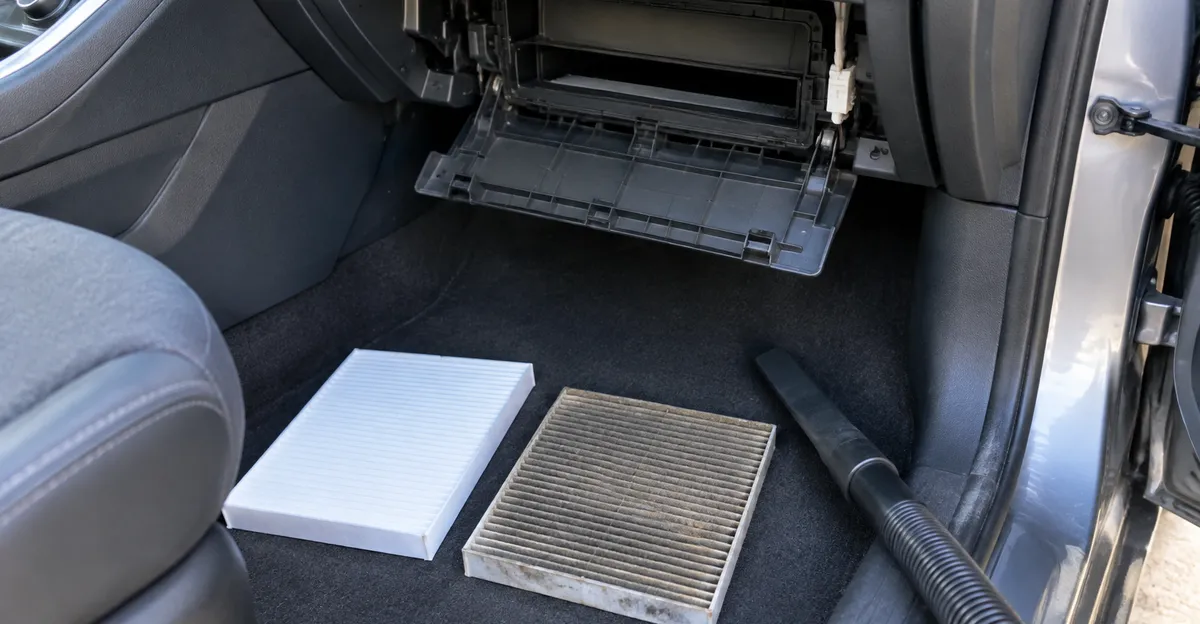
Consumer Reports explains the gym-sock vent smell as condensation on the evaporator that sits long enough to go musty. Their DIY path: windows open, fan on low, spray an AC disinfectant or Lysol aerosol into the exterior cowl intake (plenum) at the base of the windshield near the wipers, and replace the cabin air filter—often behind the glove box. Dealers often charge far more than the filter cost; the owner’s manual or a model-specific video usually shows the access path.
After you replace the filter and run a disinfectant:
- If the musty blast at startup is gone, keep a habit of running fresh air with AC off for a few minutes before shutdown so the evaporator can dry—Consumer Reports’ prevention logic in other AC writing, and common shop advice.
- If the smell returns every cold start, ask a shop to check the evaporator drain and whether an evaporator cleaning treatment belongs on the estimate before you buy another can of scent.
- If airflow is weak and dusty, the filter was overdue; if airflow is strong and the odor remains, filter age alone was not the whole story.
Warm air from the vents with a cooling complaint is a different job—sort that on the why is my car AC blowing warm air page rather than treating it as a freshening miss.
Smoke, Pets, and Used-Car Residue: Paths Baking Soda Cannot Finish
Smoke
MOT Checker Blog calls smoke one of the hardest cabin odors because it binds to fabric, carpet, headliner, vents, and glass. Their DIY stack: remove ash and trash, vacuum, clean carpets and mats, clean fabric seats, wipe hard surfaces, clean glass, careful headliner work, replace the cabin filter, use an odor neutralizer, then consider professional ozone if needed. One aerosol rarely finishes the job. Expect repeated cycles. Judge success after the cabin airs out overnight—not while cleaner fragrance is still strong.
Consumer Reports’ Mike Crossen warns that many “odor bombs” only mask smells. Look for products that actually neutralize—he points to chlorine dioxide as an ingredient that can eliminate odors rather than perfume over them. Ozone generators can reach gaps cloth cannot, but inhaling ozone harms lungs; never run a machine with people or pets present, and prefer a shop that follows vacant-cabin safety rules. Odor specialists disagree on oxidizers; ask what method they use and how they protect leather and rubber.
Pets
Remove blankets and liners. Vacuum hair with a rubber tool. Clean seats and mats with fabric-safe products. Wipe door cards and the cargo area. MOT Checker Blog’s prevention list—seat covers, boot liners, washable blankets, towel-drying after wet walks—beats another air freshener after every hike. Wet dog odor that returns when the heater runs often means damp foam or mats were put back early.
Used-car reset
MOT Checker Blog’s after-purchase checklist is a useful order for previous-owner residue: remove their leftovers, deep vacuum, clean seats and mats, replace the cabin filter, clean vents, wipe touchpoints, clean glass, check for damp, treat odors, sanitize high-touch controls. Buyers notice smell, sticky buttons, pet hair, and smoke faster than they notice a waxed hood. Do not try to hide problems with a strong freshener before a sale—the same page notes that buyers recognize the trick.
Mistakes That Make the Cabin Smell Worse
These failures show up across Consumer Reports, Clovis Auto Care, MOT Checker Blog, and The Mobile Buff:
- Fragrance before source removal
- Damp mats reinstalled
- Soaking seats until foam cannot dry
- Cleaning only what you see while under-seat trash or trunk moisture remains
- Ignoring when the smell appears (door open vs AC on vs burnt electrical)
- Bleach or peroxide on upholstery; ammonia on coated screens
- Greasy dashboard dressings that glare and feel dirty again
- Baking soda on wet carpet (it clumps and fails)
- Compressed-air abuse on sunroof drains
- Treating burnt plastic or sweet/fishy coolant smells as a detailing coupon
A clean cabin with no weird smell beats a cabin that smells like a perfume counter crashed into a gym bag.
When DIY Stops: Detailer, HVAC Tech, or Mechanic
Stay DIY while the source is reachable trash, dry surface soil, a dirty cabin filter you can change, light fabric odor that fades after clean-and-dry, or a mild baking-soda carpet pass.
Escalate when:
- The smell returns quickly after a thorough clean and full dry (Clovis Auto Care’s return-fast rule)
- Carpet or trunk keeps getting wet (leak, not perfume)
- Odor is strongest behind a panel or in an inaccessible space (Clovis’s dead-rat dashboard example required panel removal)
- Musty AC smell survives filter change and disinfectant
- Smoke or biohazard odor survives enzyme and extraction
- Burnt electrical smell, smoke, warning lights, or overheating appear
- Sweet or fishy vent smell suggests coolant (Consumer Reports’ heater-core path)
Consumer Reports prefers a professional ozone treatment over masking bombs when DIY fails—and sends mold, rodent nests, and heavy water damage to people with the tools to strip panels and use mold-specific cleaners. Health risk is the reason, not aesthetics. Approximate U.S. detail odor jobs vary widely by depth, vehicle size, and whether HVAC work is included; ask for a written scope instead of trusting a single national price. Insurance rarely covers ordinary cabin neglect; rodent or flood damage is a separate claim conversation with your insurer, not a DIY guarantee.
Keep It Fresh: Habits After the Reset
Once the source is gone, maintenance is lighter than another deep clean.
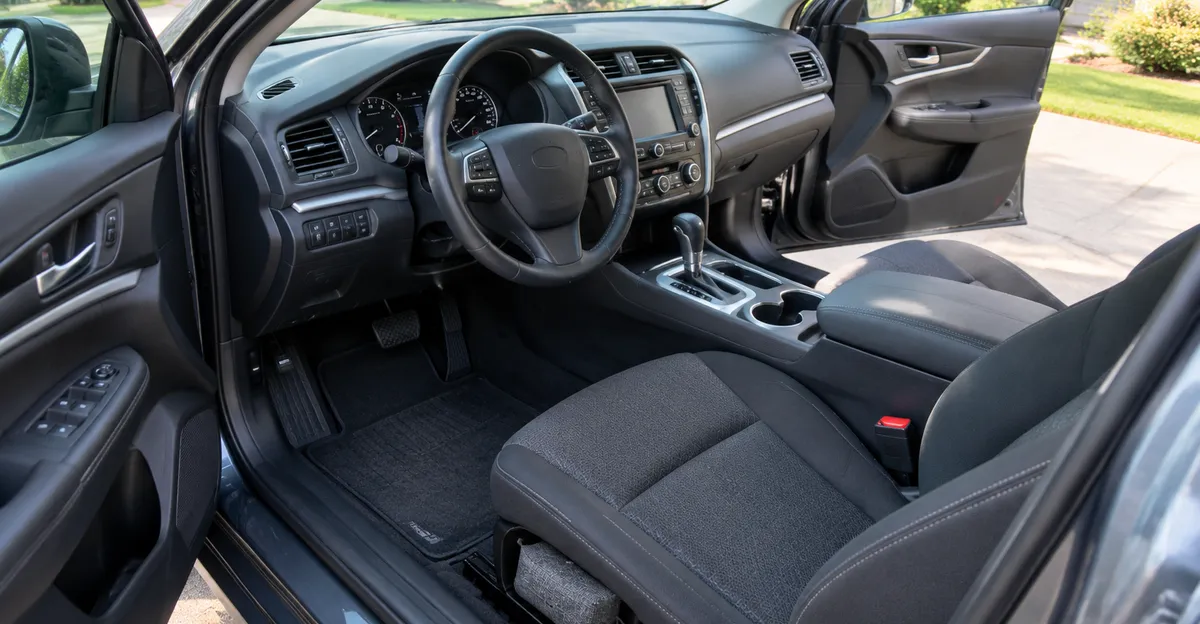
Consumer Reports’ prevention line is simple: do not let smelly things accumulate. Toss trash and leftovers the same day. Wipe spills before they soak. Shake mats weekly. Vacuum high-traffic footwells before grit becomes odor. Replace the cabin filter on the interval in your manual—or sooner if vents smell or airflow drops. After wet weather or a wet dog ride, dry mats outside the car. Open windows when it is safe after a clean so residual moisture leaves. Skip smoking and heavy food storage in the cabin if you want the reset to last.
Charcoal bags and moisture absorbers can help a clean, dry cabin stay neutral. They do not replace a filter change or a leak repair. Light vent clips are optional finishing, not step one.
A truly fresh interior does not need to smell like a showroom. It needs to smell like nothing weird is happening—because the reason for the weird smell is gone.
FAQ
Can baking soda freshen a car interior?
Yes for mild, dry carpet and fabric odors. Consumer Reports has mechanics sprinkle baking soda on dry carpet, let it sit, then vacuum. MOT Checker Blog adds the same caution: do not use it on damp areas, and do not expect it to fix mold, smoke damage, or wet underlay. It is a helper after you remove trash and vacuum—not a substitute for drying or a cabin-filter change.
Why does my car still smell after I cleaned it?
Clovis Auto Care frames the usual miss as cleaning the effect while the source remains—damp carpet under a dry-looking mat, food under a seat rail, a filthy cabin filter, or odor that only appears when the AC starts. Consumer Reports lists water leaks, blocked AC drains, and an overdue cabin filter as common hidden causes. Reassess when and where the smell is strongest before buying another air freshener.
When should I stop DIY and call a detailer or mechanic?
Consumer Reports escalates when DIY cleaning fails, when mold or rodent damage may need panel removal, or when a sweet or fishy vent smell points at a heater-core coolant leak. Clovis Auto Care stops fragrance work for burnt plastic or electrical smells, smoke with warning lights, or sources behind panels you cannot reach. Ask a shop for a written scope: carpet extraction, HVAC treatment, or mechanical inspection.
Should I use an air freshener before or after cleaning?
After. MOT Checker Blog and Clovis Auto Care both put fragrance last. A pine tree on a dirty, damp, or smoky cabin mixes scents instead of removing the cause. Clean, dry, replace the cabin filter if vents smell, air the cabin out, then add a light odor neutralizer or clip if you still want a scent.