
By Zeng FengMyCarWhy EditorialUpdated 2026-10-03
How to donate a car
How to donate a car is a sequence of ownership and tax decisions, not a single phone call for a free tow. In the United States, BBB’s Give.org and the IRS’s A Donor’s Guide to Car Donations (Publication 4303) both start in the same place: confirm the organization is a qualified charity, confirm you can transfer a clear title, and only then schedule pickup. This page is general education for ordinary U.S. vehicle owners. It is not tax, legal, or financial advice for your return, your state, or your title situation.
Before you dial a billboard number, sort three forks.
- Would a private sale or trade-in put more cash in your pocket than a deduction you may never itemize?
- Can you sign the title today—no unpaid lien, no missing co-owner, no lost paper?
- Do you care more about maximizing what the charity keeps, or about clearing the driveway this week?
Those answers decide whether donation is the right exit, which program to call, and what paperwork you must keep.
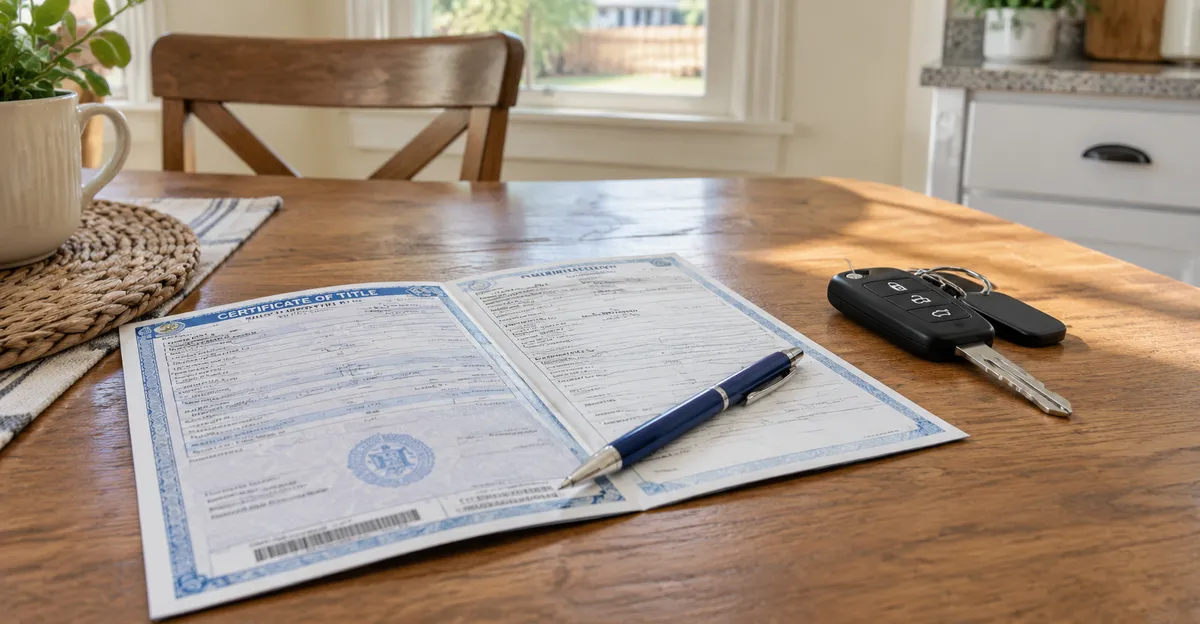
Sell, Donate, or Scrap First
Donation looks free and virtuous. The hard comparison is cash versus a deduction that only helps if you itemize.
Business Insider’s local car-donation guide quotes CPA Karlene Barry: when a charity plans to sell the vehicle, it can be simpler to sell it yourself and give the cash, because the potential tax benefit is often similar—except when a non-running car would cost you towing that the charity absorbs. IRS Publication 526 also reminds donors that vehicle gifts follow special “qualified vehicle” rules; the Blue Book number on a website is rarely the number that lands on your return when the charity auctions the car.
Use this sort.
| Your situation | Better first move | Why |
|---|---|---|
| Runs, clean title, local buyers exist | Price a private sale or dealer offer | Cash is certain; a deduction is not |
| Itemized deductions already near the standard deduction | Model the donation on Schedule A | Only then can the vehicle move the tax bill |
| Dead battery, no title clarity, or lien still open | Fix ownership before any pickup | Charities and IRS rules both need a clean transfer |
| You want a specific mission funded | Ask what share of resale the charity keeps | Flat-fee tower deals can leave little for the cause |
If selling would take months and the car sits in a driveway burning insurance premiums, donation can still win on convenience even when the tax savings are thin. Just decide that honestly. Do not donate because an ad promised a huge write-off that ignores how you actually file.
A second clock matters for people who are about to buy another car. Trade-in offers are cash against the next purchase. Donation is a separate gift. You cannot usually do both with the same vehicle. If a dealer’s trade number is weak but still beats the after-tax value of a proceeds-limited deduction, take the trade. If the car would fail a retail inspection and the dealer shrugs, donation or scrap becomes the real menu.
Also separate “I want this gone this week” from “I want the largest possible Form 1098-C.” Fast pickup programs often auction quickly. Quick auctions can produce lower gavel prices. That is fine when your goal is a clear driveway. It is a bad surprise when you donated mainly for a large Schedule A line.
Can You Transfer the Title Today
Ownership is the gate. Give.org states that car-donation charities require the title and recommends transferring it to the charity before the vehicle leaves your property so you do not stay liable for tickets or crashes. The New York Attorney General’s charity tips say the same in sharper language: some solicitors ask you to leave the assignment line blank for their convenience—do not. Fill in the charity’s name, keep a copy, and remove the plates unless your state says otherwise.
Run this checklist before you book a tow.
- Name on title. Every owner listed must sign. A spouse or co-signer who is out of town can stop the donation cold.
- Lien status. An unpaid auto loan usually means the lender holds the title or an electronic lien. Give.org notes you will likely need a payoff letter. See what a lien on a car means before you promise a pickup date.
- Duplicate title. Lost paper titles are a DMV errand, not a charity errand. Start that process first.
- Notarization and odometer. Some states require a notary on the assignment. Give.org also flags accurate odometer disclosure and warns against altering mistakes—request a clean duplicate instead.
- Branded titles. A salvage or flood brand does not always block donation, but it changes what a buyer will pay at auction and may matter if a recipient program needs a clean title. Compare that with what a branded title on a car means for insurance and registration.
If you cannot clear the title this month, pause. Scheduling a free tow while the lender still owns the claim is how donors end up chasing tickets that still come in their name.
Joint ownership deserves its own pause. If the title lists two people “and” each other, both usually must sign. If it lists “or,” one signature may be enough—but that is a state-form question, not a guess from a phone script. Ask your motor vehicle agency which conjunction is on your title and what the assignment requires. Do not let a tow dispatcher talk you into “we’ll fix the paperwork later.” Later is when liability stays with you.
Leased cars are a different animal. You do not own the title the way a financed buyer eventually will. Contact the lessor; a lease-end donation is not something you invent at the curb. If the vehicle was totaled while still leased, follow the insurer and lessor path first. Donation programs are for owners who can assign title, not for people still inside a lease contract.
How to Donate a Car to Charity Without Wasting the Gift
How to donate a car to charity starts with verifying the organization, not with the first truck that can be there tomorrow.
BBB’s Give.org tells donors to check whether the charity meets BBB Standards for Charity Accountability and to confirm section 501(c)(3) status through the IRS Tax Exempt Organization Search (churches and houses of worship are a noted exception that may not appear the same way). The New York Attorney General adds state-registry checks and a blunt warning: some “donate your car” programs are for-profit towers or dealers that send the charity a small fixed fee no matter what the car is worth. Business Insider notes that processors such as Charitable Adult Rides & Services (CARS) handle vehicles for multiple national brands and take a cut before the charity sees money—ask how the split works if you care about dollars to the mission.
Sell-for-funds versus give-to-a-driver
Ask one question out loud: will this car be auctioned for cash, used in the charity’s own program, or given or sold below market to someone who needs transportation?
IRS Publication 4303 and Publication 526 both tie your deduction to that answer. When the charity sells the vehicle and you claim more than $500, your deduction is generally limited to the gross proceeds from that sale, and you need a contemporaneous written acknowledgment—often Copy B of Form 1098-C—within 30 days of the sale. Exceptions that can support a fair-market-value deduction include significant intervening use or material improvement by the charity, or a transfer to a needy individual in furtherance of a transportation-relief purpose, as certified on the acknowledgment. Publication 561 adds that an acceptable FMV measure for a used car is generally not higher than a private-party guide price for the same make, model, year, area, and condition—not dealer retail.
That means two practical decisions.
- If tax size is your main goal, ask whether the program actually uses or places cars with recipients. A high Blue Book printout does not override a low auction hammer when the sale rule applies.
- If mission dollars are your main goal, ask what percentage or flat fee the charity keeps after the processor and tower are paid. The New York Attorney General recommends finding a charity that accepts the donation directly when possible.
Paperwork that actually matters
Give.org lists the usual tax file for a claimed value above $500: written acknowledgment, Form 8283, year/make/model/VIN, and a statement covering the sale and that you received no goods or services in return (or the value of any benefits). Publication 526 requires attaching Form 1098-C or an equivalent statement when the claimed FMV is more than $500 and the sale rule applies; without it, you cannot deduct the contribution. Claims over $5,000 generally need a qualified appraisal under the Form 8283 rules, with vehicle-specific twists when the acknowledgment already limits you to gross proceeds.
Also decide whether you itemize. Business Insider, citing CPA Greg Hudgins, notes that only about one in ten filers could itemize in the years after the larger standard deduction took hold. A donated car that never appears on Schedule A is still a gift to the charity—just not a tax strategy.
Pickup day moves
Typical steps from Give.org’s FAQ: call or use the charity’s donation page, gather vehicle details, schedule pickup (often free, sometimes contactless), sign the title over before the car leaves, remove plates, and keep every receipt. Pickup windows are often a few days but vary by region and tow capacity. Empty the glove box and trunk. Cancel or change insurance after ownership transfers—do not assume the policy dies when the tow truck turns the corner. State motor vehicle rules for reporting a sale or donation differ; follow your DMV’s transfer instructions rather than inventing a nationwide form.
Before the driver arrives, photograph the odometer, the signed title assignment, and the vehicle identification number plate. Those photos settle later disputes about mileage or which VIN was donated. Remove EZ-Pass or toll tags, garage openers, and any personal documents. If the car has a loaner spare or tools you want to keep, take them now. Charities are not storage units for the junk you meant to sort later.
If a solicitor offers a vacation voucher or a large gift card in exchange for the car, slow down. The New York Attorney General warns that “too good to be true” premiums can be a red flag, and IRS rules reduce your charitable contribution by the value of goods and services you receive back. A small token thank-you is different from a marketed reward that swallows the gift.
How to Donate a Car That Doesn't Run
How to donate a car that doesn't run is usually still possible. Give.org’s FAQ says most charities accept vehicles whether or not they currently run, and Business Insider’s FAQ answers the same question with a clear yes. The open decisions are money and logistics, not eligibility.
| Decision | What to check | Why it matters |
|---|---|---|
| Tow included? | Ask who pays for the roll-back | A “free donation” that bills you for towing is just a paid scrap run |
| Parts vs scrap vs repairable | Ask how non-runners are sold | Low gavel prices shrink a proceeds-based deduction |
| Access for the truck | Confirm driveway, apartment lot, or street permit rules | Failed pickups waste everyone’s time |
| Keys, battery, wheels | Tell the scheduler the truth | Missing keys or a locked steering wheel can cancel the appointment |
| Title still required? | Confirm before you haul parts off the car | Ownership rules do not disappear because the engine is dead |
Barry’s point in Business Insider is strongest here: if the car cannot be driven to a private buyer, the charity’s free tow can be worth more than a thin auction check you would never collect yourself. Still compare a junkyard quote. Cash from a scrap yard is simple. A donation of a non-runner often yields a small Form 1098-C number and still requires the same title and plate discipline.
Do not strip valuable parts and then expect the same reception. Tell the charity what is missing. A shell with no catalytic converter is a different gift from a complete non-running daily driver.
Neighborhood logistics matter more for dead cars than for runners. A flatbed needs room to line up. HOA rules, apartment towing contracts, and street-cleaning days can block a scheduled pickup. Call the property manager if you do not control the lot. Ask whether the charity’s tower will come onto private property or needs the car staged at the curb. If the car has been sitting so long that tires are flat or the parking brake is seized, say so. Surprises at the truck cost second trips.
Compare three numbers on paper before you commit: a scrap-yard cash offer, the likely low auction result for a non-runner, and any towing fee you would pay either way. Donation wins when the free tow plus a modest deduction (if you itemize) beats scrap cash, or when you simply refuse to negotiate with junkyards. Scrap wins when the yard pays real money and you do not itemize. There is no universal winner.
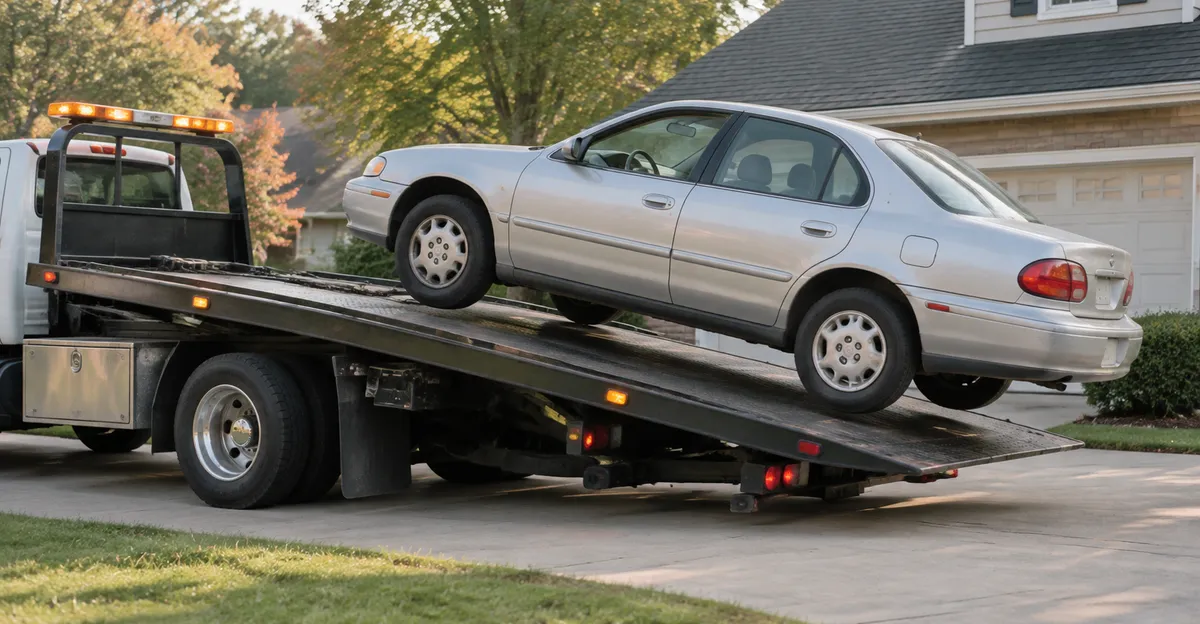
After the Truck Leaves
The donation is not finished at the curb.
- Plates. The New York Attorney General and IRS Publication 4303 both urge removing plates unless state law requires otherwise, then surrendering or transferring them per DMV rules. Leaving plates on the car is how former owners inherit parking tickets.
- Insurance. Call your insurer and document the removal date. If you are replacing the car, align the new policy start with delivery rather than carrying two cars by accident—or none.
- DMV notice. Many states want a notice of sale or release of liability. Check your state’s process; it is not identical nationwide.
- Final acknowledgment. Track the 30-day window in Publication 526 for Form 1098-C or the equivalent letter. Temporary pickup receipts are not a substitute when the IRS requires the contemporaneous acknowledgment for a claimed value over $500.
- Tax software reality. Hudgins, quoted by Business Insider, notes that Form 8283 can surprise people who usually file with consumer software. Budget time, or a preparer, if the vehicle amount is large.
If the charity’s acknowledgment says the car was sold for far less than you hoped, that is usually how the sale rule works—not a clerical error. Revisit whether you should have sold the car yourself only as a lesson for the next vehicle, not as a reason to invent a higher number.
Keep a single folder—digital is fine—with the temporary receipt, the final Form 1098-C or letter, photos of the title assignment, and any DMV release confirmation. If you use a tax preparer, hand over that folder in January, not in a panic the week of filing. If you e-file yourself, confirm whether your software accepts a PDF of Form 1098-C or whether you must mail Copy B with Form 8453, as Publication 526 describes for some filing paths.
How to Get a Donated Car
How to get a donated car is a different path from giving one away. Most national “donate your car” ads fund programs by selling vehicles; a smaller set of nonprofits place working cars with people who need transportation. LegalClarity’s recipient guide puts the reality up front: the car itself is often free, but applicants face documentation, waitlists, and several hundred dollars in title, tax, and insurance costs before they can drive legally.
Who these programs actually serve
Eligibility is local and program-specific. LegalClarity summarizes common threads: income near or below poverty guidelines, a clear transportation barrier to work or medical care, a valid license, and proof you can insure and maintain the vehicle. Categories often include domestic-violence survivors, families leaving public assistance for work, medically needy riders, disaster victims, veterans, and people in transitional housing. 1-800-Charity Cars’ public materials, as summarized by Love Columbia’s resource note and LegalClarity, also stress that recipients must be able to pick up the vehicle and pay tags, title, emissions where required, and ongoing upkeep.
Other programs never take a direct public application. Chariots4Hope’s FAQ states you must be referred by a partner organization and cannot apply cold. Cars of Hope’s FAQ says families need sponsorship from a partner social agency. That split—open online request versus agency referral—is the first filter. If you only fill national web forms, you may miss the local program that actually has a car this quarter.
What “free” still costs
LegalClarity lists typical recipient costs: title and registration roughly in the $50 to $200+ range depending on the state; possible sales or use tax on a gifted vehicle in some states; liability insurance that can run on the order of $150 to $360 a year for minimum coverage (highly variable); and maintenance that can approach roughly $2,000 a year for an older used car. Those figures are planning anchors from that guide, not quotes for your ZIP code. A car you cannot insure is not a win.
Ask before you accept:
- Has the car been inspected, and what is known to be wrong?
- Is the title clean, salvage, or flood-branded?
- Who pays for transport to your city if the car is elsewhere?
- Will accepting the vehicle affect benefits? LegalClarity notes that for federal SSI, one vehicle used for transportation is generally excluded from the resource count, and SNAP often does not count a household’s vehicle toward asset limits—but Medicaid and state rules vary, so confirm with a caseworker when benefits are critical.
How to apply for a donated car without waiting forever in silence
Parallel applications are allowed. LegalClarity advises applying to every program you qualify for at once and using the National Consumer Law Center’s directory of nonprofit car programs plus 211 for county-level leads. Keep copies of pay stubs, residency proof, license, driving record if requested, a specific personal statement, and a monthly budget. Stay reachable; some programs drop silent applicants. Waitlists of six months to more than a year are described as normal because inventory depends on donations.
Write the personal statement like a case note, not a slogan. Name the employer, shift times, and why the last bus leaves before your shift ends. Name the clinic and how often you must appear. Selection committees read vague hardship language all day; specific logistics stand out. Update the program if your address, phone, or job changes. A returned email can erase months of waiting.
Loan-based “almost donated” programs are worth a separate look if gift programs are full. LegalClarity points to character-based or low-interest vehicle loans from groups such as On the Road Lending and regional projects that serve thin credit files. Those are not free cars, but they can be faster than a year-long waitlist and may build credit. Read the payment, repossession, and insurance requirements before you sign.
While you wait, ask the same agencies about bus passes, gas cards, or vocational-rehab transport help. A donated car is not the only bridge to a job.
If you are instead shopping the used market with cash or a loan, the timeline and paperwork look different—see how long it takes to buy a car. Ownership questions also sit with other Buying, title & care guides on this site.

Mistakes That Create Liability or a Denied Deduction
Avoid these traps that show up again and again in Give.org, New York AG, and IRS materials.
- Donating to an unverified solicitor. Confirm 501(c)(3) status (or a church exception) and, where your state requires it, charity registration.
- Leaving the title assignment blank. You can remain the owner on paper.
- Leaving plates on the car. Tickets follow the plate trail.
- Assuming Blue Book equals the deduction. Sale proceeds usually control when the charity sells the car and you claim more than $500.
- Skipping Form 1098-C / Form 8283 when required. Publication 526 is explicit: without the acknowledgment attached when required, you cannot deduct the contribution.
- Counting on a deduction while taking the standard deduction. Convenience can still justify the gift; tax math may not.
- Accepting a recipient car you cannot insure. Budget first.
- Ignoring co-owners and liens. The tow truck cannot cure a title defect.
Quick Reference Tables
| Donor step | Done when |
|---|---|
| Vet the charity | IRS listing or determination letter plus clear answer on how much the charity keeps |
| Clear the title | All owners signed; lien released; plates plan ready |
| Hand off the car | Title assigned before it leaves; temporary receipt in hand |
| Close the file | DMV notice filed if required; insurance updated; Form 1098-C or letter filed with your tax records |
| Claimed situation | Usual deduction anchor (IRS Pub. 526 / 4303) |
|---|---|
| Charity sells; claim over $500 | Lesser of FMV or gross proceeds; attach 1098-C or equivalent |
| Charity sells for $500 or less | Lesser of FMV or $500 when the small-sale rule applies |
| Certified use / improvement / needy transfer | FMV may apply when the acknowledgment certifies the exception |
| You do not itemize | No federal charitable deduction benefit from the gift |
Bottom Line
Donate when you can transfer a clear title, you have vetted where the value goes, and you accept that the tax result usually follows the charity’s use or sale—not a hopeful online estimate. If you need a car rather than a driveway space, treat recipient programs as competitive aid with real out-of-pocket costs and long waits. Either path rewards people who ask concrete questions before the truck arrives.
For donors, the shortest honest script is: verify the charity, clear the title, assign ownership before the car moves, remove the plates, and keep the acknowledgment that matches what the IRS will ask for if you itemize. For applicants, the shortest honest script is: prove need and the ability to insure the car, apply widely, expect a wait, and budget for registration and repairs. Everything else on this page is detail that keeps those scripts from turning into tickets, denied deductions, or a car you cannot legally drive.