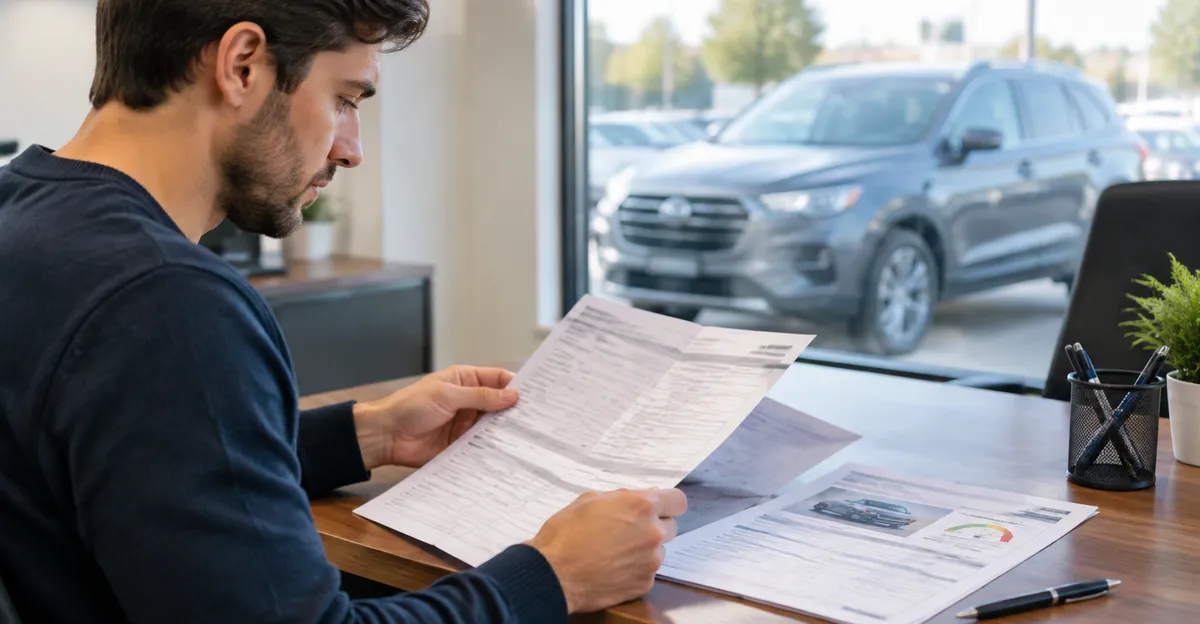
By Automotive Research TeamUpdated 2026-09-29
What is a branded title on a car
What is a branded title on a car is a paperwork question, not a make-and-model question. The word “branded” here does not mean Ford, Toyota, or any other manufacturer badge. It means a state motor vehicle agency stamped a lasting label on the ownership document because something serious happened in that vehicle’s history. The U.S. Department of Justice’s National Motor Vehicle Title Information System (NMVTIS) consumer page defines a brand as a descriptive label states assign for a vehicle’s current or prior condition, such as junk, salvage, or flood. Chase’s auto education guide puts the same idea in buyer language: the brand marks the problem the vehicle has had, not the company that built it. This page is general information for drivers in the United States. Title wording, total-loss thresholds, salvage inspections, and registration rules vary by state. It is not legal, insurance, or financing advice for your VIN, your policy, or your loan.
Do these things in order before you hand over money for a used car that might be branded.
- Read the paper title yourself. Look for words such as salvage, rebuilt, flood, lemon, junk, or water damage.
- Run an NMVTIS-based vehicle history search on the VIN through an approved consumer provider listed on the official NMVTIS consumer site.
- Call your auto insurer with the VIN and ask what coverages they will issue.
- Call your lender or credit union and ask whether that brand is financeable at all.
- Pay a trusted mechanic or body shop for a pre-purchase inspection aimed at frame, flood, airbags, and repair quality.
- Only then negotiate price or walk away.
What a branded title actually means
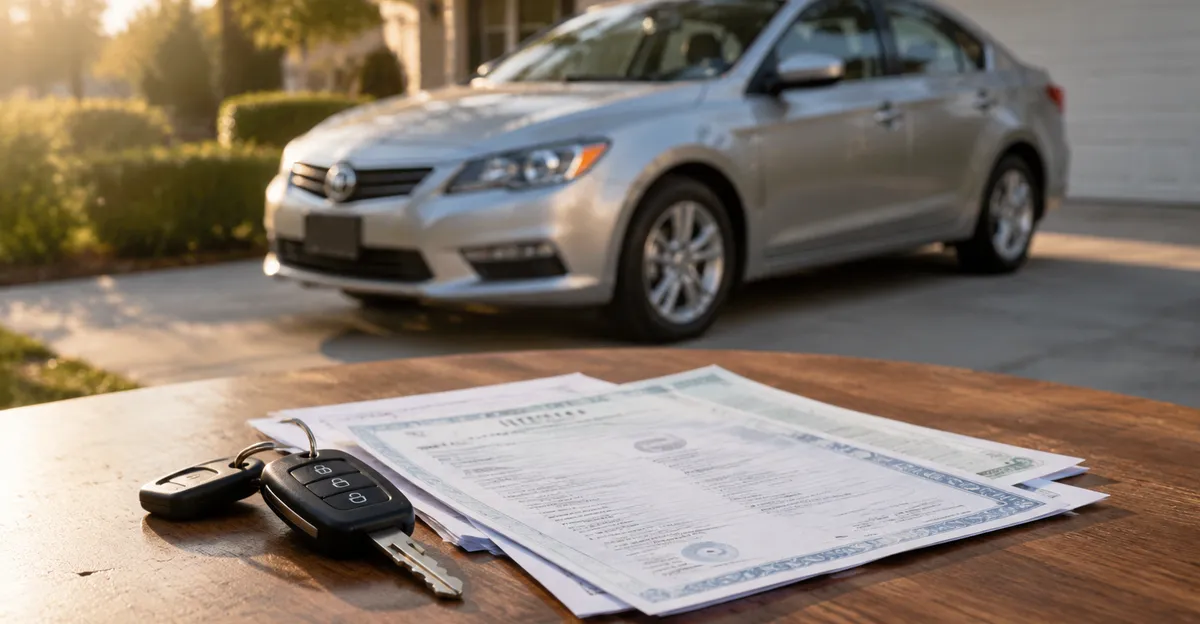
A branded title is a clean title’s opposite on paper. Experian’s Ask Experian guide describes a branded title as a car title marked with a designation that the vehicle sustained damage or other issues that affect its condition. California DMV’s branded-titles page says a brand is added to a Certificate of Title or registration card to note certain conditions or events in a vehicle’s history, and that wording varies from state to state even when the underlying idea is similar.
That definition answers the confusion baked into the search phrase. People type “branded title” because the word sounds like branding of a product. It is branding of a legal record. When someone asks what is a branded title on a car mean, they usually want that plain-English distinction: the stamp on the title, not the badge on the grille. The manufacturer name does not change. The ownership document does.
NMVTIS exists because brands travel poorly on paper alone. The Department of Justice consumer page explains that once a state brands a vehicle, that brand becomes a permanent part of the NMVTIS record, and that “title washing” happens when a vehicle is retitled in another state in a way that drops brands from the paper title presented to the next buyer. After Hurricane Katrina, that page recounts, flooded vehicles were moved out of Louisiana, cleaned, and offered for sale in states that did not brand flood damage the same way. A buyer looking only at a tidy paper title in the new state could miss saltwater damage that later hits electrical systems and airbag sensors. The national database is meant to keep that history visible even when state labels differ.
Two more NMVTIS warnings matter for ordinary buyers. First, a “clean” NMVTIS result is good news, but the Department of Justice still warns that until every required reporter is fully in the system, a search can produce a false negative such as “no junk or salvage history.” Second, an insurance “total loss” flag is not always a crushed car. NMVTIS notes that stolen-and-not-recovered vehicles can be labeled total loss, and if they later turn up undamaged, the total-loss determination may still sit in the record while the car is sold in working order. Read the brand and the story behind it. Do not treat any single line as the whole truth.
A clean title is also not a magic shield. VinCheck’s title-brand overview states that a clean title generally means no major brand such as salvage, rebuilt, flood, junk, or lemon is showing, and that a car can still have accident history or poor repairs without a brand. Branding is a high-severity flag. Absence of a brand is not proof the car was never hit.
Common title brands you will see
States invent their own words. California DMV’s branded-titles page lists a long cross-state inventory that includes damaged, dismantled, gray market, junk, lemon law buyback, prior police, prior taxi, rebuilt, reconditioned, remanufactured, replica, revived junk, revived salvage, salvage, scrap, totaled, warranty returned, and water damage. Chase and Experian compress that list into the brands used-car shoppers meet most often.
| Brand you may see | What sources say it usually means | First buyer question |
|---|---|---|
| Salvage | Insurer treated the car as a total loss; repair cost crossed the insurer’s or state’s threshold | Is this car even legal to drive yet, or still waiting on a rebuild process? |
| Rebuilt / reconstructed | Prior salvage that was repaired and passed a state inspection or equivalent process | Who did the work, and where are the inspection papers? |
| Flood / water damage | Significant water intrusion in the history | Electrical and corrosion risk later; look under carpets and in the trunk |
| Junk / non-repairable / dismantled | Severe damage or parts-only status | Can this car be titled for normal road use in your state at all? |
| Lemon / warranty return / buyback | Manufacturer buyback under a lemon law after repeated defects | What defect triggered the buyback, and was it actually fixed? |
| Odometer rollback / not actual mileage | Mileage on the dash cannot be trusted | Value and warranty math are guesswork |
| Hail / fire | Documented disaster damage | Cosmetic-only versus structural or cabin fire |
California DMV treats salvage as the brand buyers should watch most carefully: a salvage vehicle was wrecked or damaged enough that repairing it was considered too expensive. Experian adds that some insurers total a car when repair cost plus salvage value exceeds actual cash value, while others use a percentage of worth often described in the 60 to 100 percent range. That percentage language is an industry description, not a nationwide statute. Your state may set its own trigger.
Chase’s rebuilt-title section is the practical next step. A rebuilt brand means the car was significantly damaged, then repaired and restored to a roadworthy condition under that state’s rules, and it had to pass the state inspection. Experian’s comparison table is blunt: salvage is the severe total-loss brand; rebuilt is what you get after salvage is repaired and inspected. Rebuilt is still a brand. It is not a clean title with a footnote.
Flood and lemon brands deserve special caution even when the car looks perfect on the lot. Experian notes that flood damage can take time to show up after the water event. Chase notes that a lemon brand stays even if the issue is later fixed and the car is resold. California DMV’s warranty-return brand covers vehicles returned under that state’s lemon law. Reliability and resale stigma remain after the repair shop closes the ticket.
Prior police and prior taxi brands are different in kind. California DMV lists them mainly as high-mileage fleet history, not crash totals. They still matter for value. They are not the same risk stack as flood salvage.
How a brand gets onto the title
The usual path for salvage and rebuilt brands starts with an insurance claim, not with a DMV clerk inventing a label for fun. An adjuster decides the car is a total loss under the policy and the state rules that apply. Ownership often moves to the insurer. The state issues a salvage title or salvage certificate. Someone later buys the salvage car, repairs it, and—if the state allows—applies for a rebuilt title after inspection. Chase describes that salvage-to-road sequence in short form: a salvage car can be driven again legally if it is repaired and passes a state inspection.
That sequence is why what happens if you total a leased car and branded titles sit next to each other in real life. On a lease, the lessor owns the title. After a total loss, the insurance check and the lease payoff fight over money. If the lessor or insurer keeps the car for salvage, the next owner of that shell may eventually see a salvage or rebuilt brand. The brand is the long tail of a total-loss decision.
NMVTIS also collects reports from junk and salvage yards and from insurers. The Department of Justice consumer page says a buyer can discover brand history, the latest reported odometer reading, insurer salvage or total-loss determinations, and transfers to recyclers or salvage yards. Federal law requires states, before issuing a new title on a vehicle from another state, to verify certain information through NMVTIS. That is the anti-washing design. It does not erase state-to-state differences. NMVTIS’s “Understanding State Differences” section is explicit: one state may brand a damaged car salvage while another does not because the damage never hits that state’s dollar or value threshold. A flood brand in one state does not force every other state to print the word “flood.” The national system keeps reported brands available so relocation alone should not erase them.
Junk and non-repairable brands sit on a steeper cliff. VinCheck’s overview treats junk or non-repairable as a signal the vehicle may not be suitable for normal road use. California DMV warns that a revived salvage car repaired with stolen parts can be seized and refused registration. If the brand language points to parts-only, treat “I can fix it myself” as a legal registration problem before it is a wrench problem.
How to check for a branded title before you buy
Paper first. California DMV says you will find the title brand in a red box titled VEHICLE HISTORY near the upper right on current California titles and salvage certificates. Other states place brands in different spots and use different ink. Always ask to see the actual title or a clear photo of both sides, not a verbal summary.
VIN second. Chase says title brands are recorded electronically and linked to the VIN, and that buyers can contact a state DMV or use a credible online resource. Prefer an Approved NMVTIS Data Provider report when you want the federal brand and salvage feed. The official NMVTIS consumer page explains that an NMVTIS report is intentionally concise: five key fraud and theft indicators, not a full private history of every parking-lot ding. The Department of Justice also recommends accessing the current state’s full title record, not only the short NMVTIS summary.
Dealer disclosure is not a substitute for your own search. California DMV says sellers, including dealerships, must disclose salvage title and history, and that licensed dealers must obtain an NMVTIS report before offering a used vehicle for sale. If that report shows junk, salvage, or a brand, the dealer must post a disclosure on the vehicle while it is displayed, with limited exceptions. The same page admits the disclosure rule is hard to enforce when a car arrives from another state. Private-party sales are even less standardized. Assume you are the compliance department.
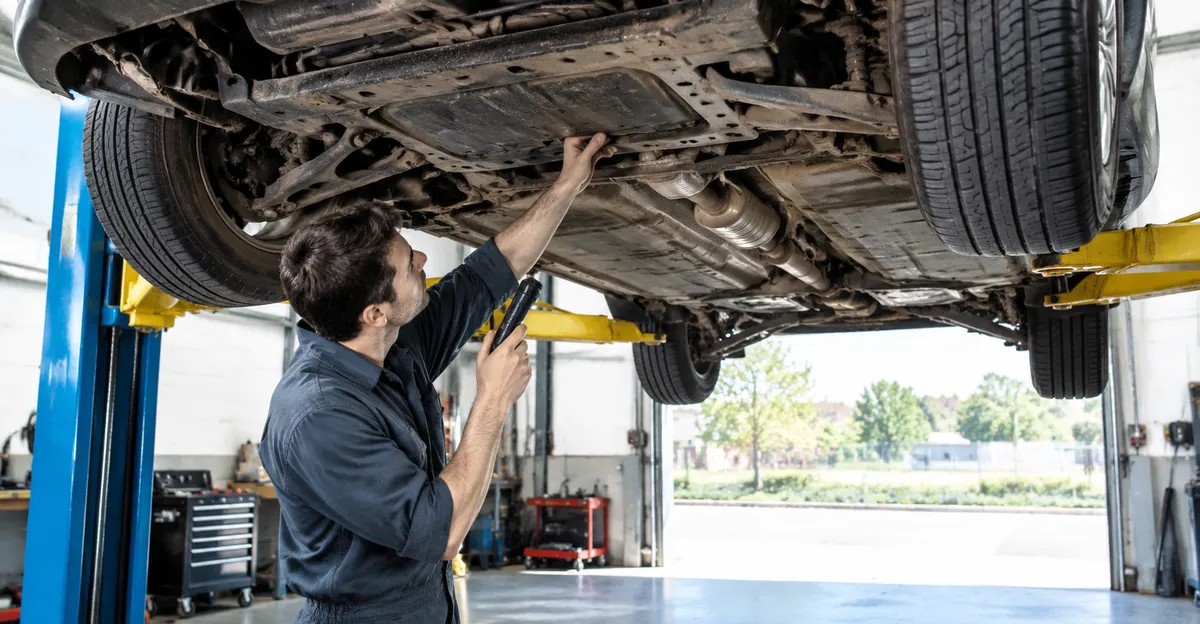
Physical inspection still matters after the paperwork. California DMV lists clues that can hint at undisclosed salvage history: major repairs on inner fender structures; mud, mold, or rust under trunk carpet; a VIN plate attached with materials other than rivets; a restraint light that stays on; resealed airbag covers; missing NHTSA labels on doors, hood, tailgate, or hatchback. Experian’s bottom line matches that advice: review the history report and have a mechanic you trust inspect the vehicle before you buy.
Use this order when money is about to leave your account.
| Step | Why it comes here | Failure mode if you skip it |
|---|---|---|
| Match VIN on dash, door sticker, and title | Catches cloning and swapped plates early | You research the wrong car |
| Read the brand on the title | Confirms what the seller is actually selling | You price a clean-title deal on branded metal |
| Pull NMVTIS brand and salvage history | Catches washed paper titles | You trust a clean-looking out-of-state reprint |
| Call insurer with VIN and brand | Confirms whether full coverage exists at all | You own a car you can only insure for liability |
| Call lender with VIN and brand | Confirms collateral rules before deposit | Deposit stuck on a car no bank will fund |
| Independent inspection | Tests repair quality the brand never describes | You buy framed damage dressed as a bargain |
If any row fails, stop. Do not “figure it out after delivery.”
Insurance, loans, and resale after a brand
Insurance is the first practical wall after the brand itself. Experian says insuring a branded title can be hard because insurers struggle to value a rebuilt salvage car and to separate new damage from old damage. Many may offer liability but not comprehensive and collision on rebuilt or salvage titles. Experian also says that after salvage becomes rebuilt through state inspection, insurers may still want a certified mechanic’s statement, current photos, and the original repair estimate. Chase lists higher premiums or limited coverage as a core disadvantage. VinCheck’s insurance section adds lower claim payouts because of reduced vehicle value and fewer insurer options. None of those sources promise a nationwide rate. Call your carrier with the VIN before you fall in love with the price.
Financing is the second wall. Experian says risk-averse lenders are less likely to finance salvage titles, or they demand a larger down payment or higher rate, because they doubt the car will outlast the loan. VinCheck lists denials, higher down payments, higher rates, shorter terms, lower loan-to-value limits, and extra paperwork. Some buyers use credit unions, specialty lenders, personal loans, or cash. Do not take a seller’s claim that “banks finance these all the time” as underwriting. Get a written or portal decision on that VIN.
Resale is the third wall, and it never really leaves. Experian cites Kelley Blue Book’s estimate that salvage-title cars can cost about 20 to 40 percent less than clean-title value at purchase—and notes you will not get much when you sell. Chase and VinCheck both say branded cars are harder to resell because the next buyer faces the same insurance and loan friction. If you plan to keep the car for many years and the discount is large, that math can still work. If you plan to trade in within two years, you are paying the brand tax twice.
Mileage and brand interact. A what is good mileage for a used car decision already sits outside the odometer when title brands and flood history appear. A rebuilt title at “good” miles is not a good-miles deal in the clean-title sense. Price the brand first, then the miles.
Buying checklist and when to walk away
A branded title can still be a rational buy for a cash buyer who understands the brand, can insure the car, has repair records, and accepts a permanent discount on exit. Experian lists the usual upsides: lower purchase price, a chance at a higher trim than the same budget buys with a clean title, and a DIY project car for people who actually wrench. Chase adds that the brand itself is a quick peek into history. Those upsides only count after the checklist below.
Ask for documentation VinCheck and Experian both treat as non-optional: repair invoices, before-and-after damage photos, insurance paperwork, state inspection records, parts receipts, airbag replacement records if airbags fired, alignment records, structural repair notes, and later maintenance. Good paperwork does not erase the brand. Missing paperwork should erase your willingness to pay near clean-title money.
Walk away when any of these show up.
- The seller hid the brand or contradicted the title.
- The title is missing, altered, or the VIN does not match the car.
- Flood, junk, or non-repairable history with no clear repair trail.
- The seller blocks an independent inspection.
- Your insurer will not write the coverages you need.
- Your lender will not fund the deal and you cannot pay cash.
- Warning lights, poor panel gaps, water lines, mold smell, or airbag covers that look resealed.
- The ask price ignores the brand.
California DMV’s revived-salvage caution belongs on that list too: some repairs are unsafe; some use stolen parts. A cheap car that cannot be registered is not a bargain.
How long the purchase takes is a separate problem from whether you should buy. How long does it take to buy a car already stretches when financing and paperwork drag. Add brand checks for insurance and NMVTIS and you should expect more calendar time, not less. Budget that time before the seller invents urgency.
Ownership questions that are not about a single symptom live under Ownership & more. Use that hub when the next decision is paperwork, registration, insurance, or buying process rather than a dashboard light.
Moving or selling a branded-title car across states
Interstate moves are where branded titles get messy for honest owners and where fraudsters try to wash history. NMVTIS exists so that a brand applied in one state remains available when another state issues a new title. The Department of Justice still warns that washing can occur when a retitling state fails to carry brands forward on the paper title, and that Experian Automotive once reported more than 185,000 titles branded in one state and then retitled in a second state as purportedly clean in the first half of 2008 alone. That statistic is historical, but the mechanism is the reason you never skip the national brand check just because the current paper looks blank.
If you already own a branded car and you move, ask the new state’s motor vehicle agency how it maps your existing brand before you assume registration will be routine. NMVTIS does not force every state to use identical words. Your rebuilt title in State A may print differently in State B while the underlying NMVTIS brand history remains. Plan for inspection, fees, and possible refusal if the car was junk or non-repairable under the old state’s rules.
If you are selling a branded car, disclose the brand in the listing and in writing before the buyer travels. California DMV’s dealer posting rule is a floor for licensed dealers there, not a nationwide private-party script. Honesty is still the cheapest way to avoid a bounced deal after the buyer’s insurer or lender sees the VIN. Price the car as branded from the first photo, not as a surprise at the bank.
For buyers shipping a car across state lines, treat the destination state’s rules as controlling for registration, not the seller’s driveway rules. Confirm insurability at the destination ZIP code. Confirm that the brand allows on-road titling there. Confirm that your lender, if any, will take a security interest in that state. Crossing a border does not upgrade a salvage shell into a clean daily driver.