By Automotive Research TeamUpdated 2026-09-21
What to Do After a Car Accident Not Your Fault
What to do after a car accident not your fault is a short list you can finish at the scene, not a debate about who pays. Check the people in every car you can safely reach. Call 911 if anyone is hurt, if you smell fuel, or if a car is smoking. Move the vehicles only when they still roll and the lane is more dangerous than the shoulder. Then get the other driver's insurance card, photograph both cars, and call the number on your own insurance card. This page is general information for drivers in the United States. It is not legal advice for your crash, and it does not promise that any insurer will pay a given bill. Reporting duties and coverages change by state and by policy.
Do these things before the other driver leaves.
- Look for injuries. If someone is hurt, that call comes before photos.
- If the cars can be driven and no one is trapped, move them out of traffic and turn on the hazard lights. Stay at the scene.
- Call the police. Some departments will not come to a minor crash, or to private property. You still make the call.
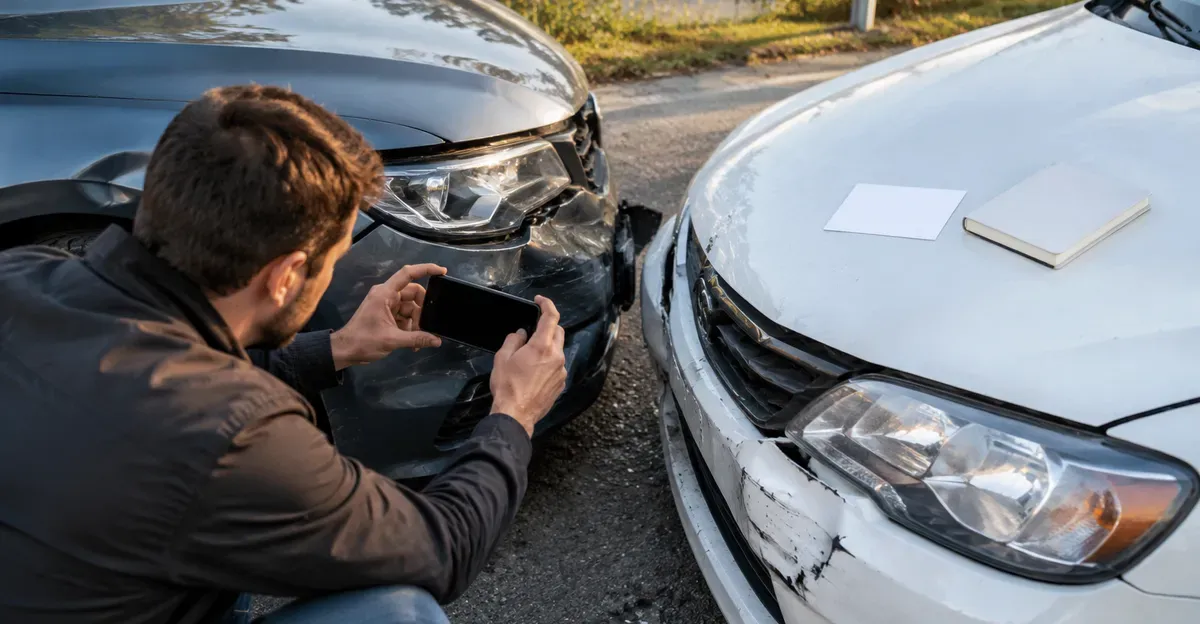
- Copy the other driver's name, insurer, policy number, and plate. Photograph the damage and the intersection.
- Get names and phone numbers from passengers and from anyone who stopped.
- Call your own insurer the same day, even if you are sure the other driver caused the crash.
The California Department of Insurance puts the same order in its consumer guide: stop, move only if it is safe, call 911 for injuries, call the police, collect information, photograph the damage and the scene, and notify your agent or company immediately.
The First Minutes
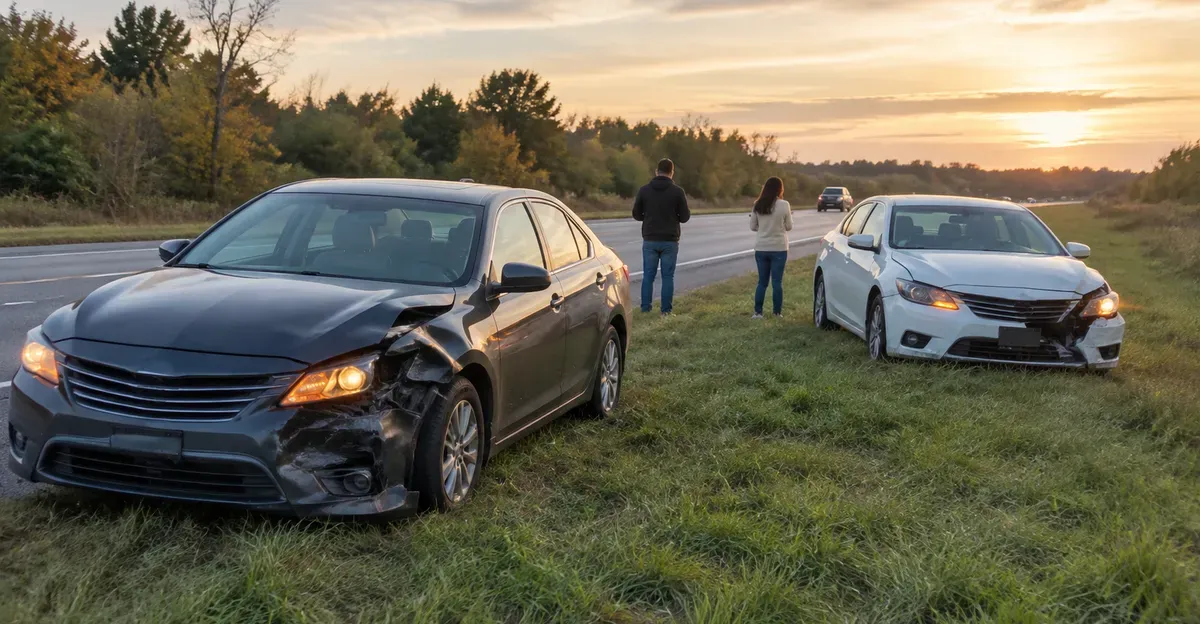
People come before cars. Walk the seats you can reach and ask each person, including yourself, where it hurts. A crash can feel minor and still need an ambulance. If anyone is injured, call 911 and say how many people are hurt and whether anyone is trapped. The California guide tells drivers to call paramedics when there are injuries, and to call the police as well.
Leave a person in the seat if you are not sure they can move. The exception is a car that is on fire or in the path of traffic you cannot stop. The National Highway Traffic Safety Administration's interim guidance for electric and hybrid-electric vehicles says to get out immediately if you see sparks, smoke, or flames, and to call 911. For those vehicles, tell the dispatcher that an electric or hybrid car is involved. Do not touch exposed electrical parts. Stay away from leaking fluid. If you can do it safely, NHTSA says to move the car to a nearby safe spot and remain on the scene.
A gasoline car follows the same safety split. Move it when the wheels still turn, the steering still works, and you can reach a shoulder, a parking lot, or a side street without crossing live lanes blindly. If the car will not move, stay inside with the belt on only when getting out would put you in traffic. Otherwise, stand well off the roadway, on the side away from passing cars. Turn the hazards on if the electrical system still works.
Do not leave to "deal with it later." The California guide says that if you hit an unattended car or other property and you cannot find the owner, you leave a note with the names and addresses of the drivers and owners of the cars involved. Driving off because the damage looks cheap can turn a claim into a hit-and-run. Hit-and-run is a separate problem, covered below.
Two things to skip while you wait. Do not argue with the other driver or the passengers. Do not announce whose fault it was. The California Department of Insurance lists both under things to avoid, and tells you to save the account of the crash for the police and for your insurance company. A sentence spoken to be polite can be written down later as an admission. Fault is a conclusion an insurer, and sometimes a court, reaches from the facts. It is not a courtesy you owe at the curb.
What to Photograph and Exchange
The California guide is specific about the paperwork. Get the name, address, telephone number, and driver-license number of each driver. Get each license plate and each vehicle identification number. Ask to see the license and the registration so you can check that the card matches the person and the car. Get the name, address, and phone number of every passenger and every witness. Photograph the damage and the scene, including traffic controls and anything that blocks a view, such as a parked truck, a hill, or a sign.
That photo list is the one that actually helps a claim. Take it before the cars are driven away, if you can stand there without being in a lane.
- All vehicles, from each corner, close enough to see the damage and far enough to show the whole car.
- Each license plate, readable.
- The damage on your front bumper, the other car's bumper, and any scrape that continues onto a fender.
- Broken or cracked lights, including a lamp that still looks intact but is loose in the housing.
- Each wheel that was hit, and the tire sidewall, because a bent wheel is easy to miss in a bumper photo.
- A door that no longer shuts, or a gap along the door seam that was not there before.
- The cars' positions, if it is safe to photograph them before they move. If you already moved, say so in your notes. Do not stage the cars back in the lane.
- Traffic signs and signals, the lane markings, and anything that hid one car from the other.
- Skid marks, fluid, and debris, with a wide shot that shows where they sit relative to the cars.
- Road condition: wet pavement, gravel, a pothole, glare.
- The other driver's insurance card. Capture the company name, the policy number, and the phone number printed on the card.
Write the date, the time, the street, the direction each car was going, and the weather. Those details fade. A photo of the intersection does not record which way you were headed unless you note it.
There is a real conflict about the license itself, and it is a state-law problem, not a manners problem. The California Department of Insurance says you must show your driver license, registration, proof of financial responsibility, and current address to the other driver or to an officer. The National Association of Insurance Commissioners, on its consumer auto-insurance page, answers a different question: you do not need to hand over your license number as a casual extra, because that number is useful to someone committing identity fraud. Both can be true in different states. Show what your state requires an officer or the other driver to see. Photograph their insurance card and their plate yourself. Do not post a photo of anyone's license on social media. If the other driver refuses to show a card, do not block their car. Call the police and write down the plate, the make, the color, and which way they go.
Witnesses leave. Ask for a name and a phone number while they are still standing there. A witness who says "the other car ran the red light" is useful only if you can find that person next week. If they will not stay, a phone number on a note is enough. Do not coach them on what to say.
If the other driver offers to skip insurance and pay cash, you can listen. You should still take the photos and the insurance information. A cash offer that disappears after you both drive away leaves you with no card, no plate photo, and a car you already released. The California guide also says not to sign anything because someone offered to pay your deductible. That signature can block your own insurer from recovering what it paid. Subrogation, in that guide's definition, is the insurer's right to collect from the at-fault party the money it already paid you. The policy requires you to cooperate with that recovery. Signing a release in the parking lot, in exchange for a deductible, is the example the guide gives of a step that jeopardizes it.
What to do after a car accident not your fault
The scene checklist is the same whether you think you caused the crash or not. The next decision depends on what the other driver does. Use the row that matches. Do not skip the photos because the row feels favorable.
| If this happens | Do this | Why it matters |
|---|---|---|
| Anyone is hurt | Call 911 | The California guide puts paramedics ahead of the paperwork |
| The other driver admits fault | Still exchange cards, photograph, and call your insurer | An admission at the curb is not the insurer's liability decision |
| The other driver refuses to exchange information | Call the police and record the plate | You still need a way to identify the car |
| The other driver has no insurance | Call the police, then your insurer, and ask about collision and uninsured-motorist coverage | The NAIC says those are the coverages that can pay, if you bought them |
| The other driver leaves | Call the police and stay if it is safe | Hit-and-run claims depend on a report and on the coverages in your policy |
| Pain shows up days later | Get examined and keep the records | A medical-payments or uninsured-motorist claim needs documentation of the injury and the bills |
| The other insurer disputes liability | Send the photos, witness names, and police report, and ask your own insurer what your collision coverage will do | Payment is not automatic because you believe you were not at fault |
If the other driver admits fault
Write the words down, with the time. "I wasn't looking" is more useful than "they admitted it." Then do the full exchange anyway. People change the story after they call their insurer, or after they see the repair estimate. The California Department of Insurance tells you not to sign a statement about fault and not to promise that you will pay the other person's damage. You also should not sign a paper the other driver writes, even if it favors you, until your insurer has seen it. A homemade release can close a claim you have not measured yet.
Call your insurer the same day and tell them what was said. Ask whether they want you to give a statement to the other company, or whether they will talk to that company. You are not required by any nationwide rule to accept the other driver's apology as the end of the crash.
If the other driver denies fault
Expect two accounts. Yours and theirs will not match, and the insurer is allowed to investigate both. Do not spend the shoulder trying to win the argument. The California guide says to save the story for the police and your company. Your facts belong in three places: the photos, the witness names, and the statement you give when you are calm.
When you do give that statement, describe what you saw. Which lane you were in. What the light showed. When you first saw the other car. What you did. Stop there. Do not invent a speed. Do not say "I guess I could have braked sooner" to be agreeable. Do not say "I'm sure it was their fault" if what you mean is that you had the right of way. Right of way and legal fault are related, and they are not the same sentence in every state.
If both drivers are partly right, payment can change. Some states reduce what an injured person recovers by that person's share of fault. Some states bar recovery after a certain share. Those rules are not national, and this page will not assign you a percentage. Ask your insurer which rule they are applying, and if the answer affects a large medical bill, ask a lawyer in that state before you accept it.
If the other driver has no insurance
A missing card is not proof of no insurance. People forget the card. Ask for the company name and a policy number, and photograph the registration. If they tell you they are uninsured, or the card is expired, call the police from the scene. Then call your own insurer and use the words "uninsured driver."
The NAIC's consumer page answers the totaled-car version directly. Collision coverage or uninsured-motorist property damage pays, if you bought that coverage. Either way you pay a deductible. Collision is optional under the law in the NAIC's description, though a lender can require it until the loan is gone. Uninsured-motorist property damage is also something you buy or you do not. Do not assume the state minimum includes damage to your own car.
Injuries are a different coverage. The NAIC shopping tool describes uninsured-motorist bodily injury as the coverage that pays your injuries, and your passengers' injuries, if an at-fault driver has no insurance or if the driver leaves in a hit-and-run. Underinsured-motorist coverage is the one that can apply when the other driver has insurance, but not enough. The tool says "underinsured" is defined by state law or by the policy, so the word does not mean the same thing everywhere. The same tool says most states require a minimum amount of uninsured and underinsured motorist coverage, and that the amount varies. Read your declarations page before you assume a limit.
No insurer has to pay a bill your policy does not cover. If you did not buy collision, and your state does not give you uninsured-motorist property damage, the repair bill can remain yours. That is a coverage fact, not a judgment that the crash was your fault.
If the other driver leaves
Stay. Call the police. Say the other driver left, and give the location. If you have a plate, read it twice. If you do not, give color, body style, and direction. Do not follow the car into traffic to finish the identification. A chase creates a second crash and can wreck the claim you are trying to protect.
The California Department of Insurance says most policies require notice to the police within a time the policy sets, when the crash is a hit-and-run. That time is in your contract, not in a national statute this page can quote. Read the policy or ask the adjuster the same day. The NAIC treats a hit-and-run driver as one of the situations uninsured-motorist bodily injury is written for, and it describes uninsured-motorist property damage as coverage that can pay for the car in a hit-and-run if you bought it. Ask which of those you have. A hit-and-run is not automatically paid in full.
What a Police Report Does
Call even when the crash feels small. The California guide is plain about the limit: some police departments respond to every scene, and some weigh the severity and the location. A crash on private property may not bring an officer. You should still try to notify them. If they do not come, write that down, including the time you called and what you were told. Your insurer will ask.
If an officer does come, give the short version. What you saw. Not what you think the law is. Ask how to get a copy of the report, and write down the officer's name and the report number if one is given. Your insurer will ask for that report when you open the claim. It is a record of statements and observations. It is not a verdict. The other driver's insurer can still dispute liability after reading it. Officers do not bind the insurance contract.
Ask for the copy as soon as the department will release it. Damage and pain are sometimes clearer the next day than they were at the curb, and the report is already written by then. Do not wait for the other insurer to request it first.
Some states also want a report to the motor vehicle agency, separate from the police. California's Department of Insurance, in its August 2020 consumer guide, tells drivers in that state to report a crash to the DMV within 10 days if anyone is injured or if vehicle damage exceeds $750. The guide says failing to notify the DMV can lead to a suspended license. Those figures are California's, from that guide. Other states use different thresholds, or none. Check your state DMV before you treat $750 or 10 days as your rule. Do not assume a police report replaces a DMV report, or the reverse.
How to Open the Insurance Claim
Call your own company even when you are sure the other driver was at fault. The NAIC's consumer guide says to call the phone number on your proof-of-insurance card as soon as possible, and to ask which forms or documents support the claim. The NAIC says each state has its own rules for the claims process, and that both you and the insurer have to follow those rules. Ask the adjuster which rules they are using. Do not guess.
Have this in front of you when you call.
- Date, time, and exact location.
- The other driver's name, plate, insurer, and policy number.
- A one-sentence description of what happened, without a speech about fault.
- Whether anyone was hurt, and whether police came.
- The report number, if you have it.
- Where the car is now, and whether it still drives.
- Your photos, ready to upload if the company uses an app.
The company may assign an adjuster, take a recorded statement, and contact the other driver and the witnesses. The California guide says a medical-payments claim or an uninsured-motorist claim requires you to document injuries, medical expenses, and lost wages. It also says an examination under oath can sometimes be requested. Cooperate with the investigation. You can ask what a question means before you answer it. You can say you do not know. Write down the name of the person you spoke with, the date, and what they asked you to send.
Which company pays depends on the state system, not on your opinion of the crash. The NAIC explains the split. Each state uses either a tort system or a no-fault system. In a no-fault state, your own insurer pays you for injury losses from the crash regardless of who was at fault. Coverages in those states vary. The NAIC's auto guide adds a point people miss: you still file with the at-fault driver's insurer to be paid for damage to your vehicle. Most no-fault states also allow a lawsuit against the at-fault driver for serious injuries. The guide says to check your state insurance department rather than assume you live in one system or the other. A "no-fault" label does not mean nobody investigates the crash, and it does not mean the other driver is excused from property damage.
If you file the vehicle damage on your own collision coverage, you pay the deductible even when you were not at fault. The NAIC shopping tool says that directly: a deductible on a claim to your own company is yours even if you did not cause the damage. Your insurer may then pursue the other party. That is the subrogation step. The California guide says the company must tell you whether it will pursue subrogation. If it does, it has to include your deductible in that effort unless you already recovered the deductible yourself. If it recovers the full amount it paid, you get the deductible back. If it recovers part, you get the same fraction, and the guide says recovery expenses can be split the same way. If the company will not pursue it, they have to tell you, so you can try on your own. Talk to them before you sue the other driver yourself. A private deal can undercut the company's recovery.
The other driver's insurer is a separate conversation. They can accept liability, dispute it, or say their driver was only partly at fault. None of those outcomes is guaranteed because you believe you were stopped, or because you had a green light. If they accept liability for the car, the NAIC says that on a liability claim the other company should pay a rental for a reasonable repair time. If they dispute liability, ask your own insurer to open the collision claim so the car is not sitting while two companies argue. You can still hope the deductible comes back through subrogation. You should not count on it until the money arrives.
If the dispute is about the dollar amount rather than about fault, read the policy for an appraisal clause. The NAIC says to do that when you and the insurer disagree about the value of the claim. The California guide describes a common version: each side hires an appraiser, the appraisers pick an umpire, and an amount any two of them agree on is binding. Each side pays its own appraiser. The umpire fee is shared. Not every policy has this clause. Read yours.
Deadlines for the company are also state rules. California's fair-claims regulations, as summarized by that state's Department of Insurance, say the insurer should acknowledge the claim, start the investigation, and provide forms within 15 days of notice. They should accept or deny the claim within 40 days after receiving proof of claim. After a settlement, they should pay within 30 days. Those numbers are California's. The NAIC says only that some states set time limits, and that "prompt" can mean something different when a claim needs a longer investigation or when a storm has flooded the company with files. If your state is not California, ask your adjuster what deadline they are working under, or ask your state insurance department. If the company misses its own stated deadline, or will not explain a denial in writing, the NAIC points you to the consumer staff at that department.
One more expectation to drop. A crash that was not your fault can still show up in your price. The NAIC says a premium increase is more likely when a crash was your fault, and that the company may still have the right to raise the premium if you have a second not-at-fault crash within a policy period. "Not my fault" is not a promise that the rate stays flat.
Repairs, a Rental, a Total Loss, and Medical Bills
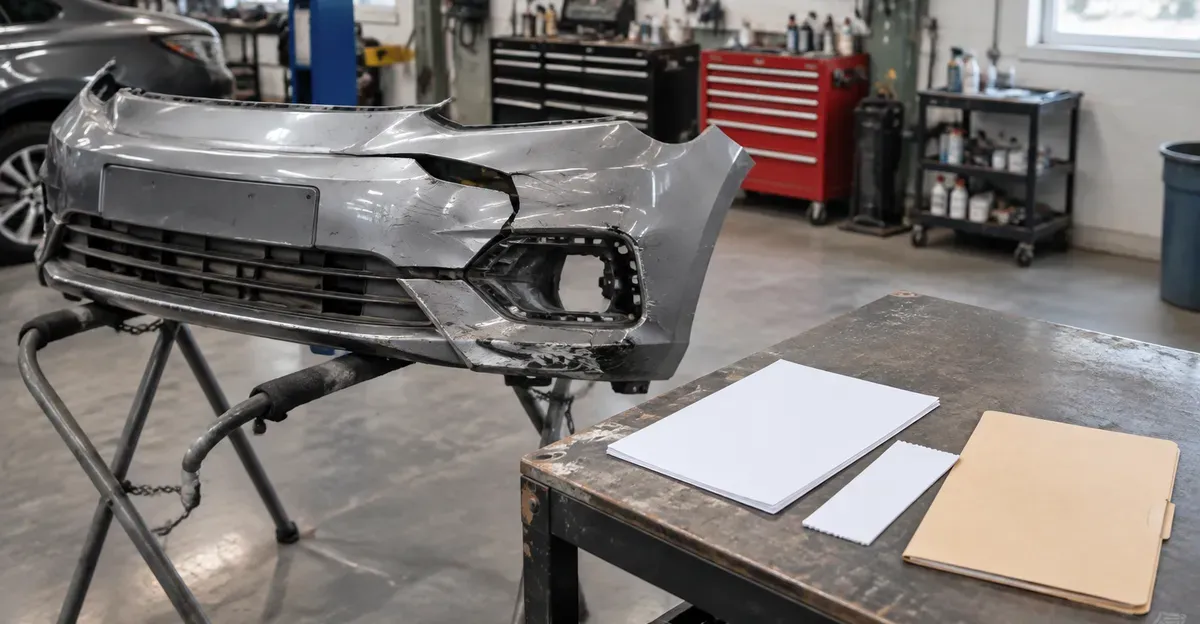
Do not authorize a shop to start until you have seen the estimate and you know which insurer is paying. The California guide says a qualified adjuster or appraiser usually inspects the car and writes an estimate from that inspection. If the shop later finds more damage, the shop contacts the insurer for approval, and the insurer may send someone to look again. For minor damage, the company may ask you for competing estimates instead of an inspection. You are the person who signs the authorization, and the guide says to do that only once you are satisfied with the final estimate and with the shop.
Who picks the shop is, again, not one national rule. California Insurance Code section 758.5, as the Department of Insurance explains it, says an insurer cannot require a specific shop. The company may recommend one if you ask, after it tells you in writing that you may choose. If you use the recommended shop, the company must restore the car to its pre-loss condition at no cost beyond what the policy already allows, and it must stand behind that shop's work. If you pick your own shop, the company pays the reasonable cost of a proper repair. It cannot cut that cost down to what its preferred shop would have charged. A written estimate is required before the work starts, and the invoice has to identify each part as used, reconditioned, rebuilt, aftermarket, or original-equipment. Aftermarket parts, in that explanation, have to be comparable in kind, quality, safety, fit, and performance. If you do not live in California, ask your state insurance department whether you have a similar right. Do not quote section 758.5 to an adjuster in another state.
Watch the payee line on the check. The NAIC says the bank's name is there because the car is collateral for the loan. The lender wants the money used on the car. California adds that a repair check may also name the shop. A total-loss check names you and the lienholder. None of that is the insurer keeping your money for fun. It is the loan.
Rental cars are where drivers spend money they cannot get back. Ask before you take the keys to a rental.
- Claim against the other driver's company: the NAIC says that company should pay the rental for a reasonable length of repair time.
- The car is a total loss, and the claim is against the other company: the NAIC says many companies pay a rental as a courtesy, they are not required to, and your right to a rental ends once a settlement has been offered.
- Claim against your own policy: the company pays a rental only if you bought rental reimbursement. The NAIC shopping tool says policies usually cap the dollars per day and the number of days. In some states the rental benefit sits inside collision and comprehensive instead of as a separate option. Ask which version you have.
Towing is similar. California's fair-claims summary says that unless the insurer gave you the name of a specific tow company before you used one, the insurer must pay reasonable towing. Your own policy may also have optional towing coverage. The NAIC lists towing and labor, or roadside assistance, as optional. A receipt from the tow truck belongs in the claim file either way.
A total loss is an economic decision, not a description of how the car looks. The NAIC says that when the repair would cost more than the car is worth, the insurer totals it and pays what the car was worth, rather than fixing it. The shopping tool uses the term actual cash value for that payment, minus the deductible if the claim is on your collision coverage. The consumer page is blunt about price guides: a company can pay you less than a Blue Book number. The Blue Book is only a guide. The company pays what the car was worth, as a used car, the moment before the crash. The adjuster looks at what similar cars, same make, model, and year, sell for in your area. You should look up those cars yourself. Bring the adjuster the listings, the mileage, and the options. A number you cannot point to is a wish.
If you want to keep the wreck, the NAIC says the insurer may take the title when it pays the claim, because it is entitled to the salvage. You can negotiate to buy the car back for an agreed salvage value. California's fair-claims summary adds that a total-loss settlement must include taxes and license and transfer fees, must reflect a comparable vehicle, and must use a salvage deduction that is fair and measurable if you keep the car. Those additions are California's. Ask whether your state requires them.
The loan does not vanish because the car did. The California guide says the borrower still owes the balance if the payment is less than the loan. The NAIC shopping tool describes guaranteed asset protection, also called gap or loan/lease coverage, as the product that can pay that difference, whether the crash was yours or someone else's. You buy it from a lender, a dealer, or an insurer. If you do not have it, the shortfall is yours. Confirm the payoff with the lender before you spend the settlement check.
Medical bills need their own folder, separate from the body shop. If your neck, back, or head hurts that night, or three days later, get it evaluated. Say that the pain followed the crash. Keep the discharge papers, the bills, and any note from an employer about missed work. The California guide requires that kind of documentation for a medical-payments claim or an uninsured-motorist claim. The NAIC shopping tool says some states require a minimum of medical-payments or personal-injury-protection coverage that pays medical expenses and lost wages regardless of who was responsible. Other states leave that coverage optional. Your declarations page is the list that matters. The other driver's insurer may pay injury bills, may pay only some of them, or may deny them. Nothing on this page makes that payment certain.
Keep these documents until the claim is closed and the deductible question is settled.
- Photos and your scene notes.
- The insurance cards and the plate numbers.
- The police report, or the record of your request for it.
- Every repair estimate, the authorization you signed, and the final invoice.
- Tow and rental receipts.
- Medical bills, visit notes, and wage records.
- A log of calls: who, when, and what they promised.
What to Say, What to Sign, and When to Ask a Lawyer
The expensive mistakes are sentences and signatures, not forgotten photos.
The California Department of Insurance tells drivers to avoid four things. Do not argue with the other driver or the passengers. Save the account for the police and your insurer. Do not sign a statement about fault. Do not promise to pay the other party's damage. Do not sign a paper because someone offered to cover your deductible. Those are claim-handling warnings from that department. They travel well as habits even where the statute is different, because a signed release is hard to undo and a recorded "it was my fault" is hard to explain.
When an adjuster calls, answer the factual questions. Refuse the casual ones. "Were you on your phone?" gets a yes or a no, not a story. "How fast were you going?" gets "I don't know" if you did not look at the speedometer. "Are you injured?" gets the truth of that moment, plus a note that you will report anything that shows up later. Do not speculate about the other driver's intentions. Do not apologize for the crash as a whole. You can be sorry someone is hurt without adopting fault.
A settlement check is an offer, not a deadline you must hit that afternoon. Ask, in writing, what the payment covers and which claims it closes. A check for the bumper is not automatically a check for a later back injury, and in some claim files one release covers both. If the letter does not say, do not sign it. Ask for the written explanation the NAIC says you can request when you disagree with an adjuster's decision. Compare the car payment with the estimate, or with the comparable cars you found. If the fight is only about the car's value, look for the appraisal clause before you hire anyone. If the fight is about a serious injury, or about a release you do not understand, that is a different conversation.
Lawyers enter in two directions, and they are not the same hire.
If the other driver sues you, notify your insurer immediately and send the summons. The NAIC says your liability coverage is what responds to that lawsuit. The company provides a lawyer. That lawyer's duty runs to you, even though the company pays the fee. The company pays a judgment or a settlement up to the policy limit. Above the limit, the NAIC says you pay the difference. The California guide adds a practical limit on your own talking: do not give statements or discuss the crash with anyone except a verified representative of your company. A lawsuit paper is not a form you answer on your own because it looks official.
If you are the one who was hurt and you are considering your own lawyer, the triggers are practical. Injuries that are still being treated. An insurer that denies liability and will not look at the photos. A release that waives claims you have not added up. A hit-and-run or an uninsured driver and a medical bill your coverage will not touch. Deadlines to sue, often called statutes of limitations, are set by the state and sometimes by the type of claim. This page does not quote one, because a wrong number is worse than none. A lawyer licensed where the claim will be filed can tell you the deadline that applies to you. Your state insurance department can tell you whether the insurer's handling of the claim, as opposed to the size of the offer, violates that state's rules. Those are different complaints.
Nothing here guarantees compensation, a rental, or a finding that the other driver is legally responsible. The other insurer can say no. Your own policy can exclude the loss. A state can split fault. The useful work is the sequence: people, a safe stop, photos, names, your own insurer, then the paper trail that lets someone other than the two drivers reconstruct the crash.
FAQ
What should I do immediately after a car accident that wasn't my fault?
Check for injuries and call 911 if anyone is hurt. Stop, and move the cars only if that move is safe. The California Department of Insurance then tells you to call the police, collect names and insurance information, and photograph the damage and the scene, including signals and anything that blocked a view. Call your own insurer the same day. Skip the argument about fault.
Should I call my insurance company if the accident wasn't my fault?
Yes. The NAIC says to call the number on your proof-of-insurance card as soon as possible. In a no-fault state, your own company is the one that pays injury losses regardless of fault, and you still claim vehicle damage from the at-fault driver's insurer. Filing on your own collision coverage means you pay your deductible even when you did not cause the crash. The company may later recover that deductible. It does not have to succeed.
What if the other driver admits fault?
Record the words, then still exchange information and take the photos. Do not sign a statement of fault or a release, even one that sounds friendly. The California guide warns that a signature given in exchange for a deductible payment can block your insurer's recovery. The admission helps. It does not close the claim.
What if the other driver has no insurance?
Tell the police and tell your insurer. The NAIC says a totaled car is paid by collision or by uninsured-motorist property damage if you bought it, with a deductible either way. Injuries may fall under uninsured-motorist bodily injury, which the NAIC describes as coverage for an at-fault uninsured driver or a hit-and-run. The limit is whatever your policy and your state actually provide.
What if the other driver leaves the scene?
Call the police, stay if you are safe, and do not chase. Write down any plate and a description of the car. The California guide says most policies set their own deadline for police notice on a hit-and-run. The NAIC describes uninsured-motorist coverage as the place a hit-and-run injury claim usually starts. Ask your insurer which coverage you have before you assume the car will be repaired.
Should I talk to the other driver's insurance company?
Give facts, not theories, and ask your own insurer whether they want to handle that call. A recorded statement is a normal part of an investigation. The California guide says an examination under oath can be requested. Do not guess, do not accept fault to be polite, and do not sign a release until you know what it ends. If the problem is how the claim is being handled, contact your state insurance department, which is the step the NAIC names.
How do I prove the other driver caused the accident?
Photographs, witness phone numbers, and the police report. The California guide tells you to photograph damage, traffic controls, and visual obstacles, and to identify passengers and witnesses. A report records what was said. It does not force the other insurer to accept liability. If the stories conflict, state law decides how shared fault affects payment. This page cannot apply that law to your intersection.
Can I get a rental car after an accident that wasn't my fault?
Only if a coverage says so, and only for the time that coverage allows. The NAIC says the other driver's insurer should pay a rental for a reasonable repair period when the claim is against that company. After a total loss, a rental is often a courtesy, not a requirement, and it ends when a settlement is offered. Your own rental reimbursement pays only if you bought it, up to the daily limit in the policy. Ask before you reserve the car.
What should I do if I start feeling pain days after the accident?
See a clinician and keep the paperwork. Medical bills, notes, and lost wages are what the California guide says you must provide for a medical-payments or uninsured-motorist claim. Tell your insurer as soon as you have the first visit on record. Whether the other driver's policy pays those bills depends on liability, on the limits, and on your state. A delay in symptoms is a reason to document, not a reason to guess a diagnosis at the scene.
When should I consider speaking with a lawyer?
Immediately, through your own insurer, if you are served with a lawsuit. The NAIC says the liability policy provides that defense, up to the point where a judgment exceeds your limits. Consider a lawyer of your own if injuries are serious, the insurer disputes liability, or you are being asked to sign a release you do not understand. Suit deadlines vary by state. No result on this page is promised.
What to do after a car accident not your fault still comes back to the same afternoon: injuries first, a safe stop, the insurance card, the photos, the police call, and your own insurer before the details blur. The payment, if there is one, follows the policy and the state. It does not follow the argument on the shoulder.