
By Automotive Research TeamUpdated 2026-09-28
What happens if you total a leased car
What happens if you total a leased car is a payoff problem, not a repair problem. The leasing company owns the title. Your insurer pays the car's actual cash value to that company, not a replacement check you can spend. Progressive's leased-car guidance is the sequence most U.S. insurers follow: the lease ends after the valuation is finished and the leasing company is paid actual cash value, minus any applicable deductible. If that payment is short of the early-termination payoff, the rest is still your bill unless a gap waiver or gap policy pays it. This page is general information for drivers in the United States. It is not legal, insurance, or tax advice for your contract, and it does not promise that any insurer, lessor, or gap provider will pay a given amount. Notice deadlines, total-loss rules, and gap products vary by state and by the papers you signed.
Do these things in order. People first. Then the two companies that control the money.
- Check for injuries. Call 911 if anyone is hurt, if you smell fuel, or if a car is smoking.
- Move the cars only if they still roll and the lane is more dangerous than the shoulder.
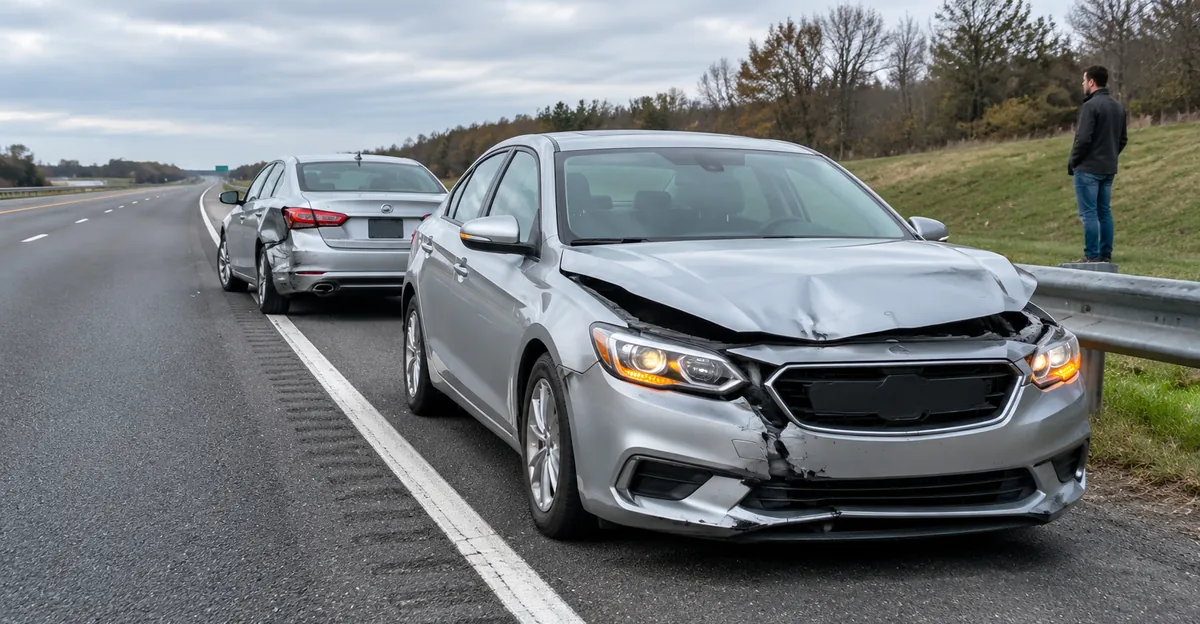
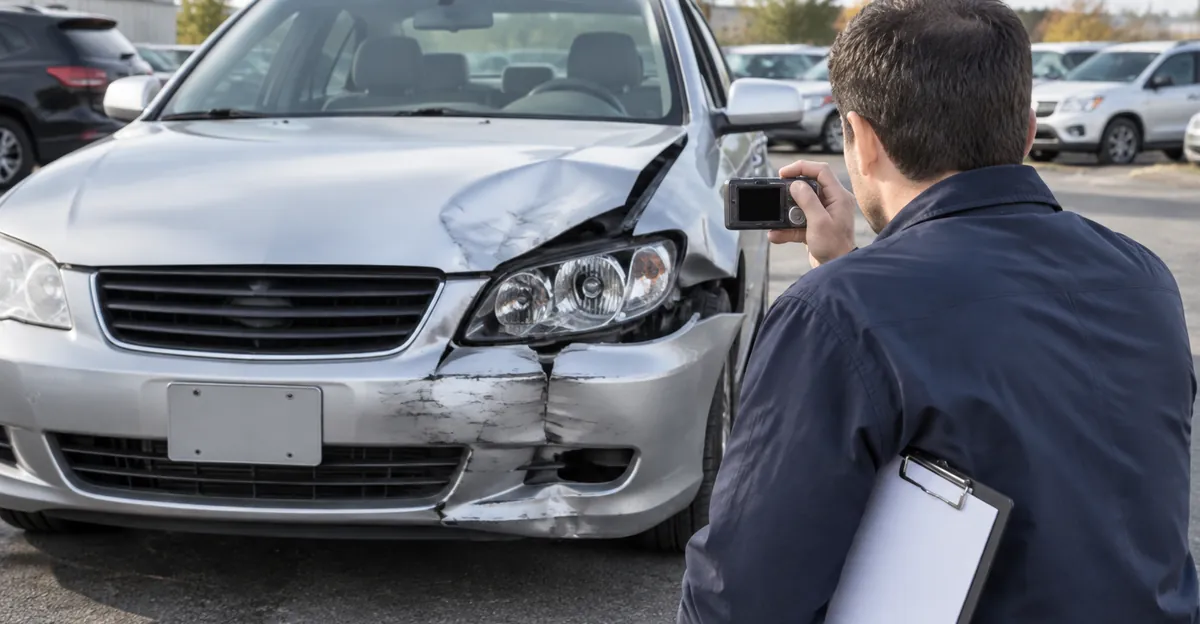
- Call the police. Photograph the damage, including a crushed front bumper, a bent wheel, broken lights, and a door that will not shut.
- Call the number on your insurance card the same day. Progressive says many policies require you to report any accident.
- Call the leasing company. Progressive notes that the lease itself may set the deadline for that notice. Read that paragraph before you assume a voicemail to the dealer is enough.
- Keep paying the lease until the lessor confirms, in writing, which dates are still due.
California Casualty's total-loss FAQ is blunt about the last item: continue the payments until the insurance company issues the check so your credit rating does not suffer.
What a total loss means on a leased car
A total loss is an insurer's decision that repairing the car is not worth the car. California Casualty says a vehicle is usually totaled when the damage meets or exceeds around 80 percent of its value, and that the insurer will check state laws because some states set their own damage threshold. That "around 80 percent" is an insurer's usual description, not a nationwide statute. Do not treat it as the rule in your state.
The same California Casualty page is useful for what a total loss is not. You do not need a dramatic crash. Fire, flood, a fallen tree, hail, vandalism, or theft can total the car. Collision coverage is the policy that pays when the car hits another vehicle, a tree, a rail, or another structure. Comprehensive coverage is the policy that pays for weather, fire, theft, vandalism, and animals. The Insurance Information Institute's auto-insurance basics page notes that a leasing company will likely require both collision and comprehensive, because those coverages pay the market value of the car, not the remaining lease balance.
Toyota Financial's GAP FAQ defines a total loss for its product in three ways: the physical-damage insurer declares a total loss; there is no physical-damage insurance, the car is stolen, and it is not recovered within thirty days; or there is no physical-damage insurance and the repair cost is greater than or equal to a NADA average retail cash value set by the program administrator. That definition is for Toyota Financial's GAP paperwork. Your lessor may use different words. The practical test for you is simpler. The adjuster says the car will not be repaired. Ask for that decision in writing.
The Federal Reserve's consumer leasing guide treats a totaled or stolen leased car as an involuntary early termination. Early termination, in that guide, means the lease ends before the scheduled date for any reason, voluntary or involuntary. You remain responsible for the early-termination charges the lease describes, unless gap coverage pays some or all of the deficiency. Ending a lease early is not the same as finishing it at term. The Fed says the early-termination charge is typically the remaining lease balance minus the amount credited for the vehicle, and that the credited amount is usually a wholesale price or a wholesale value from an appraisal. Insurance actual cash value is a different number. Do not assume they match.
A crushed bumper that looks cheap can still total a late-model lease. Structural repair, airbag replacement, and related parts add up faster than the cosmetic damage suggests. California Casualty makes that point for flood cars and for collision repairs that cost more than they look. The adjuster, not the photo on your phone, decides.
Who gets the insurance check
The leasing company gets paid first. Progressive says that in a total loss, the insurer pays the leasing company the car's actual cash value, minus any applicable deductible, and the lease then ends. California Casualty says the same thing in fewer words: the insurer sends the cash-value check to your lender, and you are responsible for any additional charges.
Two numbers decide whether you walk away or you get a bill.
Actual cash value is what the car was worth on the open market immediately before the loss, based on age, condition, mileage, options, and resale value. California Casualty lists those factors. It is not the sticker price. It is not the remaining stream of monthly payments.
Lease payoff is the early-termination amount the lessor claims is due to close the account. The Federal Reserve describes that amount as the early payoff, not including past-due amounts in the gap calculation. The payoff can include remaining scheduled amounts, early-termination charges, disposal or transfer fees, and taxes the lease lists. Ask for a written payoff statement dated after the loss. A phone number you heard last month is not the number the lessor will use on settlement day.
If actual cash value, after the deductible, is less than the payoff, the shortfall is the gap. Progressive says you need to pay that difference unless you have gap insurance. If the insurance payout is more than what you owe the leasing company, Progressive says the balance should be paid to you. Get both figures in writing before you celebrate a surplus. The named payee on the check, the lease language, and your state's rules still control who can endorse it.
Use the row that matches. Do not skip the payoff request because the crash felt like the other driver's fault.
| If this happens | Likely result | First check |
|---|---|---|
| Insurer totals the car | Lease ends after the lessor is paid actual cash value minus any deductible | Get the total-loss letter and the itemized valuation |
| Actual cash value is below the lease payoff | You owe the difference unless gap coverage applies | Request a written payoff and the gap claim instructions |
| Actual cash value is above the lease payoff | Progressive says the extra should come to you | Confirm the payee on the check and the lessor's surplus procedure |
| You were not at fault | The other insurer's property-damage liability may pay the car; you may still use your own collision | Ask which company is paying the lessor, and whether a deductible is being collected |
| The other driver has no insurance, or not enough | California Casualty points to uninsured or underinsured motorist property damage, then your own collision | Confirm those coverages on your declarations page |
| You miss a lease payment while the claim is open | California Casualty warns that credit can take the hit | Keep paying until the lessor confirms the account is current |
| Gap coverage is a lease waiver | The lessor or its administrator waives an eligible deficiency | File the documents that waiver lists, on that waiver's deadline |
| Gap coverage is an auto-policy endorsement | Progressive's loan/lease payoff example is capped and excludes some lease charges | Read the endorsement limit, not the sales brochure |
What GAP covers, and what it leaves unpaid
Gap coverage is the product built for this exact shortfall. The Insurance Information Institute's basics page says that if the car is totaled or stolen, there may be a gap between what you owe and what collision or comprehensive will pay, and that for leased vehicles the coverage is usually rolled into the lease payments. Progressive says many leases include it under a different label, such as a "waiver of responsibility in case of loss." Toyota Financial describes its dealer product as Guaranteed Auto Protection that may waive or pay the deficiency between the amount still due on the finance or lease contract and the auto insurance settlement, minus certain fees and charges.
"Usually included" is not the same as "already claimed." Open the lease. Look for gap, GAP, guaranteed asset protection, or a deficiency-balance waiver. If you bought a separate endorsement from your auto insurer, that is a different contract with different limits. Progressive's loan/lease payoff coverage, in most states where Progressive offers it, is similar to gap coverage with two limits that page names: the payout is limited to no more than 25 percent of the vehicle's value, and the exact limit varies by state; it also does not cover additional loan or lease charges such as finance charges and excess mileage. Do not treat that endorsement as a blank check for every line on the lessor's bill.
The Federal Reserve's gap guide is the clearest list of what gap is not. Gap coverage is designed to cover the gap amount of your early-termination liability if the vehicle is stolen or totaled. It does not cover the capitalized cost reduction or initial fees you already paid. It does not cover past-due amounts you owe under the lease. It does not cover other amounts you are responsible for, such as personal property taxes or unpaid parking tickets. In most cases, it does not cover your insurance deductible, insurance-policy deductions for past-due premiums, or excess wear and use.
The Fed walks through an example so the deductible does not hide. Assume a $3,000 capitalized cost reduction, a $14,000 lease payoff, a $12,000 insured value, and a $500 deductible, with no other deductions. The gap amount is $2,000. Insurance proceeds to the lessor are $11,500. With gap coverage, you still pay the $500 deductible to the lessor. Without gap coverage, you pay $2,500. Those figures are the Federal Reserve's illustration, not a quote for your car.
Toyota Financial's current GAP page is stricter on some fees and more generous on the deductible than the Fed's generic "most cases" line. Its footnotes say the remaining balance it may pay is less any delinquent payments, amounts due to pre-existing damage, taxes, auto insurance deductibles over $1,000 if applicable, and past-due charges. In other words, that product may cover up to $1,000 of the deductible where state law allows, and it still will not pick up late payments or old damage. Type and availability vary by state. Toyota Financial also notes that GAP may not be available on some finance and lease contracts, and that it is not available for lease customers who already have a deficiency-balance waiver. If your lease already waives the deficiency, do not buy a second product for the same hole.
A low insurance settlement can shrink a GAP payment. Toyota Financial's cash-value FAQ says that for a GAP claim, cash value starts with the physical-damage insurer's pre-loss value, then adds back amounts subtracted for pre-existing damage, condition adjustments, storage, towing, recovery fees, salvage, and other deductions, then subtracts the physical-damage deductible up to $1,000 if applicable. If towing and storage were taken out of your settlement, GAP may treat those dollars as if they were still part of the car's value. That reduces the deficiency GAP calculates. The yard bill can remain yours. If Toyota Financial's administrator shows that the insurer failed to pay a fair actual cash value against a NADA or equivalent figure, that FAQ says you may be required to go back to the insurer and ask for a higher payment before GAP finishes. File the auto claim completely. Do not expect GAP to paper over a thin valuation.
Leases that include gap coverage often require you to keep the required auto insurance in force and not be in default at the time of the loss. The Federal Reserve states that requirement. A lapsed collision policy, or a stack of unpaid lease bills, can be the reason a waiver is denied. Ask the lessor, in one call, whether the waiver is still in force and what documents it wants: the lease, the police report if one exists, the total-loss letter, the valuation, the insurance check copy, and a payment history.
Progressive's claim step is the same idea in insurer language. If the leased car is declared a total loss, contact the gap provider with copies of the lease, the gap contract, police reports, and the other paperwork that provider lists, then follow those instructions. The gap claim is a second claim. It does not start itself.
If you were not at fault
Fault does not change who owns the car. It can change which insurer writes the check.
California Casualty's total-loss FAQ says that if you still owe after the cash-value payment and the accident was not your fault, contact the other driver's insurance company to cover that additional payment. That is a liability claim against the other driver's property-damage coverage, not a bonus check you pocket. The leasing company still needs to be paid. Ask the other insurer whether it will pay the lessor directly, whether the check will be jointly payable, and whether it is collecting a deductible from you. Progressive still describes the total-loss mechanics as actual cash value minus any applicable deductible paid to the leasing company. Do not assume a not-at-fault crash deletes the deductible until a claims handler says so, in writing, for this loss.
If the other driver has no insurance, or not enough insurance, California Casualty's path is uninsured or underinsured motorist property damage, then your own collision coverage. It describes those uninsured coverages as optional in the majority of states. In some states, it says, you are not allowed to carry collision and uninsured-motorist property damage at the same time. Uninsured-motorist property damage can also have a cap. Read your declarations page. A leased car without collision, in a state where the lessor required it, is a contract problem as well as a coverage problem.
Your own collision coverage can still be the faster way to pay the lessor while the companies argue about fault. That is a timing choice, not a confession. Tell your insurer you want the car paid so the lease does not age into collections. Ask whether they will pursue the other company afterward. This page cannot promise they will recover your deductible.
Injuries are a separate claim. The Insurance Information Institute's basics page distinguishes bodily-injury liability, medical payments or personal injury protection, and uninsured-motorist coverage from the collision check that pays for the car. A closed total-loss on the lease does not close a medical claim. Keep the medical records. Do not sign a broad release on the property-damage payment until you know which bills that signature ends.
State fault rules are not identical. Some states reduce recovery by a share of fault. Some states use no-fault rules for injury bills while vehicle damage still follows liability. This page will not assign you a percentage. Ask the adjuster which state's rule they are applying, and verify it if the dollars are large.
Keep making lease payments until the account is closed
The dangerous week is the one after the adjuster says "totaled" and before the lessor posts the check. California Casualty's advice is to keep making the lease payments until the insurance company issues the check. That is the conservative move for credit. A missed payment during a claim is still a missed payment on the lessor's reporting.
Do not stop paying because the car is in a salvage yard. Do not stop paying because a claims app shows "total loss." Do not stop paying because someone at the dealer said the lease is over. Ask the leasing company three questions and get the answers in writing:
- What is the payoff amount dated after the loss, with each fee listed?
- Which monthly due dates do you still expect me to pay?
- When will you stop drafting the account, and will you refund a payment that overlaps the insurance check?
If an automatic debit will hit after the loss, leave enough money in the account until the lessor turns it off. Fighting a returned payment costs more than one extra month that later has to be reconciled.
The Federal Reserve's early-termination section is the reason this paperwork is messy. Involuntary termination still leaves you responsible for the early-termination charges the lease describes, plus, in virtually all cases, other amounts owed such as late charges, past-due monthly payments, and parking tickets. Some lessors add a fixed amount for their costs of early termination. Gap coverage, when it applies, is aimed at the deficiency between payoff and insured value. It is not a wand that erases every add-on line. Compare the payoff statement to the waiver. Highlight any line the waiver excludes. Call before you pay a mystery fee.
Credit follows the lease account, not the crushed car. If the remaining balance is not paid, the lessor can report the delinquency. Paying the insurance deductible, filing the gap claim, and keeping the account current are three different jobs. Do them in parallel.
If the actual cash value looks too low, or too high
A thin valuation raises the gap. A high valuation can create a surplus. Either way, the first offer is not always the last number.
If the actual cash value looks low, ask for the valuation report. You want the comparable vehicles, the mileage adjustments, the condition adjustments, and the options the insurer used. Harris Personal Injury's California explainer on totaled leases says you can request that report and submit maintenance records, pre-crash photos, records of factory or aftermarket features, and comparable-vehicle listings from your local market. California's total-loss regulations, as that page describes them, set standards for comparable-vehicle valuations. Other states use different rules. Toyota Financial's GAP FAQ, as noted above, may require you to go back to the physical-damage insurer for a higher actual cash value if the administrator's NADA or equivalent figure is higher. That is extra work. It is also how you keep GAP from treating a cheap settlement as if it were the car's true value.
If the actual cash value looks high, Progressive's rule is the one to test against your lease: the extra should be paid to you. Confirm it. A jointly payable check that names you and the lessor cannot be deposited until both endorse it. A check payable only to the lessor will be applied to the payoff first. Ask what happens to any remainder, in writing, before you assume it will be mailed.
Do not keep a totaled leased car unless the lessor and the insurer both agree you can. California Casualty tells owners who want to keep a totaled car that the settlement will be less, and that they must talk to the agent about whether the car can stay on the policy. On a lease, you are not the titleholder. The lessor decides whether a salvage retain is even on the table. For most lessees, the car goes to salvage and the account is closed with money, not with a rebuilt title.
Towing, storage, and personal items are easy to forget and hard to get back. California Casualty's process notes that totaled vehicles often go to an impound lot or tow yard, then to a salvage auction, and that you should remove important items right after the accident because the car may not stay in your possession. Gap coverage does not pay for a laptop under the seat. Get into the car while the yard will still let you, with the claim number in hand.
After the lease is closed
Once the lessor applies the insurance payment, any eligible gap payment, and any amount you still had to send, the lease should close. Ask for a paid-in-full or account-closed letter. Keep it with the police report and the settlement. If a collection notice arrives later, that letter is the document you send.
You can shop for another car. A total loss on this lease is not a nationwide ban on a future lease or a future loan. Credit, income, and the next lessor's rules decide that application. This page does not quote approval odds.
Sales tax is the replacement cost people miss. The Federal Reserve's gap guide says that in states where sales and use tax is paid at lease inception, gap coverage does not reimburse the tax you paid unless it is part of the adjusted capitalized cost. In those states, you incur initial sales tax again when you lease a replacement vehicle. That is a state-tax issue. It is not a claims-adjuster issue. Ask the next dealer which taxes are due up front in your state. Do not expect the last gap waiver to refund last year's tax.
You will also buy insurance again. Collision and comprehensive will be required on the new lease for the same reason the Insurance Information Institute gives on the last one: the lessor has a monetary stake in the car. Confirm whether the new lease includes a gap waiver before you add a policy endorsement. Toyota Financial's product is sold at the dealership at the time you finance or lease, and its page says it is optional, cancelable subject to the agreement, and not required to obtain credit. Optional still means you either have it or you do not when the next crash happens.
A rental car, if you need one, is a coverage question. Ask your own insurer whether rental reimbursement applies after a total loss, for how many days, and at what daily limit. Do not rent a car on the assumption that the other driver's company will keep paying after it has offered a settlement on the leased vehicle. Get the end date in writing.
If someone was hurt, the injury claim can continue after the car is gone. Deadlines to file a lawsuit vary by state. This page is not a substitute for a lawyer licensed in the state that applies, and it does not promise a payment.
FAQ
If you total a leased car what happens
Progressive says the lease ends after the insurer completes the valuation and pays the leasing company actual cash value, minus any applicable deductible. If that payment is short of the payoff, you owe the difference unless gap coverage applies. California Casualty says keep making lease payments until the insurance check is issued.
Do I still have to make monthly lease payments after a total loss?
Yes, until the lessor tells you the account is current and the draft is turned off. California Casualty's reason is credit. A total-loss status in a claims app is not a payment holiday.
Does GAP cover my insurance deductible?
The Federal Reserve says that in most cases gap coverage does not cover the deductible. Toyota Financial's GAP product may cover up to $1,000 of the deductible where allowed, and still excludes delinquent payments, pre-existing damage, taxes, and past-due charges. Read the document you signed.
Who gets leftover insurance money if the car is worth more than the lease payoff?
Progressive says the extra should be paid to you. Confirm the payee, the written payoff, and the lessor's surplus procedure before you count on a check.
Can I lease another car after this one is totaled?
The closed lease does not, by itself, stop a later lease. The Federal Reserve notes that gap coverage generally will not refund sales tax paid at inception, and that you incur that tax again on a replacement lease in those states.
What happens if you total a leased car still comes down to the same three files: the total-loss letter, the lessor's payoff, and the gap waiver or endorsement. Pay the people in the cars first. Call both companies the same day. Keep the lease current until the lessor posts the settlement. Then match every leftover fee to a sentence in the contract that actually covers it.