
By Automotive Research TeamUpdated 2026-09-28
What Does a Car Accident Lawyer Do
What does a car accident lawyer do after a crash is not a courtroom speech. It is a practical job: prove who caused the collision, document what the crash cost you, deal with insurance adjusters who are paid to limit payouts, and escalate to a lawsuit only when the claim path stalls. Nolo's consumer guide on how an attorney can help with a car accident claim puts the same work in plain steps—communicate with the other driver's insurer, obtain evidence of fault, organize medical records, negotiate liens and settlement, and file suit when that looks like the best strategy. This page is general information for drivers in the United States. It is not legal advice for your crash, and it does not promise that any insurer or court will pay a given bill. Fault rules, insurance coverages, and filing deadlines change by state and by policy.
If you still need the roadside checklist—photos, police, and calling your own insurer—start with what to do after a car accident not your fault. This article picks up where that checklist leaves the legal and claim work that a car accident lawyer actually handles.
Day-to-Day Work After You Hire Counsel
A car accident lawyer is a personal injury attorney who focuses on motor vehicle collisions. HawkLaw describes the role as representing people hurt when another driver's negligence, a defective part, or another dangerous condition caused the crash, with heavy emphasis on insurance negotiation rather than general practice work. Spaulding Injury Law draws a similar line: car accident lawyers concentrate on traffic laws, policy language, reconstruction, and vehicle damage assessment in a way a broad personal injury practice may not.
After you sign a fee agreement, the day-to-day work usually follows a sequence. The first meeting is a case evaluation. The lawyer reviews how the crash happened, who was injured, what treatment you have already received, and whether the claim looks strong enough for the firm to invest time and case costs. Most firms that take injury cases offer that first conversation without an upfront fee, but you should confirm that before you schedule.
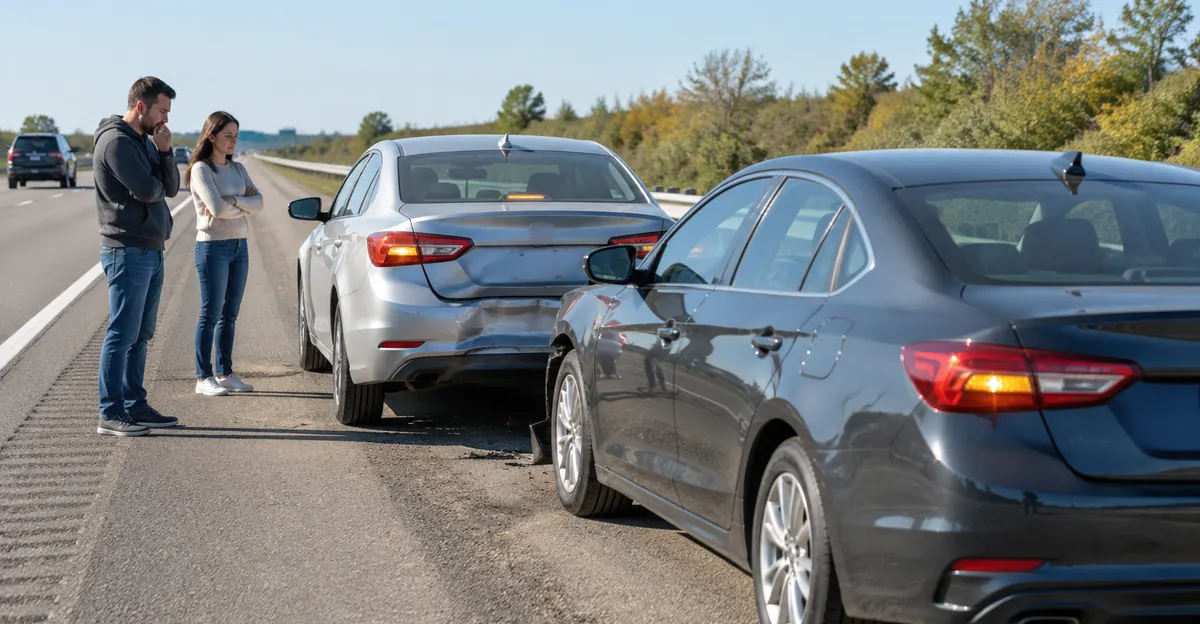
Then the file gets built. The lawyer requests the police or crash report, interviews witnesses while memories are fresh, looks for traffic or business camera footage, and may visit the scene. Medical records and bills are requested from every provider. Wage loss is documented with employer letters or pay stubs. Property damage is tracked with repair estimates or total-loss valuations for the bumper, body panels, lights, and wheels that took the hit. When the facts are complex, the firm may hire an accident reconstruction expert or a medical expert who can speak to causation and future care.
When the evidence and damages are far enough along, the lawyer drafts a demand letter. That letter states the liability theory, attaches the medical and economic proof, and asks for a specific dollar amount. Negotiation follows. If the insurer will not move to a number the lawyer and client can accept, the next tools are a lawsuit, discovery, mediation, and—rarely—trial. Mayfield Law Firm's step-by-step guide stresses that most cases still settle before a jury hears them, but preparation for trial is what gives the demand weight.
| Stage | What the lawyer typically does | What you typically do |
|---|---|---|
| Intake | Assess liability, coverage, and damages; explain fees | Bring photos, police info, insurance cards, medical list |
| Investigation | Collect reports, witnesses, records, experts if needed | Follow treatment; keep receipts; avoid recorded statements to the other insurer unless advised |
| Demand | Value the claim; send a supported demand package | Review the demand with counsel before it goes out |
| Negotiation | Counter low offers; handle adjuster calls | Decide whether to accept, reject, or litigate |
| Lawsuit | File, serve, discover, mediate, try if required | Appear for deposition or trial if the case goes that far |
That table is the job description in one view. The rest of this page explains the decisions each row creates for an ordinary driver.
Investigation, Fault, and Damages
Proving fault is not the same as winning an argument at the curb. Nolo notes that a good lawyer often returns to the scene personally, obtains every available report, and speaks with investigating officers and witnesses. Spaulding lists the common evidence set in more detail: police reports, scene and damage photos, witness contacts, medical records and bills, repair estimates, traffic or dashcam video, and—when warranted—expert reconstruction or cell-phone records that show distraction.
Fault is also a state-law problem. Some states use comparative negligence rules that reduce recovery by your share of fault. Some bar recovery once your share of fault crosses a set percentage. Spaulding's process guide notes that comparative-fault defenses and state apportionment rules can cut or bar recovery when the insurer argues you share blame—the percentages and bars differ by state. Never treat another driver's roadside apology as a finished liability decision. Insurers and courts decide claims from evidence.
Damages are the second half of the case. Economic damages include emergency care, imaging, surgery, therapy, prescriptions, future medical needs, lost wages, reduced earning capacity, and property repair or total-loss value. Non-economic damages cover pain, suffering, and loss of enjoyment of life when the injury changes daily living. HawkLaw and Mayfield both warn that early settlement offers often price only the bills already in hand and ignore future care. That is why many lawyers wait until you reach a point of stability—sometimes called maximum medical improvement—before sending a full demand. Waiting is not delay for its own sake. It is how the demand number stays connected to the medical reality.
Medical documentation is harder than it looks. Nolo describes the practical problem: providers are slow, procedures for record requests are opaque, and charts often omit the "magic words" about causation, prognosis, and disability that a claim needs. Lawyers and paralegals commonly re-request the same records and ask treating doctors for clarifying letters. That work is invisible to the client until a claim stalls because a key note is missing.
Lien holders sit on many injury claims. If a health, disability, or workers' compensation insurer paid bills related to the crash, it may assert a lien against the settlement. Nolo explains that a lien holder gets paid from the recovery before you do, and that a skilled lawyer often negotiates those liens down so more of the settlement reaches you. Ignoring liens does not make them disappear. It can leave you surprised when the settlement check is smaller than the headline number.
Insurance Adjusters, Demand Letters, and Early Offers
Once you hire counsel, the lawyer usually opens a direct line to the other driver's adjuster. Nolo calls that relationship critical because the adjuster controls the pocketbook on a third-party claim. Mayfield and HawkLaw both describe the flip side: adjusters are trained to close claims quickly and cheaply. They may ask for a recorded statement, look for inconsistencies, or float a fast offer before you know whether soft-tissue pain will resolve or turn into months of therapy.
A recorded statement is not a casual chat. Anything you say about speed, distraction, prior injuries, or how you feel "fine now" can reappear later as an admission. Mayfield's guide states that once you have counsel, you are typically no longer required to speak directly with the opposing insurer; communications route through the lawyer. Your own insurer is different. Most policies still require you to report the crash and cooperate with your company. The California Department of Insurance consumer materials referenced in our not-at-fault guide tell drivers to notify their own insurer promptly even when they believe the other driver caused the crash. Cooperation with your carrier is not the same as volunteering a free narrative to the other driver's adjuster.
The demand letter is the formal start of serious settlement talks. Spaulding outlines a common package: complete medical documentation, a calculation of economic losses, an assessment of non-economic harm, supporting liability evidence, a stated demand amount, and a response deadline. Mayfield's step-by-step guide says attorneys typically send that demand after treatment is complete or the condition stabilizes, then negotiate from a full valuation. Rushing a demand to match an adjuster's calendar can lock in a number that excludes a surgery your doctor has not yet scheduled.
| Adjuster move | Why it happens | Typical lawyer response |
|---|---|---|
| Early low offer | Close the file before future care is known | Hold for records; counter with documented valuation |
| Request for recorded statement | Lock in words that limit liability or damages | Decline or tightly control through counsel |
| Comparative fault argument | Reduce or bar payout under state rules | Rebuild with reports, witnesses, reconstruction |
| Delay or silence | Pressure you to accept less | Document deadlines; escalate to suit when needed |
| Quick release | End all future claims for that crash | Review every line before you sign anything |
Signing a release ends the claim for the injuries it covers. If later MRI findings show a herniated disc that the first X-rays missed, a broad release can block a second try. That is one reason Mayfield warns that accepting a quick settlement permanently gives up the right to seek more later. Read every release with counsel before you sign.
When You May Handle the Claim Yourself — and When You Should Call
Not every scrape needs a personal injury lawyer. Nolo is explicit: if you were not hurt badly, you can gather documents, and you are willing to negotiate, you can handle the claim yourself. Property-damage-only claims—dents to a bumper, a cracked lamp, a bent wheel—often stay inside insurance channels without courtroom work. You still photograph the damage, exchange information, and open a claim. You still avoid admitting fault for the sake of politeness.
The calculus changes when injuries are involved. Nolo's rule of thumb is practical: if walking away with no compensation would have a huge financial or emotional impact, at least get a case evaluation. HawkLaw lists concrete triggers: injuries, a child injured in the crash, a truck or commercial vehicle, a pedestrian or cyclist struck, disputed fault, drunk or reckless driving, a fatality, a defective part, or a rideshare vehicle. Mayfield adds the insurer's early pressure and the risk of missing future medical costs. Spaulding emphasizes serious injuries that need ongoing care, permanent disability, wrongful death, multi-vehicle pileups, and uninsured-motorist fights.
There is also a middle path. Nolo says that people who start on their own should still call a lawyer when the insurer refuses to accept fault, denies coverage, will not offer anything close to a reasonable value, or simply ignores the claim. Hitting that wall is information. It means the DIY path has stopped producing progress.
Defense counsel from your own insurer is a different role. If you are sued, the National Association of Insurance Commissioners materials summarized in our insurance guides explain that a liability policy typically provides a defense lawyer for claims against you, while you can still owe amounts above the policy limit. That defense lawyer protects the insured under the policy. A plaintiff's car accident lawyer you hire for your own injury claim against another driver is a separate retainer. Do not assume the lawyer assigned to defend you is also negotiating your injury claim against the other side.
| Situation | DIY often workable | Lawyer evaluation usually wise |
|---|---|---|
| Property damage only, clear fault, cooperative insurer | Yes | Optional if disputes appear |
| Minor soft-tissue injury, short treatment, clear liability | Sometimes | Yes if offers stall or you miss work |
| Hospital stay, surgery, long therapy, or time off work | Rarely | Yes |
| Fault disputed or shared | Risky | Yes |
| Commercial vehicle, rideshare, or multiple defendants | Rarely | Yes |
| Uninsured or underinsured other driver | Risky | Yes |
| You are sued | No for the lawsuit defense | Use the defense counsel your policy provides; hire your own counsel for questions about excess exposure |
For the immediate scene steps that come before any of these choices, use what to do after a car accident not your fault. For why states require auto liability coverage in the first place, see why is car insurance required.
Contingency Fees, Case Costs, and Medical Liens
Most car accident lawyers who represent injured drivers charge a contingency fee. Cornell Law School's Legal Information Institute defines a contingent fee as compensation paid as a percentage of the client's monetary award rather than an hourly rate, and notes that around 33 percent of the recovery is typical in personal injury cases. ConsumerShield reports a common market range of roughly 25 to 40 percent, with percentages often rising if the case is filed and tried. Nolo confirms the same basic model: the lawyer is paid only if you recover, and the fee is an agreed percentage of that recovery.
The written agreement matters as much as the percentage. Cornell's Wex entry on contingent fees points to Model Rules of Professional Conduct 1.5(c): the contingency fee agreement must be in writing, signed by the client, state how the fee is determined, and clearly notify you of expenses you may still owe. At the end of the matter, the lawyer must provide a written statement of the outcome and the computation of your remittance. Ask, before you sign, whether the percentage is taken from the gross settlement or from the net after case costs. Ask who advances filing fees, expert invoices, deposition costs, and medical-record fees, and whether you repay those costs if the case loses. ConsumerShield notes that some costs may still be your responsibility even when attorney fees are contingent.
A simple example shows why the order of deductions matters. Suppose a settlement is $90,000, case costs are $6,000, medical liens are $12,000, and the contingency fee is one-third of the gross. Fee first leaves a different take-home than costs-first. Exact arithmetic belongs in your fee agreement, not in a website example. The point is to ask for a sample closing statement before you commit.
Firms also decline cases. Nolo reminds readers that a declined case is not automatically a weak case. Workload, resources, damages that are too small relative to costs, or coverage limits that cannot support the investment all drive that decision. Getting a second opinion from another firm is normal.
Lawsuits, Discovery, and How Long a Case Can Take
A lawsuit is not a failure of the claim. It is the tool Nolo describes when the insurance process will not produce a fair result. Filing starts a civil case. The complaint states who is being sued, why they are liable, and what damages are sought. Service of process notifies the defendants. Deadlines to file suit—statutes of limitations—are set by state law and can be short. Spaulding's Georgia-focused materials use a two-year personal injury period as an example; your state may use a different number. Do not treat a blog's state example as your deadline. Ask a lawyer licensed where the crash occurred or where suit must be filed.
Discovery follows. Both sides exchange documents, answer written questions, and take depositions under oath. Mayfield notes that many cases settle during or after discovery because the evidence hardens and the insurer's position becomes harder to defend. Mediation is common. A neutral facilitator pushes both sides toward a number without a jury verdict. Trial remains available when settlement fails. Opening statements, witness examination, exhibits, and closing arguments are the lawyer's work in court. Post-trial motions and appeals exist but are outside the scope of most consumer crashes that settle.
Timeline expectations should stay honest. Investigation and treatment can take months before a demand. Negotiation can take weeks or months after the demand. Litigation can add many more months. ConsumerShield and firm guides agree that free consultations are common, but they cannot predict your calendar. What you can control is early documentation: photos, medical follow-through, and not signing away rights under pressure.
Low Limits, Uninsured Drivers, and Your Own Policy
Policy limits cap what the other driver's liability insurer will pay, even when your medical bills are higher. A lawyer's job in a low-limits case includes identifying every available coverage: the at-fault driver's liability limits, any umbrella policy, employer coverage if the driver was working, and your own uninsured or underinsured motorist (UM/UIM) coverage. Spaulding lists uninsured-motorist situations as a reason to involve counsel because the claim may shift onto your own policy. Whether UM/UIM applies, and at what limits, is in your declarations page and in your state's rules.
No-fault and personal-injury-protection (PIP) states add another layer. In those states, your own insurer may pay certain injury benefits regardless of fault, while vehicle damage and some liability claims still run through at-fault channels. The split is state-specific. A car accident lawyer licensed in that state can map which bills go to which carrier. Treating every state like a pure fault state is a common DIY mistake.
Your own insurer remains in the picture even when you hire a plaintiff's lawyer. You still report the crash. You still answer reasonable questions about the vehicle and the scene. You still comply with policy conditions about rental coverage, collision deductibles, and cooperation. The lawyer's role is to keep those duties from becoming free discovery for the other side's adjuster.
When the other driver flees or has no insurance, the claim path looks more like the hit-and-run and uninsured sections of what to do after a car accident not your fault: call the police, notify your insurer, and document everything you can. The lawyer then works the UM claim and any other liable parties the investigation finds.
Choosing a Lawyer and Preparing for the First Meeting
Hiring counsel is a two-way decision. Nolo lists experience with car accident cases, trial ability, who will actually handle the file day to day, and a clear explanation of fees and costs as core questions. HawkLaw adds communication habits, whether the firm regularly tries cases, and checking that the attorney's license is in good standing with the state bar. ConsumerShield advises consulting more than one firm when you can, because a single decline is not a verdict on your claim.
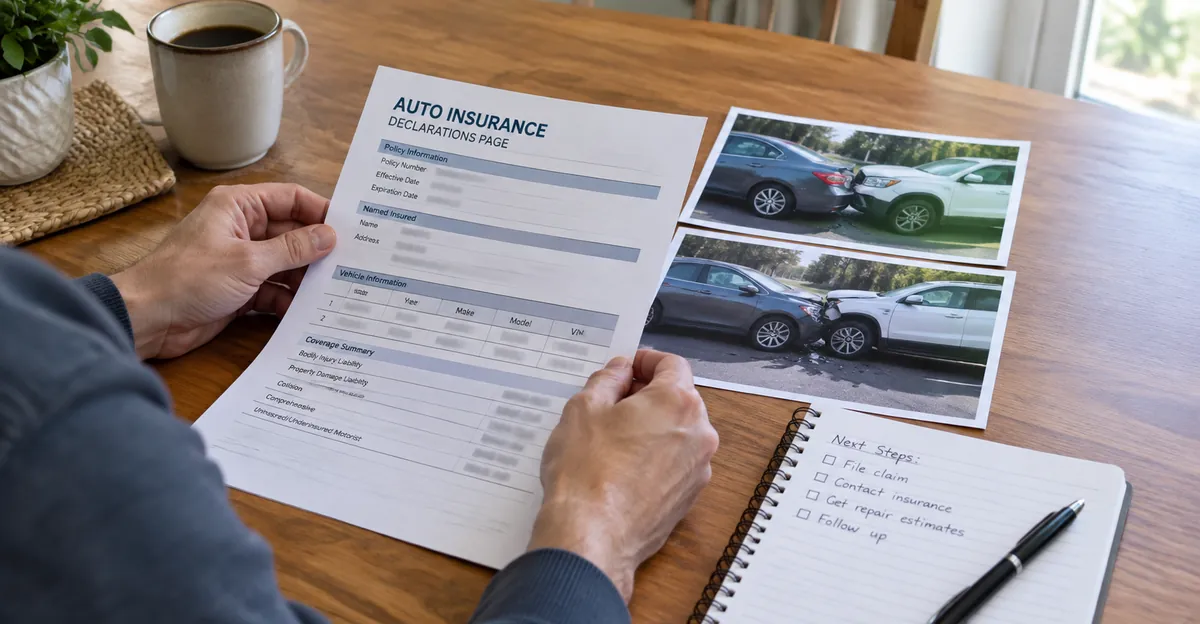
Bring what you already have. Photos of the cars and the intersection. The other driver's insurance information and plate. The police report number or a copy if you have it. A list of providers, medications, and missed work days. Your own insurance card and declarations page. Any letters or emails from adjusters. A written timeline of the crash and your symptoms helps more than a polished story.
Ask questions that force specifics:
- How many car accident cases like mine have you handled in the last two years?
- Who will be my day-to-day contact—partner, associate, or paralegal?
- What percentage is the contingency fee at settlement, after suit, and after trial?
- Who pays case costs if we lose?
- How often will I get updates, and how do I reach you between them?
- What is your plan if the other driver's limits are too low?
- Do you see any statute-of-limitations or notice deadline that is already close?
Comfort matters. You will share medical details and financial stress. If the lawyer cannot explain the plan in plain English, keep looking. Nolo also notes that you will sign a fee agreement and medical releases so counsel can obtain records. Read those documents. Ask what happens if you fire the firm mid-case, including how earned fees and costs are handled under the contract and under your state's rules.

Practical Next Steps
A car accident lawyer investigates fault, documents damages, manages insurer communications, values and demands a settlement, and litigates when necessary. Contingency fees make that help available without an hourly retainer for many injury claims, but written fee terms, case costs, and medical liens still shape what you take home. Cornell's Legal Information Institute, Nolo's attorney-help guide, and the firm process pages from HawkLaw, Mayfield, and Spaulding all describe that arc from intake to resolution. Your state's fault rules, insurance statutes, and filing deadlines still control the details.
Do these things in order if you are deciding whether to hire counsel now.
- Finish the safety and documentation steps at the scene, then call your own insurer.
- Get medical evaluation for any pain, even if it started a day later, and keep every record.
- Do not give a recorded statement to the other driver's insurer until you understand the request.
- Do not sign a release or accept a check that requires one until you know which claims it ends.
- If injuries, disputed fault, low limits, or a stalled claim are in play, schedule evaluations with one or more lawyers licensed in the relevant state.
- Bring your documents, ask the fee and cost questions above, and get the agreement in writing.
This article cannot replace advice from a lawyer who has reviewed your facts. It can keep you from treating a car accident lawyer as a mystery job title. The work is evidence, valuation, negotiation, and—when required—court. The goal is a recovery that matches the real cost of the crash, not the first number an adjuster hopes you will accept.