
By Automotive Research TeamUpdated 2026-09-29
What happens when your car is totaled but still drivable
What happens when your car is totaled but still drivable is an insurance and title problem, not a “does the engine turn” problem. Progressive’s total-loss FAQ says a car is generally a total loss when the cost to return it to pre-loss condition is greater than the vehicle’s value, and that in some states the trigger is a percentage of value—Progressive uses 80 percent as an example, not a nationwide statute. The Insurance Information Institute’s jargon buster puts the same idea in consumer language: a car is totaled if repair cost exceeds the car’s value, and with collision or comprehensive the insurer pays market value or the policy limit, less any deductible that applies when you are at fault under that policy. The car can still start, roll, and look mostly cosmetic after a bumper hit or a crumpled door. The adjuster’s spreadsheet does not care that you drove it home. This page is general information for drivers in the United States. Total-loss thresholds, salvage titles, rebuild inspections, and registration rules vary by state. It is not legal, insurance, or financing advice for your VIN, your policy, or your loan.
Do these things in order. People first. Then the money. Then the title brand.
- Check for injuries. Call 911 if anyone is hurt, if you smell fuel, or if a car is smoking.
- Move only if the cars still roll and the lane is more dangerous than the shoulder.
- Photograph the damage, including bent wheels, broken lights, and anything that will not latch.
- Call the number on your insurance card the same day. Progressive notes many policies require you to report an accident.
- Ask the adjuster, in writing, whether the car is a repair or a total loss, and what the actual cash value and salvage value figures are.
- Do not assume “still drives” means you can keep commuting after a salvage brand is filed. Confirm your state’s rule before you treat the driveway car as your daily driver.
For the first hours after a crash, the checklist on what to do after a car accident not your fault still applies: document, report, and do not guess at fault. This page picks up after the insurer says “totaled” and the car still moves.
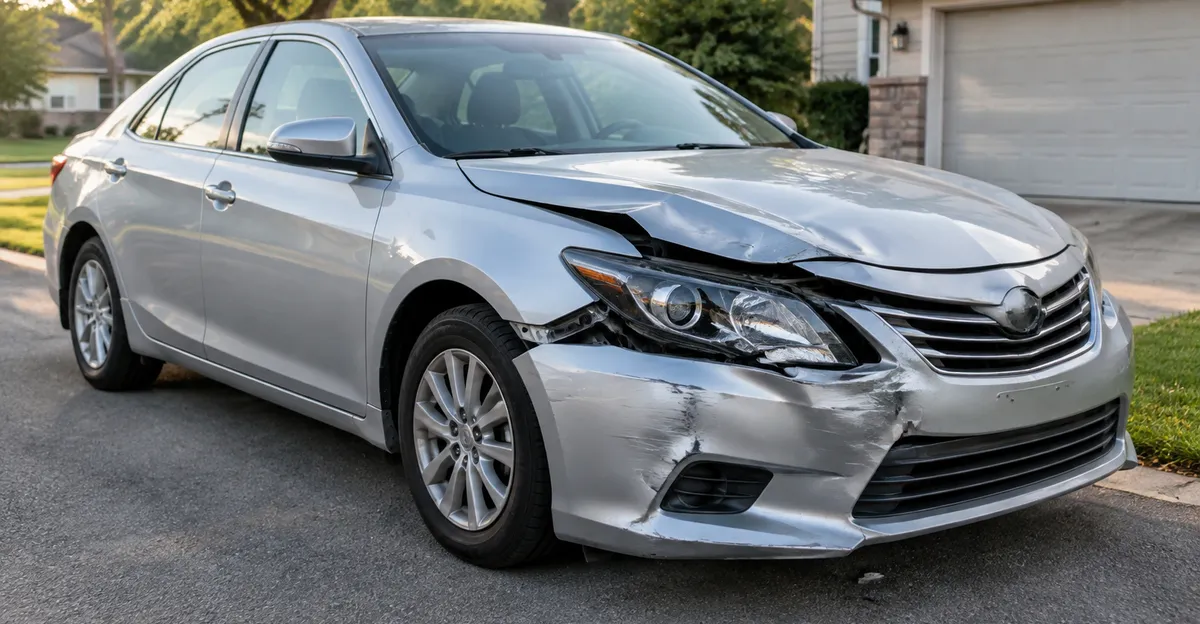
Why a car can be totaled and still roll
A total loss is money math. Progressive says the company completes an inspection before it decides value and whether the car is a total loss. It pays actual cash value—market value based on pre-loss condition, age, options, mileage, and similar factors—minus any applicable deductible if you are the Progressive insured. ConsumerShield’s totaled-but-drivable guide is blunt: the decision is economic, not a verdict on whether the car can still move. A $9,000 car with a $10,000 repair estimate is a classic total even if every light still works.
States do not use one formula. Progressive notes that some states total a car when repair costs would exceed a percentage of value. ConsumerShield cites New York’s 75 percent of retail value example and says California treats a total-loss salvage vehicle under a statute that uses uneconomical repair language and a total-loss formula approach. Insurance.com’s state guide describes thresholds that commonly fall in a 60 to 100 percent band, depending on the state. Do not memorize a percentage from a national blog as your state’s law. Ask the adjuster which rule they are applying, and verify it with your state insurance department or motor vehicle agency if the dollars are large.
Insurers also use a total-loss formula in many places: repair cost plus salvage value compared with actual cash value. InsurancePanda’s buyback explainer walks through a simple illustration—$12,000 actual cash value, $9,200 in repairs, $3,000 salvage—where the sum of repairs and salvage exceeds value, so the car may be totaled. The exact calculator varies by carrier and statute. The lesson for you is narrower: an estimate that “looks fixable” can still total the car once salvage value is in the math, and estimates often climb after a shop tears the car down.
Airbags, frame rails, and advanced driver-assistance sensors make cosmetic crashes expensive. Progressive’s definition still centers on cost versus value. A late-model car with a soft bumper cover and a bag deployment can cross the line while the drivetrain is fine. That is why “totaled but still drivable” is a common search, not a contradiction.
| If this happens | Likely insurer path | First check |
|---|---|---|
| Repair estimate exceeds actual cash value | Total loss under Progressive’s general rule | Ask for the written estimate and the ACV report |
| Repairs exceed a state percentage of value | Total loss under that state’s threshold | Ask which percentage and which statute the claim uses |
| Repair cost + salvage ≥ ACV | Total loss under a total-loss formula | Ask for the salvage figure used in the formula |
| Car still starts and steers | Does not block a total-loss call | Separate “runs” from “legal to register” |
| You disagree with the ACV | Negotiate with comps and records | Request the valuation report Progressive and others build with third-party tools |
What happens the moment the insurer totals it
Once the car is a total loss, Progressive describes two property paths: retain your vehicle salvage, or transfer the title to the insurer once the claim is paid. If you transfer the vehicle, Progressive disposes of it under the laws that apply. Insurance.com describes the keep path as owner-retained salvage: you keep the car, the settlement is reduced by salvage value, and the state issues a salvage title. Kiplinger’s keep-or-replace guide matches that money story: if you keep the car, the insurer deducts salvage value—the amount the car could bring at a salvage yard—from your payout.
If you surrender the car and the title is free and clear, Progressive says payment goes to you for actual cash value minus any applicable deductible. If a lender holds the title, Progressive gets the title from the lender after you sign the paperwork it sends, and payment goes to you, the lender, or both. Kiplinger adds the common loan outcome: the loan provider gets the check first; leftover after payoff, if any, comes to you; the insurer keeps the car when you surrender it.
Progressive’s prep list is practical even before the total-loss letter lands. Locate the lienholder and account number, or locate the title if you own the car free and clear. Remove personal electronic data from the car’s systems. Remove personal items, including license plates when the process requires it. Do not make final replacement plans until the inspection and valuation are done. Storage fees at a tow yard can erase a settlement if the car sits while you argue. Tell the adjuster where the car is, who is charging storage, and how many days the policy will cover.
If the car is leased, you are usually not the titleholder. The lessor’s payoff and gap rules dominate. That path is covered in what happens if you total a leased car. This page focuses on owned cars that still roll after a total-loss call.
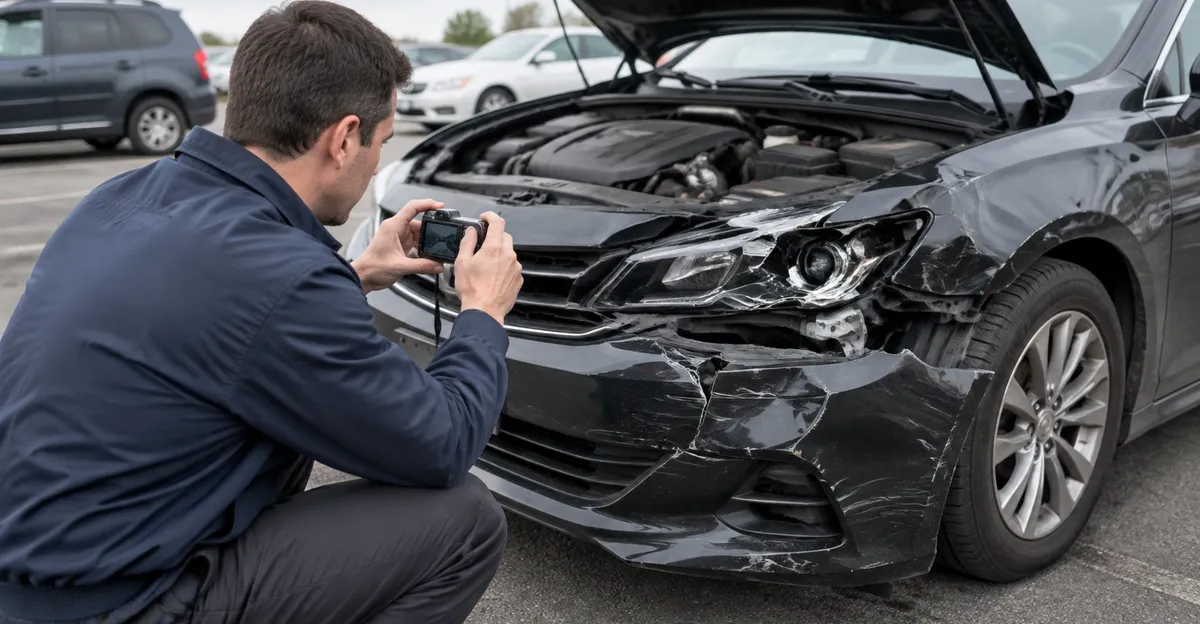
Owner-retained salvage: the buyback math
“Buy back” rarely means writing a separate check to the insurer for the whole car. InsurancePanda’s owner-retained salvage page says the usual structure is a total-loss settlement with salvage value subtracted, so you keep the vehicle and take a smaller payout. Insurance.com’s process outline is the same sequence: settlement offered at actual cash value minus deductible; you say you want to keep the car; a new settlement deducts salvage value; a salvage title follows.
On a first-party collision or comprehensive claim, the common arithmetic looks like this:
Net keep payout ≈ actual cash value − deductible − salvage value
InsurancePanda’s example uses a $12,000 actual cash value, a $500 deductible, and a $2,500 salvage value for a $9,000 keep payout. Your numbers will differ. Demand the salvage figure as a line item. If the salvage deduction looks high relative to local auction results for similar damage, ask how it was set. Do not commit to keep until you have a shop estimate that you believe, with a cushion for hidden damage.
At-fault versus not-at-fault changes who pays, not what “totaled” means. ConsumerShield notes that when another driver’s liability insurer pays, that company typically does not subtract your collision deductible the way your own collision claim would. Property-damage liability still has policy limits. If the other driver’s limit is below your car’s actual cash value, you may need underinsured or uninsured motorist property damage, or your own collision, depending on what you carry and what your state allows. Fault rules and no-fault systems vary by state. Ask which company is writing the total-loss check and whether a deductible applies to you on that check.
Negotiate the actual cash value before you lock in keep-versus-surrender. The Insurance Information Institute’s repair-value article says you can push back with mileage records, service history, and affidavits from mechanics when book value understates the car. Progressive works with a third party for actual cash value; ask for the comparable list. ConsumerShield’s negotiation tips match that approach: Blue Book and local listings, aftermarket upgrades if they were on the policy, maintenance receipts, and pre-crash photos. A higher actual cash value raises both the surrender check and the keep math. A higher salvage deduction only hurts the keep path.
Can you keep driving a totaled but still drivable car?
This is the question the SERP pages answer incompletely, so separate three clocks.
Safety clock. Structural damage, airbag status, steering, brakes, fuel leaks, and exhaust leaks decide whether a mechanic would let a family member drive it. ConsumerShield advises a mechanic check for hidden hazards even when the car still moves. If the car is unsafe, do not drive it because an insurer called it a total loss for money reasons. Totaled does not mean “safe enough.”
Claim clock. Before the title brand changes, you may still have a clean registration on paper while the car sits in your driveway with crash damage. Progressive still needs an inspection to finish valuation. Driving during that window is a risk conversation with the insurer and with safety, not a free pass. If the shop or yard has the car, you are not driving it anyway. If you drove it home from the scene, ask the adjuster whether continued use affects the claim, storage coverage, or the total-loss decision.
Title and registration clock. Insurance.com’s nationwide statement is the one most keepers miss: a totaled vehicle with a salvage title generally cannot be registered or legally driven until it meets state requirements—inspection before driving again, off-road limits until rebuilt, a ban on driving until a rebuilt title issues, or a ban on insuring until rebuilt, depending on the state. Every state, on that guide, allows you to keep a totaled car, but the road-back rules differ. SCA Auction’s salvage-title overview draws the same line: a car that starts and rolls can still fail the legal test for public roads until rebuild, inspection, titling, registration, and insurance requirements are complete. Limited inspection permits may exist in some states; they are not a substitute for normal registration.
ConsumerShield’s Washington example shows how fast paperwork can matter: that state’s licensing guidance, as ConsumerShield summarizes it, calls for surrendering the original title and applying for a salvage title within a short window after the total-loss declaration. California’s salvage inspection path, as ConsumerShield describes from California Highway Patrol materials, checks tires, brakes, steering, fuel tank, lights, windshield, suspension and frame, and restraints, plus VIN checks aimed at stolen parts, with title and inspection fees and emissions requirements in the mix. Those are state examples, not a national checklist. Your DMV or equivalent agency publishes the rebuilt path that applies to your plate.
So the honest answer to “can I keep driving?” is: maybe until the salvage brand and registration rules catch up, and usually not for normal public-road use once salvage title land—unless and until you complete the rebuilt process your state requires. “Still drivable” in search language often means “the car still moves.” Street-legal is a separate product.
| Situation | Common outcome | What to verify |
|---|---|---|
| Car runs; claim open; title not yet branded | Temporary use may still be possible, safety permitting | Ask the adjuster and a mechanic the same day |
| You retain salvage; salvage title issues | Often not street-legal for normal commuting | State salvage and rebuilt rules |
| Repairs done; rebuilt title and registration issued | Legal road use under that brand | Insurance that will cover the VIN |
| Lender refuses owner retain | Keep path may be blocked | Lienholder written position |
| You surrender the car | Insurer takes it; you get ACV path without salvage deduction | Payee on the check; personal items removed |
Loans, liens, and GAP when the car still rolls
An open loan turns a keep decision into a three-party problem: you, the insurer, and the lienholder. Progressive says payment may go to you, the lender, or both, and that you might still owe money if actual cash value is less than the loan or lease balance. The Insurance Information Institute defines gap insurance as covering the difference between what the vehicle is worth and what you still owe when collision or comprehensive pays only market value. Progressive’s Loan/Lease Payoff coverage, where offered, is the insurer’s product for that hole, subject to the limits on your declarations page.
Kiplinger’s keep guidance is the lender gate most people skip: notify the insurance company and, if applicable, your lender; once the loan is paid off, you typically have the option to keep the vehicle. InsurancePanda is more direct: if the car is financed, get the lender’s permission before keeping the vehicle. Some lenders will not allow owner-retained salvage. A car that still drives does not change that underwriting rule. If the lender demands payoff and surrender, your “keep and fix” plan dies on the phone call, not in the body shop.
If you keep the car and the settlement is short of the loan, you may still owe a deficiency unless gap coverage applies. Keeping a salvage shell does not cancel the note. For how a lien sits on a title in ordinary ownership, see what is a lien on a car. For why states push drivers to carry coverage in the first place, see why is car insurance required.
Gap products have exclusions. Progressive points you to the available policy limits on the declarations page. Dealer-sold gap contracts have their own definitions of total loss and their own lists of unpaid fees. Read the certificate you signed. Do not assume gap pays storage, personal property, or a second car while you wait on a rebuilt title.
Salvage to rebuilt: title, insurance, and resale
Insurance.com’s rebuilt-title table is the practical map: every listed state allows keeping a totaled vehicle, and each lists an inspection or documentation path—state police, DMV salvage exam, VIN verification, repair receipts, photos, or a reconstruction affidavit, depending on the state. That table is a starting point, not a substitute for the form your state publishes this year. After you pass, the brand usually becomes rebuilt, reconstructed, or a similar label. It does not become a clean title. For how brands show up on paper and in NMVTIS-style history, see what is a branded title on a car.
Insurance after salvage is the second wall. Insurance.com says most insurers will not offer full coverage on a salvage vehicle, and that finding full coverage on a rebuilt title is often hard, with premiums that can run higher. Kiplinger notes that many insurers offer only the state minimum, and some refuse the car entirely. WalletHub’s rebuilt guide adds that comprehensive and collision are hard because carriers struggle to set actual cash value on a rebuilt car, and that receipts, photographs, and a mechanic’s statement can help when a carrier will consider full coverage. Call carriers with the VIN before you spend the keep payout on parts.
Resale is the third wall. Kiplinger says many dealerships will not take a salvage or rebuilt car on trade, so private sale is the usual path, at a discount, because the next buyer faces the same insurance and trust problem. Insurance.com lists lower resale among the lasting drawbacks of a branded title. If you planned to sell within a year or two, repairing a total-loss car can mean paying the brand tax twice—once in repair cash, again at sale.
More ownership and paperwork guides sit under Ownership & more. Use that hub when the next question is registration, buying, or cabin care rather than a mechanical symptom.
How to decide: keep, scrap, or replace
Kiplinger’s decision frame is the right order: compare repair cost with what you would actually buy next, then factor how long you planned to keep this car. Kelley Blue Book averages that Kiplinger cites for new and used prices move over time; treat them as context, not your quote. If you were going to trade within a year, a rebuilt brand often ruins that plan. If you planned many more years, and the damage is mostly cosmetic with a trustworthy shop, owner retain can pencil out.
Insurance.com’s “when keeping makes sense” list is practical: repair for less than the insurer’s view of value, cosmetic damage, parts worth more than the settlement, sentimental or rare cars. InsurancePanda adds the reverse list: major structural or safety-system damage you cannot verify as safe, need for reliable transport now, and hopes of a quick resale. Progressive’s rental note matters if you keep a salvage car that cannot be registered yet: rental reimbursement, when you have it, is limited; Progressive describes up to three days of rental after it communicates vehicle value for Progressive policyholders with rental coverage, with different processes for non-Progressive claims. That is not months of rebuilt-title waiting time.
Run this comparison on paper before you call the adjuster back:
- Write the surrender net: actual cash value − deductible (if any) − amounts the lienholder will take.
- Write the keep net: actual cash value − deductible (if any) − salvage value, then subtract a real shop estimate with a contingency.
- Add time, storage, towing, inspection fees, and the insurance you can actually buy on a salvage or rebuilt VIN.
- Add the cost of the replacement car you would buy if you walked away, including sales tax and new insurance.
If the keep path only wins by assuming perfect DIY repairs and free storage, it does not win. If the car is unsafe, no math saves the commute.
Common mistakes after a total-loss call on a car that still rolls:
- Treating “drivable” as “legal” after a salvage brand.
- Keeping the car without lender written approval.
- Accepting the first actual cash value without reading the comps.
- Spending the keep payout on cosmetic parts before the safety systems are fixed and documented.
- Leaving personal items and plates in a car headed to salvage.
- Stopping loan payments because the claims app says “totaled.”
- Buying a replacement before Progressive’s advice to wait for the inspection result, then discovering the first car was repairable—or the reverse.
FAQ
What happens when your car is totaled but still drivable?
Progressive frames total loss as repairs costing more than the car’s value, or more than a state percentage of that value. The Insurance Information Institute says the insurer pays market value or the policy limit, less any deductible that applies. You either surrender the car for that settlement path or keep it as owner-retained salvage for a smaller check after salvage value is deducted. Insurance.com adds that a salvage title usually stops normal legal driving until your state’s rebuilt process is done.
Can I keep driving a totaled car that still runs?
Only if safety and your state’s title and registration rules both allow it. Insurance.com says salvage-titled cars generally cannot be registered or driven on public roads until rebuild requirements are met. A running engine does not rewrite that. Ask the adjuster about the claim window, then ask your state motor vehicle agency about salvage and rebuilt rules before you treat the car as a daily driver.
How much less do I get if I keep a totaled car?
Expect actual cash value minus any applicable deductible minus salvage value on a typical first-party retain. Progressive offers retain-or-transfer; Insurance.com and InsurancePanda describe the salvage deduction the same way. Get the salvage line in writing. Compare it with a shop estimate before you commit.
Do I still owe my car loan after a total loss?
If the payout is less than the balance, yes, unless gap or Loan/Lease Payoff coverage closes the hole within its limits. Progressive and the Insurance Information Institute both describe that shortfall. Keeping a salvage car does not erase the lien. Get the lender’s position in writing if you want to retain.
Is a salvage title the same as a rebuilt title?
No. Salvage marks the total-loss brand. Rebuilt (or a similar state word) marks a car that completed the repair and inspection path that lets you register again. Insurance.com and WalletHub both keep those labels separate. The brand stays on the history even after you are back on the road.
What happens when your car is totaled but still drivable still ends on three files: the total-loss letter with actual cash value and salvage figures, the lender’s written yes or no on owner retain, and your state’s salvage-to-rebuilt checklist. Pay attention to people in the cars first. Then decide keep versus surrender with the math on paper. Then treat “still rolls” and “street-legal” as different answers.