
By Automotive Research TeamUpdated 2026-09-29
What is a lien on a car
What is a lien on a car is a legal claim a lender or other creditor places on your vehicle so the car can secure a debt. Chase’s auto-education pages put it in plain terms: when you finance a purchase, the lender gets a lien on the vehicle, the car becomes collateral, and the lender can repossess if you stop paying under the contract. OneMain Financial says the same thing from the borrower’s side—a lien is the lender’s claim until the loan is paid, and paying on time leads to the lien being removed. This page is general information for U.S. vehicle owners and buyers. It is not legal, tax, lending, or insurance advice for your state, your contract, or your deal. Title rules, payoff paperwork, and sale procedures vary by state and by lender.
If you only remember three moves, make them these.
- Confirm who the lienholder is on the title record, not only on a monthly statement.
- Get a written payoff quote before you sell, trade, or wire money for a private purchase.
- After payoff, verify that the lien is actually released with the lender and with your state motor vehicle agency.
What a car lien actually means
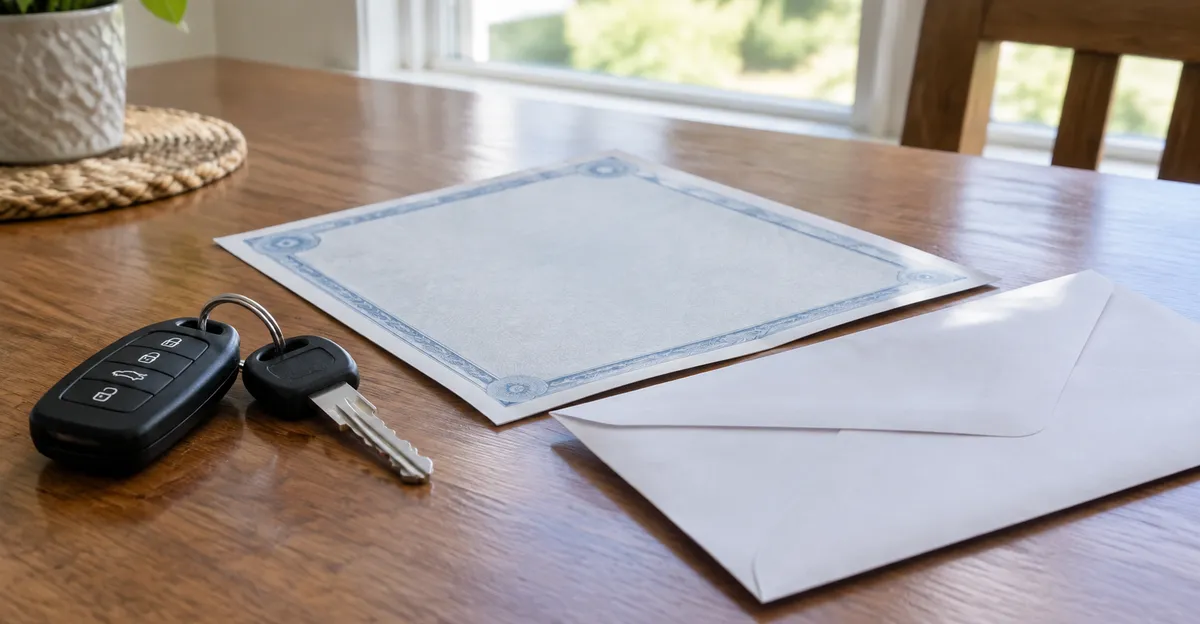
A car loan is a secured loan. The security is the vehicle. Chase describes a lien as a legal claim over something of value. OneMain Financial adds that if you default, the lender has the legal right to take possession of the car to recover what is owed. That claim is not the same as everyday “ownership” language. You drive the car. You insure it. You register it in your name in most cases. The lienholder still has a recorded interest that blocks a clean transfer until the debt is handled.
The New York State DMV’s public guidance on adding or removing a lienholder defines a lien as someone other than the owner having a security interest in the motor vehicle, usually the bank or finance company that financed the purchase. That agency also notes that the lienholder is listed on the title certificate and on DMV records. Other states use different forms and different databases, but the consumer idea is the same: the lien shows up on the title trail, not only in the lender’s customer portal.
A purchase-money auto loan is the most common reason people search this topic. It is not the only reason. Mechanic’s liens, storage liens, towing liens, and some judgment or tax situations can also create claims against a vehicle. Treat “my bank has a lien” and “a shop is threatening a lien sale” as different problems with different next steps. The later sections separate them on purpose.
Use this table before you assume what your paperwork means.
| If this happens | Likely meaning | First check |
|---|---|---|
| You still owe on a retail installment or auto loan | Purchase-money lien on the title | Monthly statement and the title or ELT record |
| You financed at a dealer | The finance company or bank is usually the lienholder of record | The retail installment contract and any title application copy |
| You paid cash and still see a lien name | Possible unpaid prior loan, paperwork lag, or a non-loan lien | State title record by VIN and written payoff or release status |
| A shop refuses to release the car over unpaid repair or storage | Mechanic’s or storage lien rules may apply | Written invoice, dates due, and your state’s notice rules |
| The lender repossessed after default | The security interest is being enforced | Contract default terms and any deficiency notice |
| You paid the loan but still cannot sell | Title delivery or electronic release may be delayed | Written payoff confirmation plus state title status |
What is a lien on a car title
What is a lien on a car title is the same security interest recorded on the state’s ownership document or electronic title record. Progressive’s buyer guidance says a lien on the title means the owner has not paid off the car loan yet, and the lienholder has a legal right in the vehicle. Chase tells buyers to look up the VIN with the local motor vehicle agency because the title trail should show whether a lien exists and who holds it.
Paper title versus electronic title
Who physically holds a paper title during the loan is not the same in every state. Industry electronic-lien guidance describes electronic lien and title (ELT) programs that suppress a paper title while a lien is active and replace it with an electronic lien notice in the state’s database. At payoff, the lienholder notifies the jurisdiction electronically so a clear title can be issued. Older “title-holding state versus non-title-holding state” shortcuts still circulate online. They are incomplete once ELT is common. Ask two questions instead of memorizing a map:
- Does my state keep an electronic title while this lender’s lien is active?
- Will I receive a paper clear title only after electronic release, or do I already hold a paper title with the lien printed on it?
Either way, the lien is on the title record. Driving without a paper certificate in your glovebox does not mean there is no lien. Having a paper title in a drawer does not mean the car is lien-free if the face of the title still names a lienholder.
Why the title record matters more than the ad
Private sellers sometimes advertise a car as “owned free and clear” while a lender still appears on the state record. Progressive and Chase both treat a VIN title check as a basic buyer step. If you are taking a loan for the purchase, Progressive notes you can ask your own lender to run a lien search, sometimes for a fee. That search is cheaper than discovering after you paid that another creditor still claims the car.
Registration stickers and plates are not a substitute for a title check. A car can be currently registered and still carry a lien. Insurance can be active and still leave the title uncleared. For related ownership questions when you are shopping, see how long it takes to buy a car and what good mileage looks like on a used car. Broader ownership guides also sit under Ownership & more.
How to tell whether your car has a lien
Start with the boring documents you already have.
Loan statements and online account pages. If you make monthly auto payments, assume there is a lien until the lender confirms release and the state record matches. Chase says that if you are making payments on a car loan, you most likely have a lien.
The title or title status printout. Look for a lienholder name, a lien date, or an electronic-lien indicator. If you never received a paper title after purchase, that is common in ELT states and in states where the lender holds the paper title. It is not proof that no lien exists. It is often proof that one does.
Your state’s motor vehicle agency. Chase and Progressive both point buyers and sellers to DMV or equivalent title lookup tools. Agency names differ—DMV, BMV, MVA, DPS, and others—and online access is not identical everywhere. Some states require an account, a fee, or an in-person request. If the website will not show lien data, call or visit and ask what document proves lien status for that VIN.
The lender’s payoff desk. A payoff quote is not the same as the “principal remaining” line on a statement. Payoff often includes per-diem interest through a stated good-through date. Chase’s selling guidance tells owners to contact the lienholder for the amount needed to clear the loan before setting a sale price. Ask for the quote in writing, including wiring instructions and any overnight fee.
Unexpected liens. Chase notes it is rare but possible to discover a lien you did not expect, especially after a thin private purchase. Mechanic’s or storage claims are another path. If the name on the title is not your auto lender, do not guess. Get the claim amount and the legal basis in writing before you pay anyone.
Buying or selling when a lien is still open
If you are selling
Chase’s “how to sell a car with a lien” sequence is the shared floor across lender explainers:
- Confirm liens on the title record.
- Get the payoff amount.
- Estimate the car’s market value.
- Choose a dealer sale or a private sale and plan the payoff into that path.
Dealer trade-in or dealer purchase. OneMain Financial and Chase both note that dealerships often work directly with the lender to pay off the lien. If the trade-in offer is less than the payoff, you have negative equity. Chase says the dealer may roll the difference into a new loan if you are buying another car there. That is a financing decision, not a free pass. Ask for the old-loan payoff, the trade allowance, and the new contract numbers on separate lines before you sign.
Private party. Chase’s selling page says that if you sell to a private party, you are required to pay off the remainder of the loan before doing so, then the lienholder releases the lien with the state agency. OneMain Financial is slightly more flexible in wording: some lenders allow payoff at the time of sale; others require payment before release; some buyers may pay the lender directly as part of the purchase. Progressive lists the buyer-pays-lender path as a documented option. The consumer rule underneath all three is the same: money must reach the lienholder, and the release must follow. A handshake and a bill of sale are not enough.
Set the sale price against the payoff, not only against a retail listing average. If the car is worth less than the loan, you need cash at closing or another way to cover the gap. If the car is worth more, plan how surplus funds move after the lender is paid—do not assume the buyer’s cashier’s check can be split casually without the lender’s process.
If you are buying
Progressive’s buyer page lists three paths after you identify the lienholder:
- The seller pays off the loan before transfer.
- You pay the remaining loan amount directly to the lender as part of the sale.
- You try to take over the seller’s loan, which many lenders do not allow and which still requires credit approval and possible fees.
Progressive also warns that escrow services used in private car deals should be verified as legitimate, and points readers toward checking with regulators and industry associations such as the Consumer Financial Protection Bureau when evaluating unfamiliar payment middlemen. Do not wire “title fees” to a stranger who will not put the lienholder identity and VIN in writing.
Insuring a car with a lien is still required. Progressive notes that you still need at least your state’s minimum auto insurance in a private sale, and that if you take over a loan the lender will likely require comprehensive and collision. A lien does not, by itself, automatically raise your rate according to that Progressive page—but coverage requirements from the lender are real.
For registration paperwork after a clean purchase in one example state process, see what you need to register a car in Missouri. Your state will differ; use that page as a checklist mindset, not a nationwide rulebook.
What is a lien release on a car
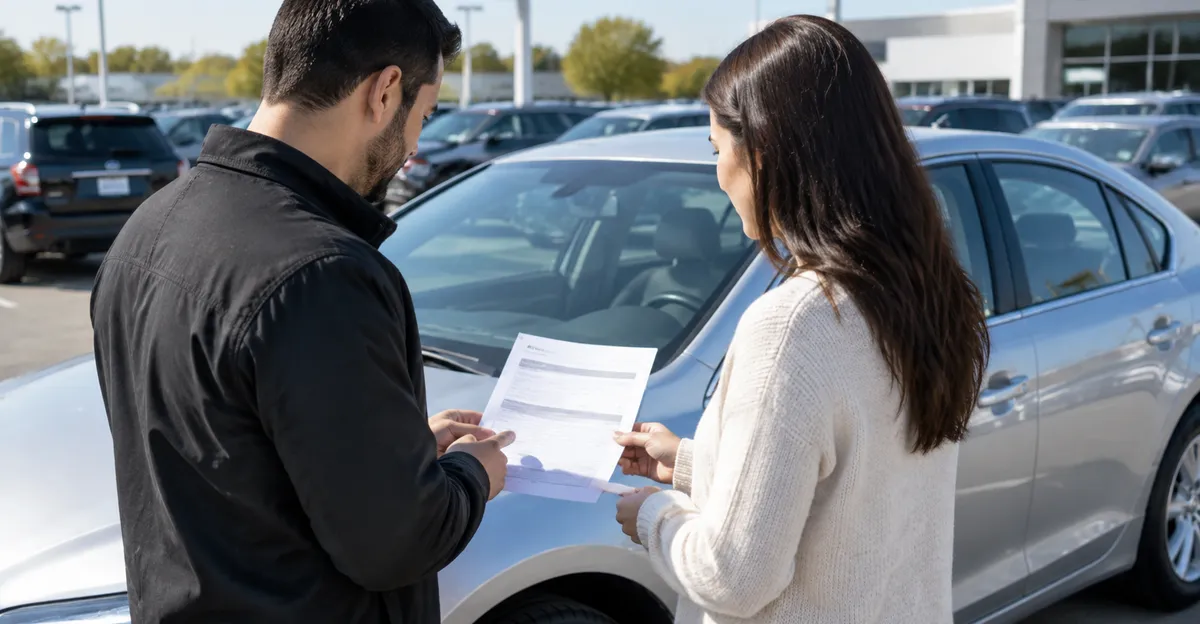
What is a lien release on a car is the formal step where the lienholder gives up its claim so the title can become clear. Chase defines a lien release as the lienholder formally giving up the claim to the vehicle’s title, which lets the car be bought or sold without that string attached. After you pay the loan in full, Chase says the lender should contact the local motor vehicle agency to release the lien, and that once released the lender no longer has the right to repossess for that loan.
What “paid off” should produce
Expect more than a thank-you email.
- A written payoff confirmation with the VIN, account number, and zero-balance date.
- An electronic release through ELT, a paper lien-release document, or both, depending on the lender and state.
- A clear title mailed to you, or an updated electronic title status you can print or request from the state.
Chase tells sellers and buyers to follow up with the lienholder to verify the release went through and to check status directly with the motor vehicle agency. That follow-up is not optional busywork. The Consumer Financial Protection Bureau’s October 2024 Supervisory Highlights special edition on auto finance reported that examiners found unfair acts when auto-loan servicers failed, through service providers, to timely deliver titles after loan or lease payoff or when consumers needed the title to move registration to another state. The Bureau noted that servicers’ own policies were often to provide title documentation within two business days, yet delivery times significantly exceeded that timeline, and that consumers without the title faced harm such as inability to sell, extra insurance costs, and towing risk. If your loan is paid and the title still has not moved, escalate with the servicer in writing and keep proof of the payoff.
Release before a sale versus after full payoff
Most releases happen after the final payment. Some sales need a release mid-process because the buyer’s funds are paying the lender. In that case, structure the closing so:
- The payoff quote’s good-through date covers the closing day.
- Funds go to the lienholder by the method the lender accepts.
- Nobody drives away assuming the title will “catch up later” without a written plan for who receives the clear title.
If a third party claims you need to pay a rush fee to a personal account for a “DMV lien wipe,” stop. Use the lender’s published payoff instructions and your state agency’s own channels.
What is a lien sale on a car
What is a lien sale on a car is not your ordinary private-party sale with a bank payoff. It is usually a statutory sale used to enforce a mechanic’s, storage, towing, or abandoned-vehicle lien after unpaid charges and required notices. Virginia’s Department of Motor Vehicles mechanic’s and storage lien guidance explains that state law creates statutory liens for people who tow, store, or repair motor vehicles so they can recover costs when owners fail to pay within the required timeframe, and that enforcement can include sale at public auction after the owner has failed to pay an invoice for at least ten days after the invoice is due under that state’s process. The North Carolina State Bar’s public explainer on storage, mechanics, and other liens likewise describes enforcement of those liens through sale of the vehicle, with sale proceeds applied first to the charges and sale costs, and any remainder going toward other interests and then the owner under that state’s framework.
Those examples are state-specific. Do not treat Virginia’s ten-day invoice clock or North Carolina’s chapter citations as the rule where you live. Every state sets its own notice, waiting period, auction, and title-issuance steps. Federal Servicemembers Civil Relief Act issues can also change enforcement against active-duty service members; the North Carolina State Bar materials note that federal law can require a court order before certain storage and related lien enforcements against servicemembers even when state law looks simpler.
How a lien sale differs from loan repossession
| Topic | Purchase-money lien / repossession path | Mechanic’s or storage lien sale path |
|---|---|---|
| Typical creditor | Auto lender or finance company | Repair shop, tower, storage facility, sometimes landlord or abandoned-vehicle claimant |
| Trigger | Default under the retail installment or loan contract | Unpaid repair, towing, or storage charges after statutory conditions |
| Usual endgame | Repossession and sale under the security agreement and state UCC-style rules | Statutory notice, then public sale or auction under motor-vehicle lien statutes |
| What a buyer at auction receives | Depends on lender sale and state title practices | A title path that follows the lien-sale paperwork; prior loan liens may still matter |
| Your first move if you still want the car | Reinstate or redeem if the contract and state law allow | Pay the charged amounts and reclaim before the sale deadline if the statute allows |
If you receive a certified letter about an impending lien sale, read the deadlines immediately. Call the claimant for a written payoff of the charges. Confirm whether a purchase-money lender is also on the title; a shop sale process and a bank lien can collide, and state priority rules decide who gets paid from sale proceeds. Virginia’s guidance, for example, describes distributing sale proceeds to satisfy the mechanic’s or storage lien and then paying additional proceeds to the lienholder of record and the owner within a set period. Your state may order those pockets differently.
Buying a car advertised as a “lien sale title” or “salvage from storage auction” without reading the title brand and the sale affidavit is a separate risk from buying a normal used car with an open bank lien. Get the title history and the statutory basis for the sale before you pay.
Missed payments, repossession, and what a lien does not forgive
The lien is why an auto lender can repossess after default. The Consumer Financial Protection Bureau’s Bulletin 2022-04 on auto repossession reminds that lenders take a security interest in the vehicle and may exercise contractual rights to repossess if the borrower defaults, while also warning that unfair or deceptive repossession practices by servicers and their vendors can violate federal consumer-protection law. Examples the Bureau has pursued include repossessing when accounts were current, ignoring promised extensions, or applying payments in an order different from what consumers were told. A lien gives the creditor a powerful remedy. It does not give the creditor a free pass to ignore the contract or the law.
After a repossession sale, you may still owe a deficiency if the sale proceeds do not cover the balance and allowable costs. That deficiency is a debt question, not a title question. If the car was totaled while a lien was open, the insurer’s check often names the lienholder; for a leased parallel, see what happens if you total a leased car.
A lien also does not replace insurance requirements, safety recalls, or emissions rules. Clearing a title problem does not clear a mechanical problem. If the car will not start on the lot while you argue about paperwork, that is a different diagnostic path entirely.
Mistakes that keep the lien problem alive
Paying the seller the full price in cash and “trusting” them to pay the bank later. Progressive and Chase both describe direct payment to the lienholder as the safer structure when a private sale must clear a loan.
Confusing a monthly principal balance with a payoff quote. Interest runs daily. A quote expires.
Assuming the title will arrive “soon” after payoff without checking. The CFPB’s 2024 auto-finance supervisory findings show that delayed title delivery after payoff is a real consumer harm, not a rare anecdote.
Mixing up a bank lien with a shop lien sale. Paying the auto loan does not automatically stop a storage auction if unpaid storage charges are the separate claim—and paying a shop bill does not erase a purchase-money lien on the title.
Skipping the VIN title check because the car looks clean and the price is low. Low price is a reason to check harder.
Signing a dealer deal jacket before you see the old-loan payoff and negative-equity line items. Ask for the numbers in writing.
What to do next
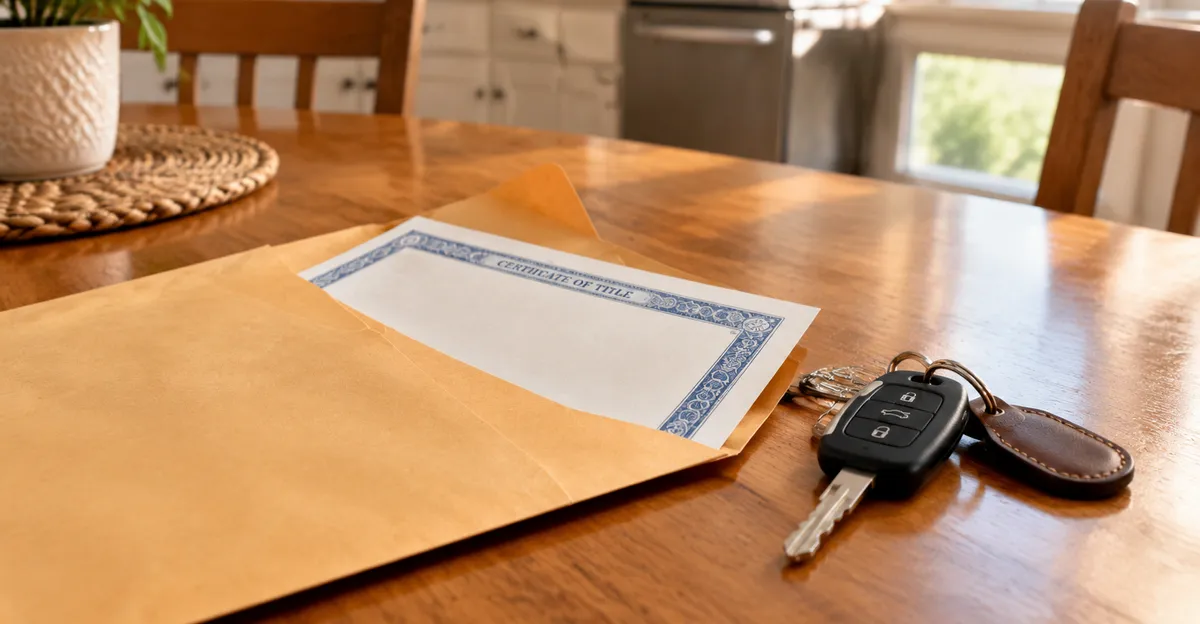
If you are still paying a loan, keep paying on time and store the lender’s payoff phone number before you need it. If you plan to sell, get a payoff quote and a market value estimate the same week. If you plan to buy, run the VIN through the state title record and identify the lienholder before you send money. If you already paid the loan, confirm electronic or paper release and escalate if the clear title stalls. If a shop or tower threatens a lien sale, treat the notice deadlines as hard stops and verify the charges and your state’s procedure instead of arguing only on the phone.
Lien paperwork feels abstract until a buyer, a dealer, or a state clerk refuses the transfer. The claim on the title is the reason. Clear the claim with documents, not assumptions.