
By Zeng FengMyCarWhy EditorialUpdated
Best Tire Pressure Gauge
For most US cars and light SUVs, the best tire pressure gauge is the AstroAI Digital 150 PSI—a compact, backlit, best rated digital tire pressure gauge that covers passenger tires and many spares. Step up to the JACO ElitePro Digital when you want an accurate tire pressure gauge with a hose, bleeder, and ANSI-grade listing claims. Keep a Milton S-921 pencil when you want a no-battery glovebox backup. A tire pressure gauge still has to match the door placard—and skip shopping when the sidewall is cut or the tire will not hold air.
This guide compares three verified gauges by read style and roadside use. It is a buying map, not a lab test. Specs come from the manufacturer listings linked here. For filling air, see portable tire inflator. For cold-snap rubber decisions, see when to switch to winter tires.
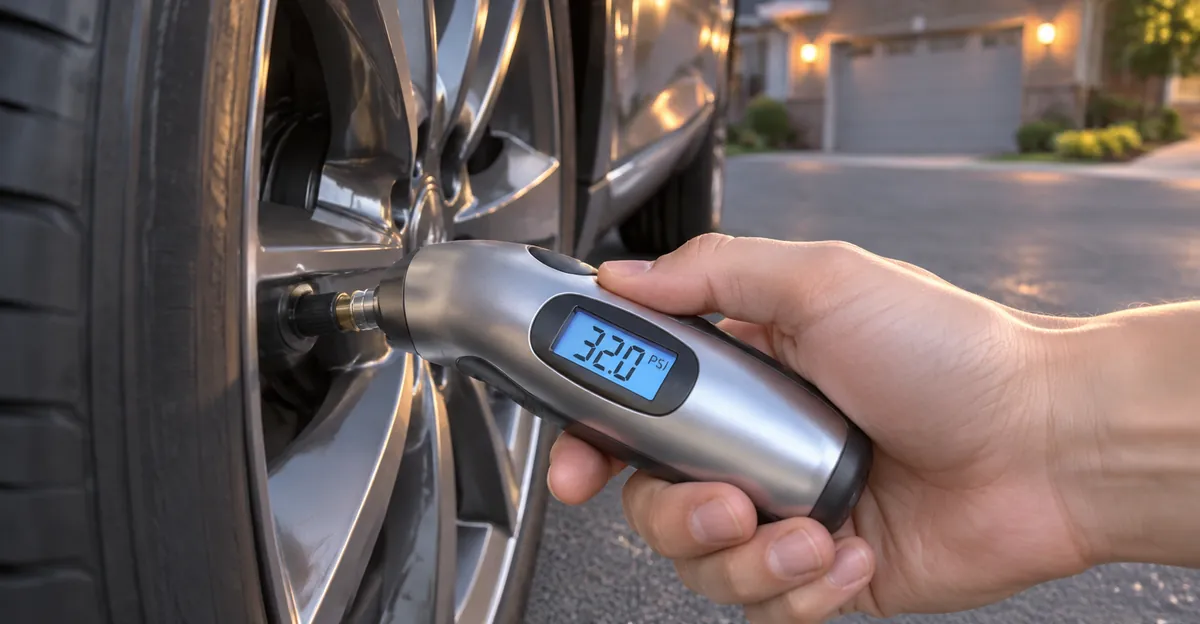
Should you buy a tire pressure gauge for this job?
Buy a dedicated gauge when you want cold placard checks, a TPMS warning you can verify, or a second opinion on a gas-station hose. The head phrase best tire pressure gauges usually means the same three jobs: monthly cold checks, pre-trip top-offs, and confirming an inflator’s built-in display.
Do not buy a gauge as a tire repair. A soft tire from a nail, a bubble in the sidewall, or a rim that will not seal needs a patch, plug path the maker supports, a spare, or a shop—not another PSI number.
| Job | Right tool | Skip |
|---|---|---|
| Cold monthly check to placard | Glovebox tire pressure gauge | Sidewall max PSI |
| TPMS light, tire still holds air | Gauge, then inflator | Ignoring a cut sidewall |
| Confirm a station hose | Separate accurate tire pressure gauge | Trusting every stick gauge on the pump |
| Puncture that will not hold air | Spare, kit, or shop | Buying a finer gauge |
Digital, dial, or pencil—what should you buy?
A best rated digital tire pressure gauge shows tenths, often with backlight and unit switching (PSI, BAR, kPa). It needs a battery. A hose dial gauge is easier to read while you bleed air. A pencil gauge is cheap, battery-free, and harder to misread in bright sun once you learn the bar—but increments are coarser.
Accuracy claims on listings are manufacturer statements (for example AstroAI ±1 PSI class, JACO ANSI Grade language). Treat them as a filter, then spot-check against a shop gauge once. An accurate tire pressure gauge is the one that seals on the Schrader valve without hissing away half a pound every reading.
UK searches for best tyre air pressure gauge point at the same Schrader tools. Spelling does not change the placard. Buy for your valve type and PSI range, not for the word tyre on a UK blog.
Which tire pressure gauge should you buy?
These three cover digital daily use, hose-style accuracy, and a pencil backup. As an Amazon Associate, we may earn from qualifying purchases. Prices move; use the live listings.
<table> <thead> <tr> <th>Model</th> <th>Amazon</th> <th>Type / range</th> <th>Best fit</th> </tr> </thead> <tbody> <tr> <td>AstroAI Digital 150 PSI</td> <td><a href="https://www.amazon.com/dp/B01J8DLGU2?tag=screenissues-20">B01J8DLGU2</a></td> <td>Digital, ~0–150 PSI, backlight</td> <td>Most cars; glovebox digital pick</td> </tr> <tr> <td>JACO ElitePro Digital 100 PSI</td> <td><a href="https://www.amazon.com/dp/B07VV78RZ1?tag=screenissues-20">B07VV78RZ1</a></td> <td>Digital hose gauge, bleeder, ANSI-grade listing</td> <td>Accurate tire pressure gauge with bleed control</td> </tr> <tr> <td>Milton S-921 Pencil</td> <td><a href="https://www.amazon.com/dp/B0002SQYTG?tag=screenissues-20">B0002SQYTG</a></td> <td>Pencil, ~5–50 PSI, no battery</td> <td>Backup; cold glovebox; UK “tyre” analog habit</td> </tr> </tbody> </table>AstroAI Digital 150 PSI — the common digital pick
The AstroAI Digital 150 PSI is the volume pick for a best rated digital tire pressure gauge: compact body, backlit display, multiple units, and a range that covers passenger tires plus many compact spares. Choose it when you want one tool in the door pocket and you already own an inflator with a gauge you do not fully trust.
Skip it as your only gauge if you hate coin-cell batteries or you need a hose bleeder while dialing in pressure. Pair it with a pencil backup if the display dies on a trip.
JACO ElitePro Digital — hose accuracy and bleed
The JACO ElitePro Digital 100 PSI lists dual-sensor ANSI Grade 2A style accuracy language, a hose chuck, backlight, and a bleeder so you can drop overfill without guessing. That is the accurate tire pressure gauge lane for drivers who set pressure carefully after every fill.
It costs more and needs AAA cells. The 100 PSI ceiling is fine for most cars and many light-truck cold fills; confirm your spare and any high-pressure light-truck target before you buy.
Milton S-921 — pencil backup, no battery
The Milton S-921 is a classic brass pencil gauge with a deflator and roughly 5–50 PSI passenger range. It answers the “best tyre air pressure gauge” shopper who wants something that works when the digital screen is dead. Readings are coarser; technique matters—seat the chuck cleanly and read the bar straight on.
Skip it as your only household gauge if you want tenths of a PSI or night backlight. Keep it as insurance next to the digital unit.
How do you check tire pressure the right way?
- Park safe. Read the cold PSI on the driver’s door jamb placard.
- Check before a long drive, or after the car has sat.
- Remove the valve cap. Press the chuck on squarely until the hiss stops.
- Compare to placard. Add or bleed air. Recheck.
- Cap the valve. Repeat for all four tires and the spare if it is a full-size unit.
A built-in inflator gauge helps. A separate glovebox tire pressure gauge still earns its keep when the compressor display disagrees with how the car feels. See portable tire inflator for 12V versus cordless fill tools.
When should you buy an inflator or a kit instead?
- Soft tire, casing intact, you need air now: portable tire inflator.
- Puncture path the maker supports: a tire repair kit is a different product—do not expect a gauge to seal a hole.
- Winter compound decision: when to switch to winter tires. Correct pressure is not winter rubber.
- Dead battery roadside, not soft tires: jump starter or jumper cables.
When should you not buy a tire pressure gauge?
Skip mystery gauges with no range, no Schrader fit, and no readable scale. Skip shopping while the tire is shredded—replace or spare first. Skip treating sidewall max as a target. Skip a $2 stick you cannot read at night if that is the only tool you will ever own and you drive after dark.
Also skip expecting TPMS alone to set pressure. The light is late news. The placard and a cold reading are the plan.
Quick pick guide
- Most cars, digital glovebox: AstroAI Digital 150 PSI.
- Accurate hose + bleeder: JACO ElitePro Digital.
- No-battery pencil backup: Milton S-921.
- Need to add air, not only measure: portable tire inflator.
Check cold. Match the placard. Recheck after you fill. A gauge that lives in the glovebox beats a perfect Amazon cart that never leaves the house.
FAQ
Do I need a tire pressure gauge if my car has TPMS?
Yes. TPMS warns when a tire is already low. It does not replace a cold reading against the door-jamb placard. A glovebox tire pressure gauge lets you set pressure before the light, after a fill, or when a station hose looks wrong.
Digital or analog—which is more accurate?
Either can be accurate when it is calibrated and sealed on the valve. A best rated digital tire pressure gauge is easier to read at night. A hose dial or pencil gauge needs no battery and still works in a cold glovebox. Verify any new gauge against a trusted shop reading once.
What PSI should I set?
Use the cold pressure on the driver's door jamb placard, not the maximum molded on the sidewall. Check before a long drive. If you just drove, wait until the tires cool or expect a higher reading.
Is a tyre air pressure gauge different from a tire gauge?
No. Best tyre air pressure gauge is the same product class with UK spelling. US listings say tire. Buy a Schrader-compatible gauge for passenger cars; Presta adapters are a bike add-on, not a car requirement.