
By Zeng FengMyCarWhy EditorialUpdated
Best Torque Wrench for Cars
For most US DIY lug-nut and suspension jobs, the best torque wrench for cars is the EPAuto 1/2-inch 10–150 ft-lb click wrench. Add the Capri Tools 3/8-inch 15–80 ft-lb for oil plugs and smaller fasteners, or the EPAuto 3/8-inch 10–80 ft-lb when you want a matching 3/8-inch EPAuto scale. A torque wrench still has to match the manual’s number—and skip using it as a breaker bar.
This guide compares three verified click wrenches by drive size and range. It is a buying map, not a lab test. Specs come from the listings linked here. For wheel pressure after a tire rotation, see best tire pressure gauge. For roadside flats, see portable tire inflator and emergency roadside kit.
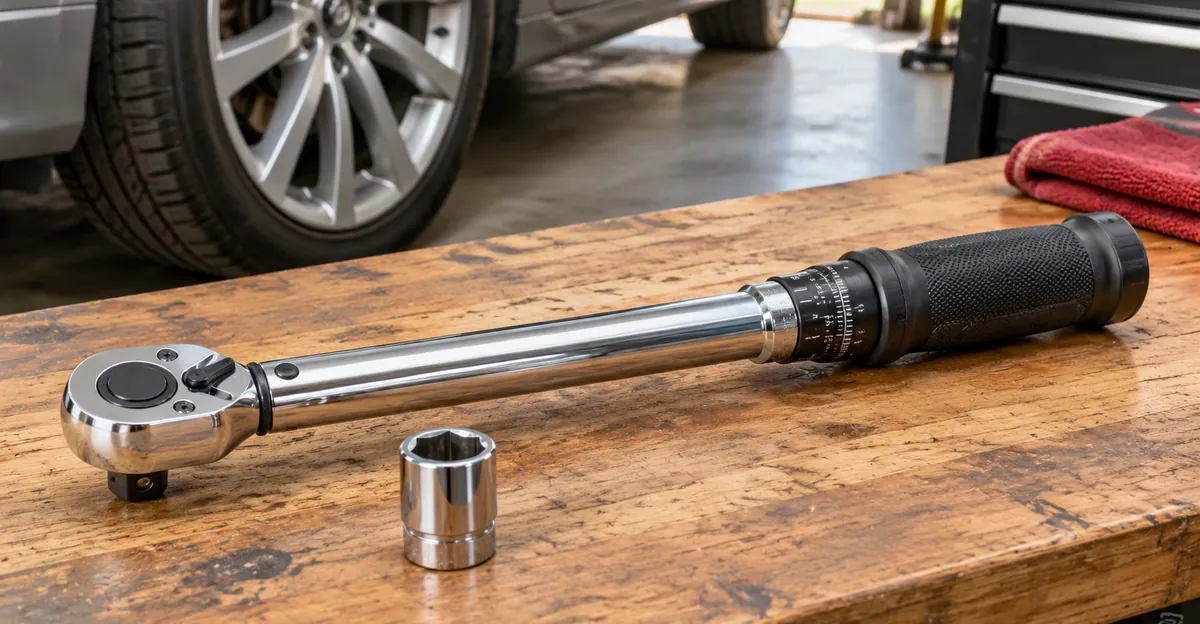
Should you buy a torque wrench for this job?
Buy one when you install wheels, axle nuts the manual torques, suspension hardware, or drain plugs with a published value. Skip buying if you only ever have a shop mount tires—and you never turn a lug nut yourself. Skip using any wrench when the stud is damaged or the nut is rounded; fix the hardware first.
| Job | Drive / range cue | Notes |
|---|---|---|
| Lug nuts (most cars) | 1/2-inch, up to ~150 ft-lb | Confirm manual; torque in a star pattern |
| Oil drain plug / smaller bolts | 3/8-inch, lower ft-lb | Aluminum pans hate over-torque |
| High-torque axle / hub specs | Check range; may need higher-capacity tool | Do not bury a light wrench at 100% all day |
| Loosening stuck lugs | Breaker bar, not torque wrench | Protect calibration |
What do drive size and ft-lb range mean?
Drive size is the square (1/4, 3/8, 1/2 inch) that accepts sockets. Range is the torque window where the maker rates accuracy—often around the middle of the scale, not the extreme ends. Click wrenches: set the handle to the target, tighten smoothly until it clicks once, then stop.
Always store a click wrench at the lowest setting when the manual says to unload the spring. Do not drop it. Recalibrate if it was abused or years old and you do precision work.
Which torque wrench for cars should you buy?
These three are a 1/2-inch EPAuto for wheels, a Capri 3/8-inch for mid-range fasteners, and an EPAuto 3/8-inch alternative. As an Amazon Associate, we may earn from qualifying purchases. Prices move; use the live listings.
<table> <thead> <tr> <th>Model</th> <th>Amazon</th> <th>Drive / range</th> <th>Best fit</th> </tr> </thead> <tbody> <tr> <td>EPAuto 1/2-inch click</td> <td><a href="https://www.amazon.com/dp/B01M1D17AW?tag=screenissues-20">B01M1D17AW</a></td> <td>1/2-inch, 10–150 ft-lb (≈13.6–203.5 N·m)</td> <td>Most DIY lug-nut and chassis jobs</td> </tr> <tr> <td>Capri Tools 3/8-inch</td> <td><a href="https://www.amazon.com/dp/B00NIZ6GI4?tag=screenissues-20">B00NIZ6GI4</a></td> <td>3/8-inch, 15–80 ft-lb</td> <td>Oil plugs, brackets, mid-torque fasteners</td> </tr> <tr> <td>EPAuto 3/8-inch click</td> <td><a href="https://www.amazon.com/dp/B075ZVQVSY?tag=screenissues-20">B075ZVQVSY</a></td> <td>3/8-inch, 10–80 ft-lb</td> <td>Matching EPAuto 3/8-inch scale for smaller work</td> </tr> </tbody> </table>EPAuto 1/2-inch 10–150 ft-lb — the common car pick
The EPAuto 1/2-inch covers the ft-lb band most passenger-car lug nuts and many suspension bolts need. Choose it as the first torque wrench for cars when wheels are the main DIY job.
Confirm your lug-nut spec. Some trucks sit near or above 150 ft-lb—buy a wrench whose range honestly covers the number with margin, not at the painted stop every time.
Capri Tools 3/8-inch 15–80 ft-lb — smaller fasteners
The Capri Tools 31000 is a 3/8-inch click wrench for mid-range torque. Use it for drain plugs and brackets where a 1/2-inch bar is clumsy and easy to overshoot.
Skip it as your only wrench if lug nuts are the weekly job—those usually want 1/2-inch.
EPAuto 3/8-inch 10–80 ft-lb — matching smaller EPAuto
The EPAuto 3/8-inch gives a 10–80 ft-lb window on a 3/8-inch drive for owners who already like the EPAuto 1/2-inch and want a second scale for lighter fasteners.
Own both drive sizes if you wrench often. One wrench that is always wrong for the bolt is how aluminum threads die.
How do you torque lug nuts without warping a rotor?
- Look up the torque and sequence in the manual.
- Seat the wheel; snug nuts by hand in a star pattern.
- Set the wrench to the spec. Pull smoothly until the click. Stop.
- Re-check in a star pattern after a short drive when the manual says to retighten.
- Reset the wrench to its storage setting.
Never bounce on the handle to “add a little more.” Never use a torque wrench as a cheater pipe with an extension for leverage beyond the design.
When should you buy other tools instead?
- Soft tire, need air: portable tire inflator and a tire pressure gauge.
- Stranded with a dead battery: jump starter or roadside kit.
- Stuck fasteners: breaker bar and penetrating oil—not a click wrench.
When should you not buy a torque wrench?
Skip no-name wrenches with no range marking and no click you can feel. Skip using a 1/4-inch toy wrench on lug nuts. Skip buying only a digital unit if you will leave it in a hot trunk with dead batteries. Skip any purchase if you will not look up the torque value—guessing defeats the tool.
Go to a shop when the stud stretches, the nut rounds, or the hub hardware needs a higher capacity tool than a DIY click wrench provides.
Quick pick guide
- Lug nuts / most car DIY: EPAuto 1/2-inch 10–150 ft-lb.
- Oil plugs / mid-torque: Capri Tools 3/8-inch 15–80 or EPAuto 3/8-inch 10–80.
- Loosening only: breaker bar—not these wrenches.
Set the number from the manual. Click once. Stop. That is the whole product.
FAQ
What size torque wrench do I need for lug nuts?
Most passenger-car lug nuts fall in a range a 1/2-inch drive, 10–150 ft-lb click wrench can cover. Always use the ft-lb or N·m value in your owner’s manual or service data—not a forum guess. If your spec sits near the top of a 3/8-inch wrench’s scale, step up to 1/2-inch.
Click, beam, or digital—which should I buy first?
A click wrench is the common DIY pick: you feel and hear the release at the set torque. Beam wrenches need a clear view of the scale. Digital units cost more and need batteries. Start with a quality click wrench in the right drive size.
Can I use a torque wrench to loosen bolts?
Do not. Use a breaker bar or suitable ratchet to loosen. Torque wrenches are for controlled tightening. Loosening abuses the mechanism and ruins calibration.
Do I need a torque wrench for an oil drain plug?
If the manual publishes a torque, yes—especially on aluminum pans. Many drain plugs sit in a lower ft-lb band better served by a 3/8-inch wrench. Over-tightening strips pans; under-tightening leaks.