
By Automotive Research TeamUpdated 2026-09-22
Why Would My Car Lose Power While Driving
Why would my car lose power while driving is the question you ask when the pedal still moves and the car does not. The engine may still idle. The radio may still play. The road ahead still expects you to merge, climb, or clear an intersection. Power loss on the move is not the same problem as a car that will not start in a driveway. It is a running engine that cannot make or deliver torque when you ask for it.
Most consumer lists already name the same floor: clogged fuel filter, dirty air filter, failing mass airflow sensor, oxygen-sensor faults, weak fuel pump under load, worn spark plugs, clogged catalytic converter, injector problems, low compression, and turbo or boost leaks on forced-induction cars. MechanicBase puts clogged fuel and air filters at the front of that list for power loss under acceleration, then walks through sensors, injectors, spark, exhaust restriction, and boost faults. YourMechanic ties catalytic-converter failure to reduced performance, rattles, a sulfur smell, and a Check Engine light, and ties mass-airflow faults to rich or lean running, rough idle, and stalls. YourMechanic also lists slow acceleration, misfires, and poor fuel economy among worn spark-plug symptoms. This guide starts from that shared floor, then answers the decisions those lists usually leave hanging once you are already on a highway shoulder or stuck in limp mode.
Sort the power-loss pattern before you buy parts
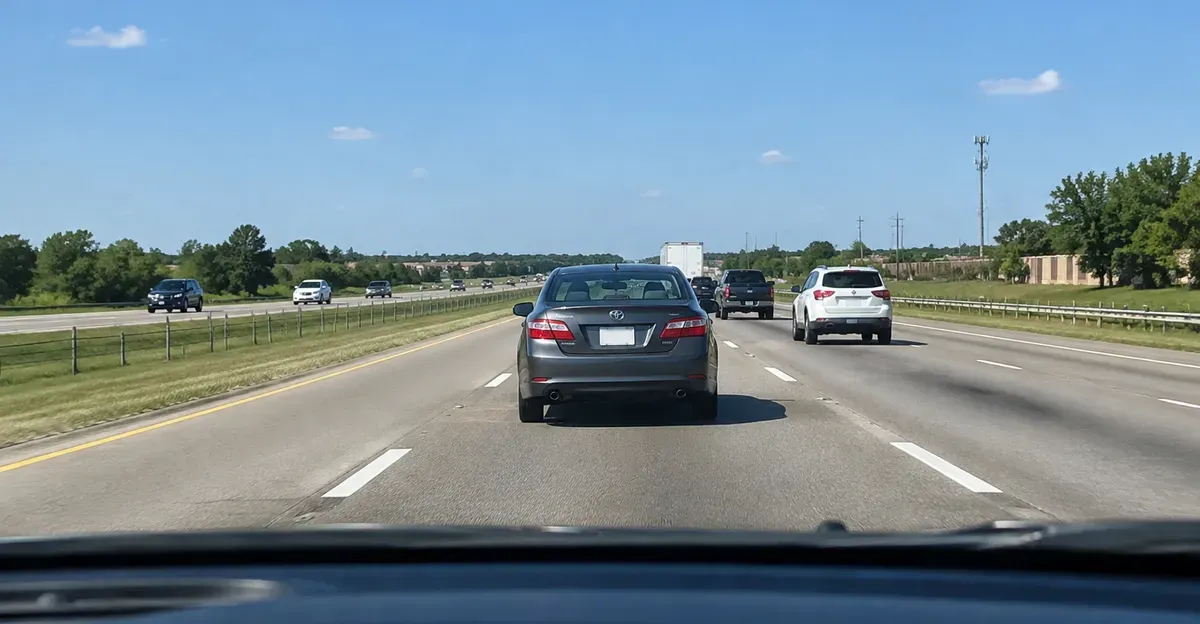
Why does my car lose power while driving is not one failure mode. Shops sort the complaint by pattern first, because the same word “weak” covers limp-mode protection, fuel starvation under load, ignition misfire, and exhaust that cannot breathe. Write down four facts before you replace a filter or a sensor.
- Did power fall all at once, or did it fade over days or weeks?
- Did a Check Engine, EPC, or reduced-power message appear at the same moment?
- Will the engine rev past a fixed ceiling, or does it climb normally and still feel soft?
- Did the automatic transmission refuse to upshift, or did the car stay in what feels like one gear?
Those four answers decide whether you are dealing with a computer-limited car or a mechanically starved car. MechanicBase describes limp mode as a protective cut that limits power and often caps RPM so you can reach a shop. That is different from a fuel pump that still feels okay at idle but collapses when you enter a freeway on-ramp. It is also different from a misfire that shakes the car and flashes a Check Engine light. Guessing parts before you sort the pattern is how a $20 air filter becomes a $400 sensor that did not fix the complaint.
A no-start car belongs in a different diagnostic tree. If the engine will not crank or will not fire from Park, that is a battery, starter, fuel, spark, or interlock problem. This article stays on losses that appear after the car is already moving.
Common causes of losing power on the road
The causes below are the shared floor from MechanicBase’s acceleration-power guide and related YourMechanic symptom pages. Treat the table as a sort, not a shopping list.
| When it happens | Likely cause | First check |
|---|---|---|
| Soft pedal response after high miles, worse under load | Clogged fuel filter | Service history; fuel-pressure test if equipped |
| Gradual lag, worse in dusty regions or overdue service | Dirty engine air filter | Inspect and replace on schedule |
| Sudden cut with Check Engine light and RPM limit | Limp mode from sensor, boost, or transmission fault | Scan all modules; do not keep flooring it |
| Power fades on hills or hard acceleration; idle OK | Weak fuel pump or restricted fuel delivery | Listen for pump prime; measure pressure under load |
| Rough running, stumble, slow acceleration | Worn spark plugs or ignition misfire | Scan misfire counts; inspect plugs on schedule |
| Loss of power with sulfur smell or underbody rattle | Catalytic converter restriction or internal breakup | Scan catalyst efficiency codes; listen cold start |
| Hesitation after air-filter or intake work | Contaminated or failed mass airflow sensor | Inspect MAF; clean only with proper MAF cleaner |
| Turbo car that feels like a non-turbo overnight | Boost leak, wastegate, or boost-sensor fault | Smoke-test intake; compare commanded vs actual boost |
MechanicBase ranks clogged fuel filters and dirty air filters among the most common reasons a car loses power when accelerating, because both restrict what the engine needs to make torque. A clogged catalytic converter or diesel particulate filter, in the same guide, traps exhaust so the engine cannot exhale and therefore cannot inhale the next charge. YourMechanic explains that a restricted converter reduces power and fuel economy, and that a broken catalyst substrate can rattle, especially at start-up. Those are exhaust-side power losses. They feel different from a misfire. They can still strand you in traffic.
Fuel, air, and spark
Fuel delivery fails most often under demand. MechanicBase notes that a weak fuel pump may not show at low speed, then leave you wanting on quick acceleration. That matches the driver story of a car that idles fine in a parking lot and dies on a merge. A clogged fuel filter creates a similar under-load fade. Dirty injectors disrupt the spray pattern and combustion quality. None of those failures are diagnosed by smell alone. Fuel pressure under load and injector balance tests belong to a shop with a gauge and a scan tool.
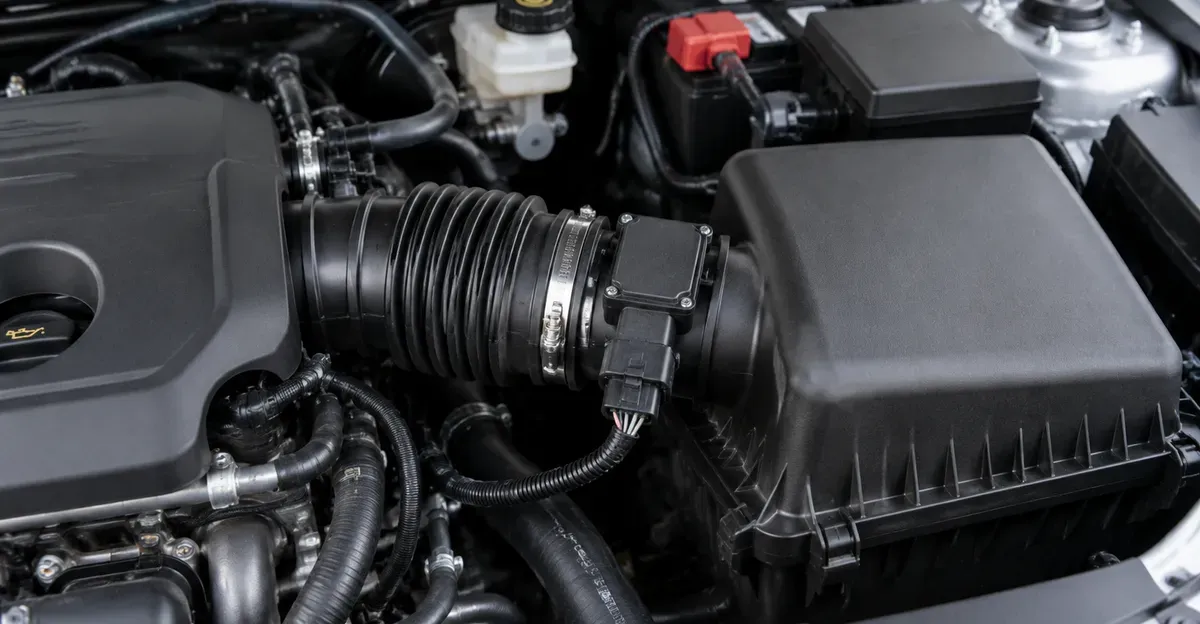
Air-side faults are cheaper to rule out and still commonly missed. MechanicBase recommends changing the air filter on a normal service interval because a packed filter starves the engine of air. The mass airflow sensor measures incoming air so the computer can meter fuel. YourMechanic describes a contaminated hot-wire MAF as a cause of rich idle or lean running under load, and a fully failed MAF as a cause of rough idle or stalls. Cleaning a MAF only helps when contamination is the issue, and only with an approved MAF cleaner. Touching the sensing element or spraying parts-store carb cleaner is a common way to destroy an expensive sensor.
Spark-side faults show up as hesitation and misfire more than as a clean “governor” feel. YourMechanic lists slow acceleration, misfires, surging or hesitating, rough idle, and hard starting among worn spark-plug symptoms, and notes that many U.S. vehicles still call for plug service in a roughly 30,000 to 50,000 mile window unless the manufacturer specifies a longer iridium interval. A flashing Check Engine light during a misfire is a stop-driving signal. Unburned fuel can overheat and destroy a catalytic converter.
Exhaust restriction and sensors
When exhaust cannot leave, power cannot arrive. YourMechanic links a failing catalytic converter to reduced engine performance, rattling, a rotten-egg sulfur smell, Check Engine illumination, and failed emissions checks in states that require them. MechanicBase makes the same mechanical point: a clogged converter or particle filter is an obstacle in the only exit path the engine has. If you smell sulfur and the car feels choked at higher RPM, do not keep hammering the throttle on a long trip. Heat and restriction compound each other.
Oxygen sensors and related air-fuel feedback loops sit next to that story. MechanicBase notes that a failed O2 sensor can drive a lean or rich condition that costs power under acceleration. A MAF that lies and an O2 sensor that lies can produce similar pedal feel with different code families. That is why “replace the O2 sensor because a friend did” is a weak plan. Codes and fuel-trim data decide the branch.
On turbocharged engines, MechanicBase puts boost-pressure problems at the top of limp-mode causes: wastegate faults, boost leaks, bad boost sensors, and control valves that let pressure read too high or too low. A boost pipe that pops off can make a modern turbo car feel like a tractor in one second. That is dramatic, but it is still a hose clamp and a smoke test away from a wrong turbo replacement.
Limp mode versus ordinary power loss
Many drivers searching this symptom are already in limp mode and do not know the name. MechanicBase defines limp mode as a safety feature: the engine or transmission computer detects a threat, then limits power and RPM so you can reach a mechanic without destroying the powertrain. In the same guide, common signs include a Check Engine light, a hard drop in power, an RPM ceiling often around 2500 to 3000, and an automatic that refuses to leave a protective gear such as third.
That pattern matters because limp mode is not fixed by a bottle of fuel additive. MechanicBase lists turbo boost faults, bad engine sensors, transmission problems, and wiring faults as frequent triggers. It also notes that a weak battery can rarely provoke limp-like behavior through low system voltage, and that low oil can trigger protection indirectly through pressure and mechanical risk. The useful consumer takeaway is simple. If the car suddenly will not rev and a warning light is on, treat it as computer protection until a scan proves otherwise.
Ordinary power loss without a hard RPM wall still needs a scan, but the parts branch differs. A soft, progressive lack of pull with no warning light can still be a dirty air filter or a fuel filter nearing the end of its life. A soft lack of pull with a solid Check Engine light is often a sensor or catalyst-efficiency code. A shaking lack of pull with a flashing light is a misfire emergency. Sorting those three sentences is worth more than any generic “top 10 causes” list.
Why does my car lose power when driving in specific situations
Why does my car lose power when driving often shares the same causes as “while driving,” but the timing of the fade is a diagnostic fork the listicles usually skip. “When” and “while” are the same Google intent. The useful difference is the situation stamp you bring to a shop.
Power only on hard acceleration or hills points at fuel delivery and air metering first. MechanicBase’s fuel-pump note—that low-speed driving may feel fine while quick acceleration does not—belongs here. So does a clogged filter that cannot keep up with demand. Power only after the engine is fully hot points at heat-related coil, sensor, or vapor issues more than at a filter that was already dirty at the cold start. Power only at steady highway speed with a sudden cut and warning lights points at limp mode or an intermittent sensor, not at “the car is just old.”
Power that returns after you shut the car off for ten minutes and restart can be a heat-soak ignition or sensor fault, or a temporary exit from a limp condition that returns once the same code sets again. MechanicBase is clear that limp mode comes back until the fault is repaired. A restart that “fixes” the car for one errand is not a repair. It is a clue.
If the loss appears only with the air conditioning on, electrical and idle-control load matter more. If it appears only in heavy rain, water in the intake tract, a soaked ignition coil, or a connector issue rises on the list. Bring the weather and load note. It changes which bay test the technician runs first.
What to do in the moment on a U.S. road
The shared advice on almost every power-loss page is “see a mechanic.” The hanging question is what you should do in the next five minutes while you are still in the lane.
If power collapses and you cannot keep highway speed, signal, move right when safe, and exit the travel lanes. Hazard lights on. Do not sit in a live lane to “see if it comes back.” If the Check Engine light is flashing, treat that as a misfire warning and minimize driving. YourMechanic’s spark-plug guidance links ongoing misfire to rising emissions, falling power, and catalytic-converter damage. Continuing to drive with a flashing light to “make the appointment next week” is how a coil job becomes a converter job.
If the light is solid, the car still moves, and temperature gauges look normal, limp-mode guidance from MechanicBase still applies: use the car only to reach a safe place or a trusted shop. There is no fixed safe mileage. Longer limp-mode trips raise the chance of secondary damage. Avoid towing a trailer, climbing long grades for fun, or resetting the computer at a parts store and then blasting back onto an interstate.
Smell matters. A strong raw-fuel smell with power loss means stop and ventilate; do not keep driving into a garage with the windows up. A sulfur smell with choking power raises catalytic-converter concern, per YourMechanic’s converter symptom list. Sweet coolant smell and a climbing temperature gauge are an overheating stop, not a power-loss debate.
Call for a tow when you cannot maintain a safe speed, when the engine overheats, when fluids are leaking, or when warning messages demand an immediate stop. A short limp to a nearby shop can be reasonable. A fifty-mile limp across open country usually is not.
Safe checks before you shop for parts
After you are off the road, the competitor floor says scan for codes and check filters. The follow-up questions are which checks are safe for a non-mechanic and which ones waste money.
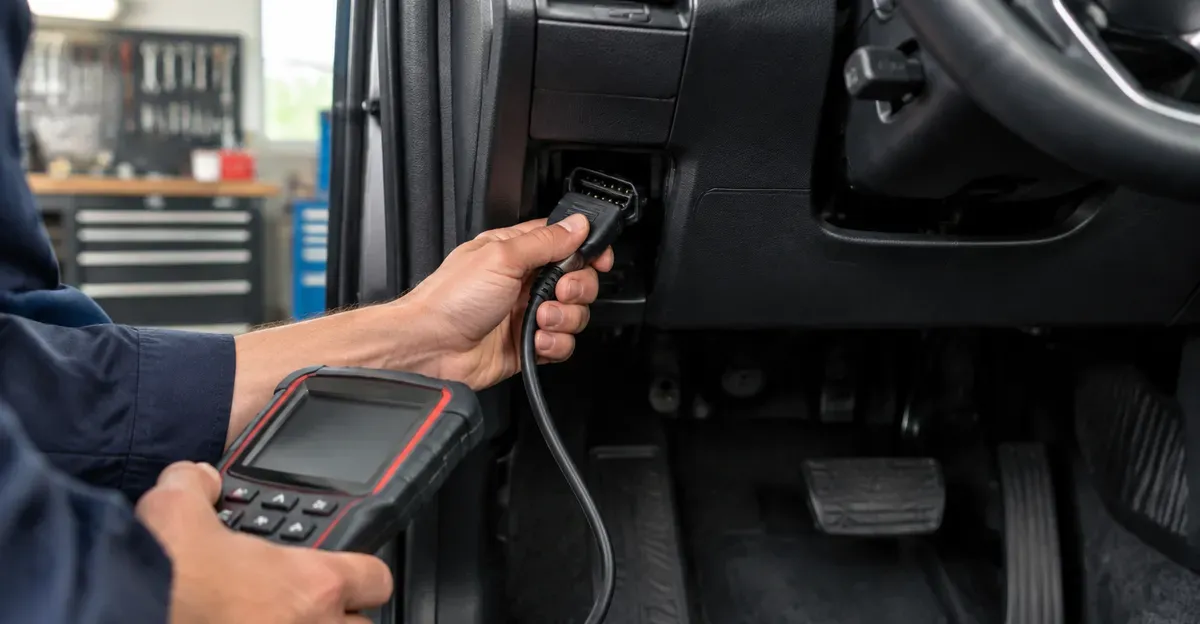
Start with information, not parts. An inexpensive OBD2 scanner, or a free read at many U.S. auto-parts stores, turns a vague complaint into a code family. MechanicBase calls code reading the fastest way to know what triggered limp mode and recommends checking for technical service bulletins and recalls on the VIN, noting that some Honda, Jeep, and Ram power-loss investigations have appeared in the industry conversation. A recall repair can be free. A guessed sensor rarely is.
Inspect the engine air filter. MechanicBase treats a dirty filter as a common, inexpensive cause of reduced power. If the filter is dark, collapsed, or overdue by the maintenance schedule, replace it. That is one of the few parts swaps that is both cheap and logically first.
Check obvious intake plumbing on turbo cars: loose clamps, cracked rubber boots, and disconnected sensors after recent service. A boost leak large enough to dump power is sometimes visible. Do not “test” by revving a cold engine in a closed garage.
Battery and charging health belong on the list even though this is not a no-start article. MechanicBase notes that a bad battery can rarely contribute to limp-mode behavior through voltage problems. Dim lights, a battery warning light, or a recent jump are reasons to load-test the battery before you condemn an expensive control module.
Stop before you buy a catalytic converter from a search result. YourMechanic’s converter page makes clear that many issues set a Check Engine light, and that scanning is required because other faults can look the same. Converters are expensive. Upstream misfires and fuel problems create converter failures. Replacing the converter without fixing the cause repeats the bill.
Do not pour random cleaners into a tank as a diagnosis. Do not clear codes, drive without notes, and then ask a shop to guess what the computer once knew. Save screenshots of the code list and freeze-frame data when your scanner offers them.
What to tell the shop so diagnosis starts faster
Power-loss tickets get expensive when the only note on the repair order is “car feels slow.” Give the advisor a timeline the technician can test against.
Say when it started, whether it is constant or intermittent, and whether a warning light is solid, flashing, or absent. Say whether the automatic feels stuck in a gear. Say whether the RPM stops climbing near a fixed number. Say whether the problem appears cold, hot, on hills, at highway speed, or only with air conditioning. Mention recent work: air filter, battery, spark plugs, intake cleaning, or collision repairs that may have disturbed wiring.
Bring the code list if you already scanned. MechanicBase’s limp-mode diagnostic outline starts with reading all stored codes, then researching that code path, checking boost readings on turbo cars, inspecting wastegate motion, looking for intake leaks with smoke, and verifying key sensors such as MAF, O2, coolant temperature, throttle position, and intake-air temperature. You do not need to run that list at home. You do need to hand the shop a symptom story that matches it.
Ask for a documented fuel-pressure test if the complaint is soft under load with no RPM ceiling. Ask for misfire counts if the car shakes. Ask for catalyst and O2 monitor status if the car feels choked and smells like sulfur. Those requests are reasonable consumer questions. They keep the job on a test sequence instead of a parts roulette.
Cost depends entirely on the failed part. MechanicBase states that limp-mode repairs can be nearly free when a connector is loose, or can climb past a multi-thousand-dollar turbo failure. YourMechanic’s converter and ignition articles do not promise a single national price, and neither should you expect one. Demand a diagnosis fee that buys a written cause, then approve parts against that cause. States differ on inspection and emissions rules; a catalyst code that fails an emissions check in one state may be a different paperwork problem in another. Verify local rules when the repair is emissions-related.
Mistakes that make power loss worse
Clearing codes and ignoring a return of limp mode is the most common expensive mistake. MechanicBase’s reset guidance is repair first, then clear. A temporary restart that restores power is not permission to plan a road trip.
Driving with a flashing Check Engine light is the second. Misfire dumps fuel into the exhaust. Converters overheat. YourMechanic’s converter and spark-plug pages together explain why “it still moves” is not the same as “it is safe to finish the week.”
Replacing the most popular internet part for your exact model year without matching codes is the third. MAF, O2, fuel pump, and converter all appear on forums for the same complaint. Only one of them is usually right for your car this week.
Ignoring transmission symptoms is the fourth. MechanicBase notes that automatic-transmission faults—low fluid, bad shift solenoids, valve-body problems, or sensor faults—can force limp behavior. Topping off mystery fluid without checking the correct procedure in the owner’s manual can harm some sealed units. If the car will not upshift, say so explicitly. Do not let the ticket stay filed as “engine tune-up.”
Finally, do not confuse this symptom with a brake drag or a parking-brake left on. A car that feels like it is being held back, smells like hot brakes, and loses speed downhill is a brake or wheel issue, not a fuel pump. Different system, different part page. If the pedal is hard and the wheels are hot, open a different diagnostic path.
FAQ
Why did my car lose power while driving?
Why did my car lose power while driving is the past-tense version of the same diagnosis. Something interrupted fuel, air, spark, exhaust flow, or computer permission while the car was already moving. MechanicBase’s cause list for acceleration power loss—filters, MAF and O2 sensors, injectors, fuel pump under load, spark plugs, catalytic restriction, compression loss, and turbo or boost faults—covers most one-time events. A scan and a pattern note (sudden versus gradual, light on versus light off, RPM capped versus soft) decide which branch to test first.
Can I drive home in limp mode?
MechanicBase says you can drive in limp mode but should not treat it as normal transportation. The feature exists to reach a repair location. There is no universal safe mileage. If you cannot maintain traffic speed, if temperatures climb, or if warning messages escalate, tow instead.
Will a new air filter fix it?
Sometimes. MechanicBase lists a clogged air filter as a common, basic cause of reduced power, and cleaning or replacing overdue filters is part of its early limp-mode checklist. If codes point at misfire, catalyst efficiency, or fuel pressure, a filter alone will not finish the job.
Does a Check Engine light have to be on?
No. Filters and some fuel-delivery problems can rob power without setting a light. A light makes the computer branch easier. Absence of a light does not mean absence of a problem.
Power loss while the car is moving is a sort problem first and a parts problem second. Match the pattern to limp mode, fuel, air, spark, or exhaust restriction. Scan before you spend. Stop when the light flashes or the car cannot stay with traffic. Then give the shop a timeline that makes the next test obvious.