
By Zeng FengMyCarWhy EditorialUpdated
Best Octane Booster
For most US daily drivers, buy the pump octane the manual requires instead of a bottle. When one tank of 87 was a mistake, use Lucas Oil 10026. STP Octane Booster is the small one-tank bottle. Read the street-legal note on Royal Purple Max-Boost before a daily driver. Skip booster when knock continues on the correct premium grade.
This guide compares those three verified boosters by street use versus a racing-formula caveat. It is a buying map, not a lab test. Claims come from the manufacturer and Amazon listings linked here. For deposit-related hesitation, see best fuel injector cleaner. For power loss under load, see why a car would lose power while driving. If a light is on, read the code with best OBD2 scanner for check engine light.
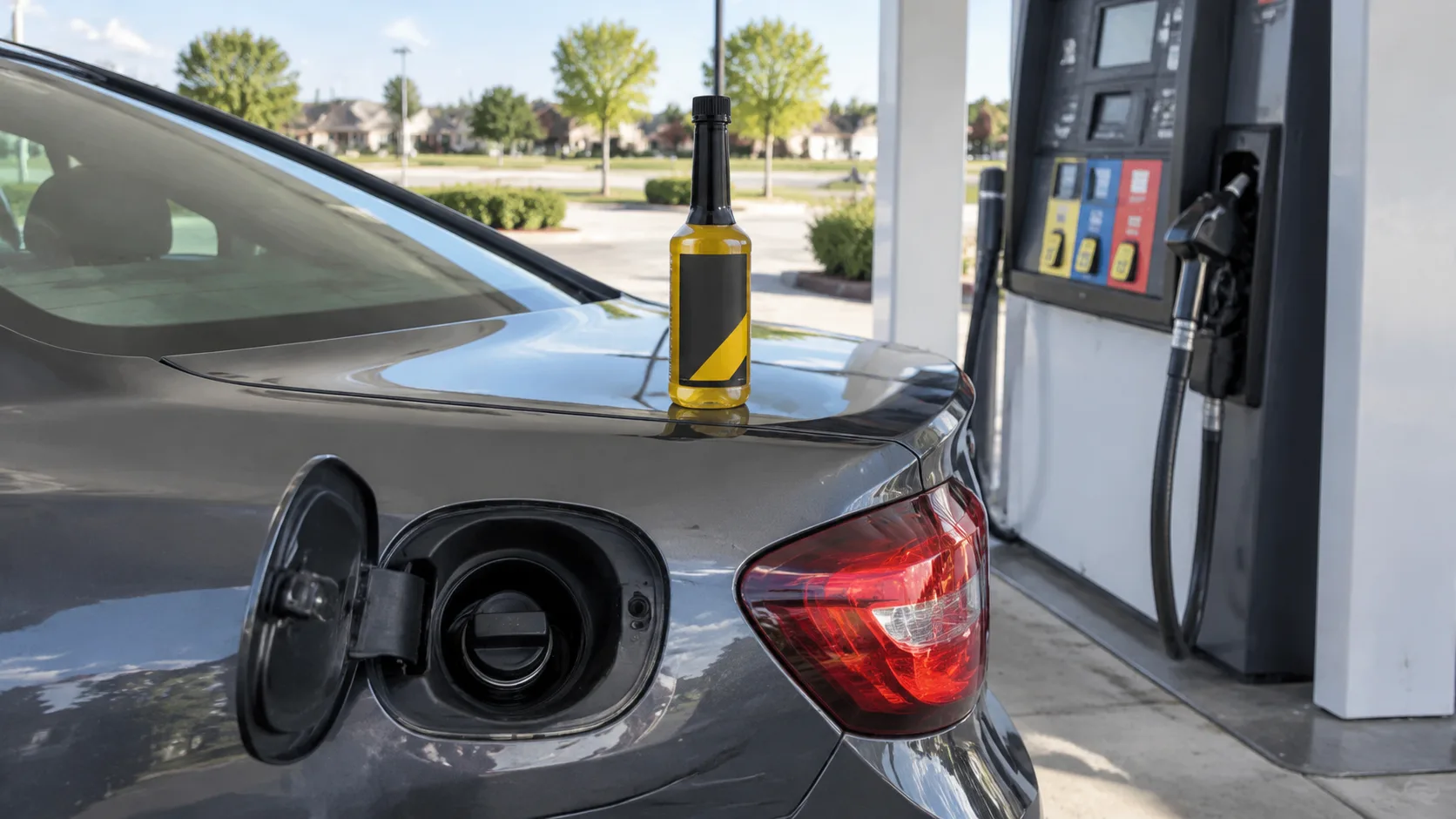
Should you buy octane booster for this knock?
Octane is resistance to knock, the ping you hear when the air-fuel mix fires too early under load. If the engine pings mainly on 87 and quiets on 91 or higher, octane is a plausible lever. If it knocks on the premium grade the manual already requires, look at carbon, ignition, fuel trims, and mechanical causes instead of another additive.
- Read the fuel-octane requirement in the owner's manual. Do not guess from a forum post about a different engine.
- Note when the knock happens: hot day, heavy throttle, a grade, or towing.
- If the check engine light is on, scan before you pour. Codes beat a bottle.
- For ongoing driving, buy the correct pump grade. Treat a booster as an occasional bridge, not a lifestyle.
| What you know | Booster useful? | Better next step |
|---|---|---|
| Manual requires premium; you filled 87 once | Sometimes, for that tank | Next fill: the correct pump octane |
| Light ping only on cheap gas | Sometimes | One label dose, or just buy 91 or higher |
| Knock already on the correct premium | Unlikely | Diagnosis: carbon, ignition, or fuel trims |
| Hesitation without ping | Wrong tool | Injector cleaner, air, or codes |
| Power limit and a warning light | No | Scan, then power loss |
What do "points" and octane-booster claims mean?
Retail copy often says "up to 3 numbers" or "30 points." In that retail talk, 10 points is about 1 AKI octane number. Verify the exact wording on the bottle you hold. Results vary with treat rate and with the base fuel. A 5 oz bottle will not turn a tank of 87 into race fuel.
Some boosters use MMT or similar manganese additives. Follow the label limits for oxygen sensors and catalytic converters. Do not overtreat "for more power." More bottles are not safer, and they are not free horsepower.
A booster is not an injector cleaner. If the complaint is hesitation, rough idle, or deposits, start with best fuel injector cleaner. If the complaint is ping only after you bought the cheap grade, octane is the conversation.
Which octane booster should you buy?
These three bottles are a common 15 oz street treat, a small one-tank bottle, and a higher-claim can with a racing-formula note. As an Amazon Associate, we may earn from qualifying purchases. Prices move; use the live listings. Prefer a single bottle unless you want a multipack.
| Model | Amazon link | Size and treat | Maker highlights | Best fit |
|---|---|---|---|---|
| Lucas Oil 10026 | B000ARTZPE | 15 oz; listing treats a tank in the mid-20 gallon class | Fuel-injected and carbureted; turbo, oxygen-sensor, and catalyst safety claims on the copy | Common street booster |
| STP Octane Booster | B004MBFTYK | 5.25 oz; up to about 15 gallons per the listing | Octane bump plus intake-cleaning claims; capless-filler friendly | Small, inexpensive one-tank bottle |
| Royal Purple Max-Boost | B00HEZQHQU | 16 oz | Up to about 3 octane numbers; direct-injection and turbo claims; racing-formula note on the listing | Only after you read the street-legal caveat |
Lucas Oil 10026 — the common street bottle
Lucas Oil 10026 Octane Booster is widely listed for fuel-injected and carbureted engines. Maker copy claims a strong boost versus many other brands and includes safety language for turbos, oxygen sensors, and catalytic converters. Use the bottle as directed for the tank size on the label.
Choose Lucas when you want a mainstream 15 oz treat for one tank of low octane. Still buy 91 or higher on every fill if the manual requires premium.
STP Octane Booster — small one-tank bottle
STP Octane Booster, the 5.25 oz listing, markets an octane bump plus intake-system cleaning. One bottle treats up to about 15 gallons, and the listing mentions capless filler compatibility.
Pick STP for a small, inexpensive one-tank try. It is not a substitute for diagnosing knock that continues on premium fuel.
Royal Purple Max-Boost — read the fine print first
Royal Purple Max-Boost lists up to about three octane numbers, deposit cleaning, and compatibility language for carbureted, port-injected, direct-injected, and forced-induction engines. The Amazon feature text also says it is a racing formula that is not street legal in some contexts. That note is why this pick sits behind a caution, not as the default daily-driver bottle.
Choose Max-Boost only after you read the can for street-use limits where you drive. Skip it if you need a clearly street-positioned consumer booster. Lucas or STP is the clearer grocery-store path.
How do you use octane booster without making a mess?
- Pour the labeled amount into the tank before or during fueling, as the bottle says.
- Do not exceed the treat rate. More is not safer.
- Keep the bottle away from sparks, wipe spills, and store it sealed.
- On a turbo or direct-injection engine, use only a product that allows that setup, and still obey the manual's octane requirement.
If the manual forbids additives, do not add a booster because a listing looks compatible. The manual wins.
When should you buy pump gas or see a shop instead?
Buy the correct pump octane every fill when the manual requires it. That is cheaper and clearer than a bottle habit. See a shop when knock continues on that grade, when a check engine light stores a knock or misfire code, or when the car is in a reduced-power mode. Read engine power reduced and why a car would lose power while driving for that branch.
A light ping on one tank of 87 can be an octane story. Ping on the correct premium, plus a warning light, is a diagnosis story. Pouring booster on top of a bad knock sensor does not fix the sensor.
When should you not buy octane booster?
Skip unlabeled race jugs with no treat chart. Skip using booster as an injector cleaner. Skip stacking booster, cleaner, and a powder in one tank. Skip any product that conflicts with emissions equipment without a clear label path.
Also skip a booster as a forever substitute for premium. If the engine was tuned for 91 or higher, the pump grade is the plan. A bottle is a bridge when the station was out, or when you grabbed 87 by mistake, not a weekly savings strategy. Detonation on the wrong fuel can get expensive. Correct octane is the cheaper habit.
Royal Purple Max-Boost stays off the default list until you have read the street-legal note for a daily driver. Do not treat a commuter car with a racing-formula can you have not read.
Go to a shop when knock is loud on the correct grade, when the engine pulls timing and feels down on power, or when you smell fuel along with the ping. See why the car smells like gas if that odor is part of the visit. A booster will not seal a leak.
Quick pick guide
- Manual requires premium: buy that grade at the pump. A booster is a bridge, not the plan.
- One mistaken tank of 87, street bottle: Lucas 10026.
- Small one-tank bottle: STP Octane Booster.
- Higher claim, racing-formula can: Royal Purple Max-Boost, only after the street-legal note.
Treat the label as the dose limit. Correct pump octane beats a melted-piston story.
FAQ
Is octane booster better than buying 91 or higher pump gas?
Usually no for daily driving. If the owner's manual requires premium, buy that pump octane. A booster is a temporary bridge for one tank, not a cheaper substitute for the fuel grade the engine was tuned for.
Will octane booster fix engine knock from carbon or timing problems?
Not reliably. Knock from heavy carbon, a bad knock sensor, an ignition fault, or a lean mixture needs diagnosis. A booster only addresses knock when low-octane fuel is the actual limit.
Are these octane boosters safe for turbos and catalytic converters?
Lucas and similar consumer listings often claim turbo, oxygen-sensor, and catalyst safety. Still follow that product's label. Royal Purple Max-Boost's Amazon listing notes a racing formula that is not street legal in some contexts. Read the can before you treat a daily driver.
Can I use octane booster in a direct-injection engine?
Many modern boosters list direct-injection compatibility, but the bottle rules. Do not overtreat. If the manual forbids additives, skip them. For deposit cleaning rather than octane, see the injector-cleaner guide.