
By Zeng FengMyCarWhy EditorialUpdated
Rough Idle: Mounts, Vacuum, or Misfire
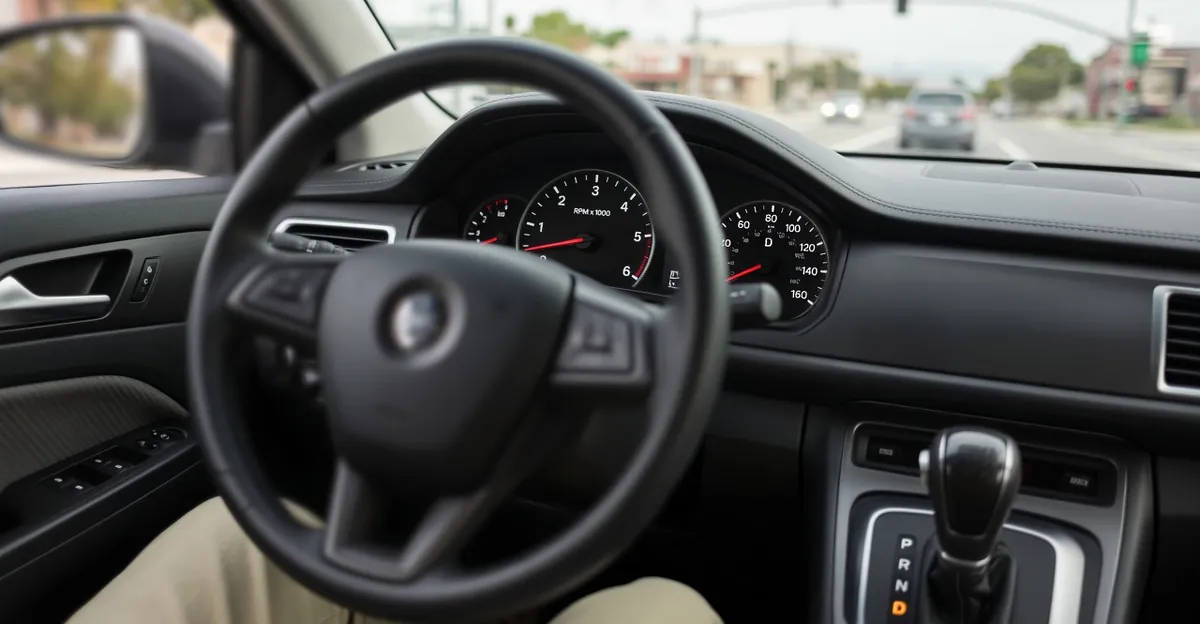
Rough idle is a sorting problem, not a shopping list. When the cabin shakes at a light, the tach hunts a few hundred RPM, or the whole car feels like it is about to stall in Drive, the first useful decision is whether the shake is the engine fighting for air and spark—or the engine running fine while a failed mount passes every pulse into the body. PulsCar-style DIY guides put that Neutral / Park contrast near the front of the diagnosis for a reason: the same vibration can mean two different repair tickets. Dana Brothers–style cause lists name vacuum leaks, dirty throttle bodies, bad plugs or coils, fuel delivery, and worn mounts in one breath. Use those names only after a pattern test, not as a cart of parts.
Why is my car idling rough is also a stop-driving question when the Check Engine light flashes. A flashing light with a rough idle is the active-misfire warning that can cook a catalytic converter if you keep loading the engine. Steady light or no light still deserves a scan and a listen. Do not open with a full tune-up kit, a bottle of cleaner, and hope. Open with Neutral versus Drive, cold versus hot, AC on versus off, and whether the tach is stable while the cabin still shakes.
Stop Now or Sort in the Driveway
Treat flashing Check Engine plus rough idle as a pull-over. Shut the engine off when it is safe. Do not finish a highway trip “to see if it clears.” Raw fuel from a dead cylinder overheats the catalyst. Once the light is only steady—or off—and the car is not trying to stall into traffic, you can sort in a quiet lot.
Use this roadside filter before anyone quotes plugs, mounts, or a fuel flush:
| What you see | Safer next move | Why |
|---|---|---|
| Flashing CEL, strong fuel smell, power collapsing | Stop, tow or flatbed if it will not idle safely | Active misfire risk to catalyst and fire hazard from raw fuel |
| Steady CEL, rough but holds idle in Park | Drive short to a lot, scan freeze frame | Codes and fuel trims beat guessing |
| No light, shake only in Drive / Park, smooth in Neutral | Mounts first, not a coil pack | Neutral test isolates chassis shake from combustion shake |
| Hunt 500–1200 RPM, hiss under hood | Vacuum / intake boot path | Unmetered air makes the computer chase idle |
| Rough only with AC on | Idle control + compressor load | Extra load reveals a marginal idle or a weak vacuum leak |
If power falls while you are already moving, treat it like why would my car lose power while driving, not like a quiet idle complaint. If heat climbs with the shake, see why is my car overheating. Noise without a clear idle pattern belongs with car noises first.
The Neutral Test Before Any Parts Cart
Engine shaking at idle often feels like “the motor is dying” when the real story is a broken engine or transmission mount. In Drive or Park, the powertrain is loaded against the mounts. In Neutral, many cars unload that path. If the shake drops sharply in Neutral at the same RPM, and the tach is steady, start with mounts—not a four-coil Amazon bundle.
Do the test somewhere flat and safe:
- Warm the engine to normal temperature so you are not sorting cold-enrichment quirks.
- Set the parking brake. Note the shake in Drive with your foot on the brake.
- Shift to Neutral. Watch the tach and feel the steering wheel and seat.
- Shift back to Park and Drive again. Repeat once so you are not fooled by a single light cycle.
| Neutral-test result | Likely direction | Do not buy yet |
|---|---|---|
| Smooth in Neutral, harsh in Drive/Park | Mounts / torque path | Plugs, coils, injector cleaner |
| Same shake in Neutral and Drive, tach hunting | Air, fuel, or ignition | Mounts alone |
| Shake plus flashing CEL in any gear | Misfire first | “Just a motor mount” stories |
| Smooth until you turn AC on | Idle air / compressor load | Full AC rebuild on day one |
Mounts can coexist with a real misfire. The Neutral test only ranks the first ticket. If Neutral is smooth and there are no codes, a shop can still confirm mount play with a careful brake-torque check. If Neutral is still rough, leave the mount aisle and move to scan, listen, and cylinder isolation.
Pattern First: Cold, Hot, Hunt, Wet, AC
Car idling rough is not one failure. The when-table beats a random parts list every time.
| When the rough idle shows up | Likely direction | First useful check |
|---|---|---|
| Only for the first 30–90 seconds cold, then smooth | Cold spark, enrichment, or sticky idle air | Scan pending codes; note if it dies only cold |
| All day, worse fully hot | Vacuum leak that opens with heat, weak coil, fuel pressure | Listen for hiss hot; scan fuel trims |
| Tach hunts up and down at the light | Vacuum leak, dirty throttle, IAC / ETB deposits | Intake boot and throttle-body carbon |
| Rough idle when AC on, fine with AC off | Idle compensation under compressor load | Codes + throttle adaptation; clutch lockup feel |
| Worse in rain or after a car wash | Ignition boots, coil towers, cracked wires | Spray mist carefully on boots only with engine running if you know the risk—or scan misfire counts |
| After recent intake, PCV, or throttle work | Hose left off, gasket leak, relearn not done | Visual re-check of every connector you touched |
| With a raw fuel smell and dead-flat idle | Rich misfire or leaking injector | Stop driving; scan and fuel-rail diagnosis |
Dana Brothers–style articles often list six causes in a row. Keep the list, lose the simultaneous shopping. One pattern, one test. If the pattern is AC-only, do not start with a compression tester. If the pattern is Neutral-smooth, do not start with Techron.
Vacuum Leaks and Intake Air You Did Not Meter
Unmetered air after the MAF—or on speed-density cars, any unplanned air—makes the computer chase idle with fuel and timing. The cabin feels like a stumble; the tach may rise, fall, then catch. Common backyard finds: cracked intake boots, brittle vacuum tees, disconnected PCV hoses, and throttle-body gaskets that weep after a cleaning.
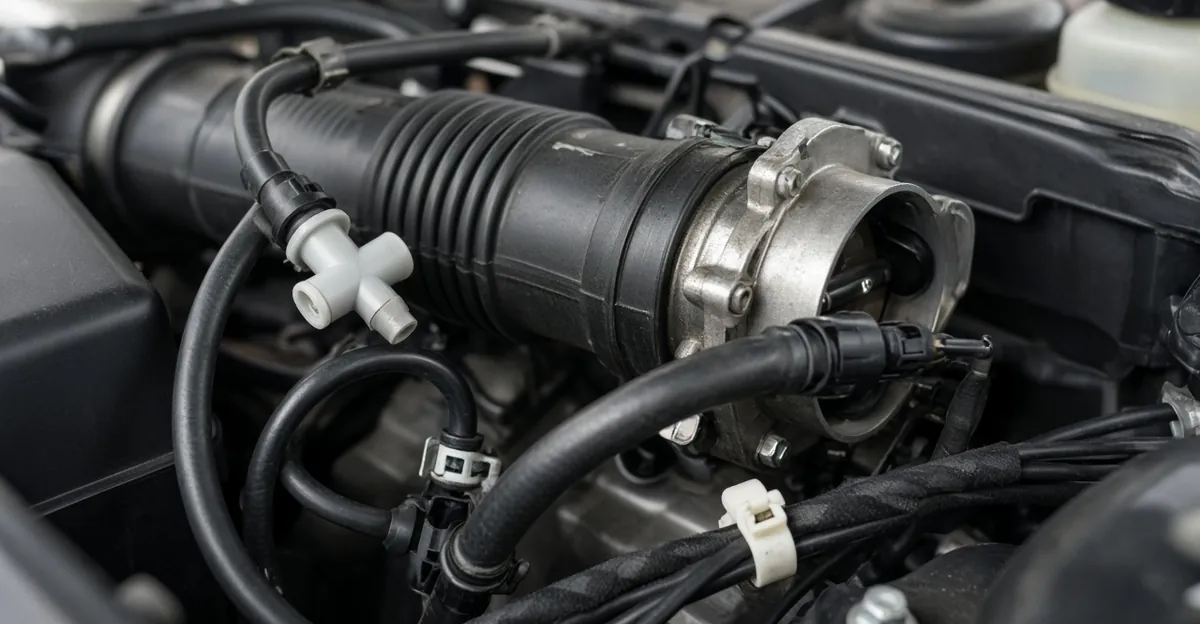
Walk this order with the engine warm and idling in Park, parking brake set, and clear of fans:
- Look. Follow the big rubber intake tube from the air box to the throttle. Pinch gently along folds. A collapsed or split boot often shows as a hard line or oil-stained crack.
- Listen. A sharp hiss that changes when you move a hose is a clue. Do not spray flammable carb cleaner in a blind fog near a hot exhaust—use careful listening and visual inspection first.
- Check PCV and brake-booster hoses. A disconnected line to the booster can rough the idle and change pedal feel.
- Watch short-term fuel trims with a scanner if you have one. Large positive trims at idle that fall under load often scream vacuum leak.
If you already cleaned the throttle and left a hose off, that is not a mysterious computer failure. Say the recent work out loud at the parts counter. It shortens the path.
Ignition: Coils, Plugs, and the Coil-Swap Test
A dead coil or fouled plug on one cylinder is a classic rough idle with or without a steady CEL. Random misfire codes (P0300) or a cylinder-specific code (P0301–P0308) turn guessing into a plan. If you have a coil-on-plug layout and a code for cylinder 3, swap that coil with cylinder 1, clear codes, and see whether the misfire number moves. When the code follows the coil, replace the coil. When it stays on the same cylinder, look at the plug, injector, or compression next—not another random coil from a multipack you already opened.
Do not replace every coil because one failed unless mileage, oil in the plug wells, or a known campaign says the set is due. Oil-filled plug wells point at valve-cover gaskets before a fourth identical coil purchase. Cross-thread fear is real: start plugs by hand, seat to the manufacturer torque, and use the correct heat range from the catalog—not “the ones that were on sale.”
Wet-weather rough idle that smooths out after a long dry highway run often lives in boots and towers. Condensation and micro-cracks arc to ground at idle when voltage demand is still high and mixture is not always perfect. That pattern is ignition first, fuel cleaner second.
Dirty Throttle Bodies and “Idle Relearn”
Carbon around the throttle plate steals the tiny air path the computer uses to hold idle, especially on electronic throttle bodies. Rough idle after a battery change can also be a lost idle adaptation—not a failed engine. Many late-model cars need a short relearn: warm idle in Park with all loads off, then with AC on, following the service information for that platform. Skipping the relearn after a cleaning is a common way to create a new complaint that looks like a failed cleaner job.
Throttle cleaning is not a substitute for a vacuum leak you can hear. Clean the bore with a product meant for electronic throttles when the plate is visibly caked and trims or idle are unstable without misfire counts. Avoid soaking sensors. If the car uses a separate idle air control valve on an older cable throttle, that valve can stick and create a hunt that looks identical from the seat.
For a paired cleaner path when hesitation and idle quality share a fuel-deposit story—and codes do not scream misfire—see best fuel injector cleaner. Cleaner is support after air and spark are not the obvious fault, not the opener for a flashing light.
Fuel Delivery Without Magical Bottles
Low fuel pressure, a clogged filter on older platforms, or a lazy pump can rough the idle and stumble on tip-in. That diagnosis needs a pressure gauge or a shop bay, not a second bottle of solvent. Use a maintenance cleaner only when:
- The engine holds a stable idle without flashing CEL.
- There are no hard misfire counts pointing at one coil.
- The complaint is mild hesitation or a gradual idle quality drop on a high-mileage gasoline car.
- You are willing to run a full tank after dosing per the label.
Verified US Amazon options that already appear in the sister cleaner guide:
- Chevron Techron Concentrate Plus for a mainstream one-tank maintenance dose.
- Sea Foam SF-16 when you also want a multi-use garage can with stabilizer use cases.
- Red Line SI-1 for a concentrated detergent shot.
Skip all three if the car will not idle, smells like raw fuel, or the light is flashing. Solvent does not fix a dead coil, a split boot, or a broken mount.
Scan Before You Guess: Code Readers That Help
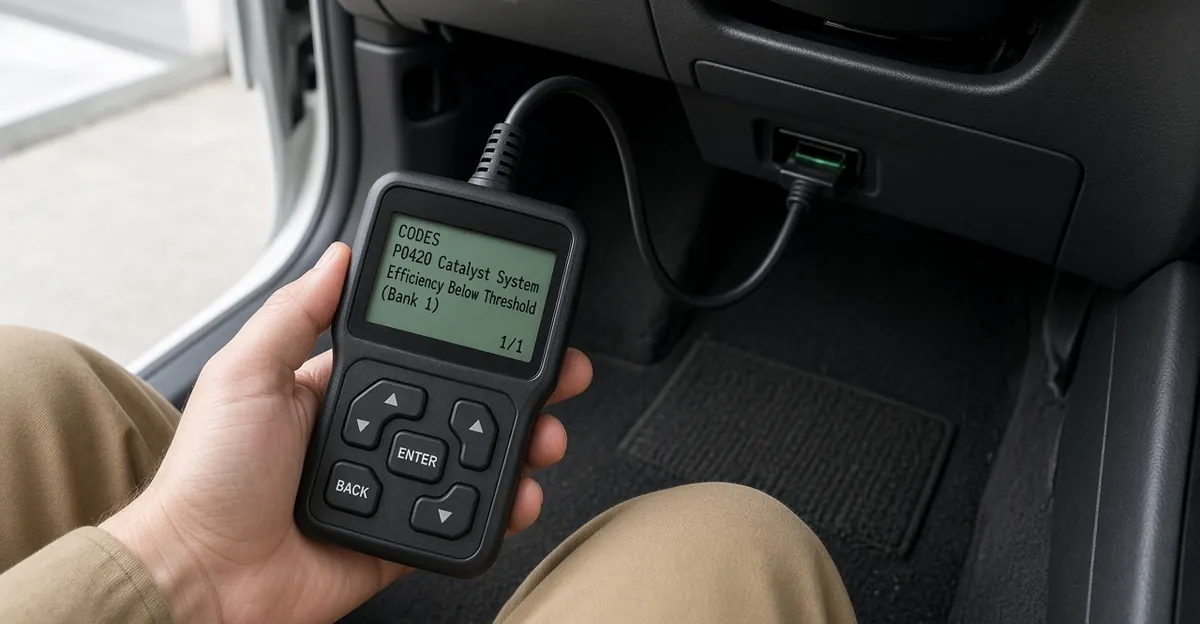
Even when the dash is dark, pending codes and freeze-frame data explain whether the computer saw a lean idle, a misfire on cylinder 2, or a throttle performance fault. Live misfire counts turn a “maybe coil” into a measured swap. Fuel trims at idle versus 2500 RPM separate vacuum leaks from fuel-delivery limits.
Practical US Amazon scanners already used across MyCarWhy tool pages:
- ANCEL AD310 for a simple plug-in read and clear when you need codes without a phone.
- BlueDriver Bluetooth Pro when you want deeper reports on a phone and are willing to live in an app.
- Broader comparisons live on best OBD2 scanner for check engine light and best code reader for cars.
Scan, write the codes down, then clear only after you understand the freeze frame. Clearing first to “see if it comes back” without recording data wastes the only snapshot the computer saved at the moment of failure.
Compression and Leak-Down: Last Mechanical Gate
When one cylinder keeps misfiring after coil, plug, and injector command look fine—or when rough idle rides with coolant loss, milky oil, or unexplained oil consumption—move to compression or leak-down. Those tests answer whether the cylinder seals. They do not explain a Neutral-smooth mount failure. They do not fix a vacuum tee you can see without a gauge.
A simple tester such as the OTC 5606 compression tester kit is enough for a relative compression check on many gasoline engines if you follow the tool instructions and disable fuel and spark safely. Large spreads between cylinders, or one cylinder far below the others, change the job from DIY idle sorting to engine repair territory. Leak-down adds whether air escapes through valves, rings, or a head-gasket path. Stop before you turn a driveway test into a scratched cylinder wall—if you are not set up for it, pay for the test once.
DIY Versus Tow Versus Shop Bay
| Situation | DIY ceiling | Shop / tow |
|---|---|---|
| Neutral-smooth, no codes, visible collapsed mount | Visual confirm; replacement may still need alignment tools | If the mount is buried or subframe-related |
| Hiss + cracked boot you can reach | Replace hose / clamp | If the leak is under the intake manifold |
| P030X with coil-on-plug access | Coil swap test; replace failed coil / plug | If wells are full of oil or threads are damaged |
| Flashing CEL on a busy road | Stop; do not “limp home” at highway load | Tow when it will not idle safely |
| Random rough idle, no access to scan data | Borrow or buy a basic reader | Shop if trims and smoke tests are needed |
| Rough idle plus overheating or coolant in oil | No further idle experiments | Tow; mechanical diagnosis |
Power-reduced modes and limp messages overlap this topic—see engine power reduced when the computer is actively limiting output, not only shaking at a light.
What Not to Buy on Day One
- A full plug-and-coil kit with no codes, no Neutral test, and no pattern.
- Three cleaners stacked on a flashing misfire.
- A used catalytic converter because someone online said rough idle means “cats.”
- Mounts and coils in the same cart “just in case.”
- The cheapest no-name coil set for a car that needs a specific OEM-shape boot.
Spend first on information: Neutral test results, a photo of the intake boot, and a code list. Parts second.
Tools and Parts That Fit After the Sort
When the pattern earns them, these verified Amazon links (tag screenissues-20) match the checks above:
| Need | Product | Link |
|---|---|---|
| Read / clear codes | ANCEL AD310 | B01G5EA74I |
| Phone-based reports | BlueDriver Pro | B00652G4TS |
| Maintenance fuel cleaner | Techron Concentrate Plus | B00092893E |
| Multi-use cleaner / stabilizer | Sea Foam SF-16 | B0089EMOK8 |
| Concentrated detergent | Red Line SI-1 | B000CPI5Z0 |
| Relative compression | OTC 5606 kit | B000R5CPAQ |
| Throttle / MAF cleaning set (when deposits are visible) | CRC MAF + throttle twin pack | B0091KCH6U |
CRC products are for cleaning hardware you can see, with the battery and sensors handled per the label—not for spraying into a running intake as a diagnosis. Pair cleaner purchases with the best fuel injector cleaner decision tree when the complaint is soft deposits rather than a hard misfire.
FAQ
Why is my car idling rough in Park but smooth in Neutral?
That pattern usually points at engine or transmission mounts, not a misfire. In Neutral the engine is unloaded from the driveline path that Park or Drive loads through the mounts. Confirm with the Neutral test before you buy plugs, coils, or a fuel-system cleaner.
Can I keep driving with a rough idle and a flashing Check Engine light?
No. A flashing Check Engine light with rough idle is a stop-when-safe signal for an active misfire that can overheat the catalytic converter. Pull over, shut down, and scan before another highway run. A steady light still deserves a scan the same day, but flashing is not a commute-through warning.
Does rough idle when AC on mean the AC compressor is bad?
Not by itself. AC-on idle rough often means the idle air control or electronic throttle is not adding enough air when the compressor loads the engine, or a weak vacuum leak only shows under that load. Check for codes, listen for vacuum hiss with AC on, and confirm the compressor clutch is not locking up hard before you replace the compressor.
Should I buy a tune-up kit for rough idle with no codes?
Not first. Do the Neutral test, a visual vacuum and intake-boot check, and a freeze-frame scan even when the light is off. Blind plug-and-coil kits waste money when mounts, a cracked PCV hose, or a dirty throttle body are the real cause. Buy parts after a pattern points at ignition or fuel.
When does rough idle need a compression or leak-down test?
After you have ruled out mounts, vacuum leaks, throttle deposits, and ignition on a cylinder that keeps misfiring, or when oil consumption, milky oil, or coolant loss rides along with the shake. Compression and leak-down are shop or advanced DIY tests for mechanical sealing, not a first garage guess.
Rough Idle Decision Wrap
Rough idle gets cheaper when you refuse to buy the whole cause list at once. Run the Neutral test. Respect a flashing CEL. Scan before you guess. Listen for vacuum. Swap a coil only when a cylinder code invites the swap. Use fuel cleaner as a maintenance lane, not an emergency lane. Move to compression only when the cylinder still fails after air and spark. For broader hard-failure paths, keep engine repair and car noises in the loop—but let the idle pattern pick the next link, not the other way around.