
By Automotive Research TeamUpdated 2026-09-29
How to Check Car Fluids Without Guessing Levels
How to check car fluids is a driveway skill, not a shop mystery. Incorrect levels cause breakdowns and serious damage, and AAA Automotive says vehicle fluids need attention more often than the typical 5,000- to 10,000-mile service interval even when a maintenance reminder is working. You are not trying to become a technician in one afternoon. You are trying to read six reservoirs and dipsticks the way the manual expects, catch a slow leak before a warning light forces a tow, and know when a top-off is the wrong next move.
This guide sorts the job the way a US driver meets it under the hood: which fluids matter between oil changes, how to set the car up so the reading is honest, how cold checks differ from hot checks, how do you put coolant in a car without scalding yourself or mixing the wrong chemistry, what sealed transmissions and electric steering change, how color and smell change the decision, and when low fluid means stop driving. Nothing here replaces the owner's manual for your VIN. Fluid type, dipstick marks, and sealed-service rules are model facts.
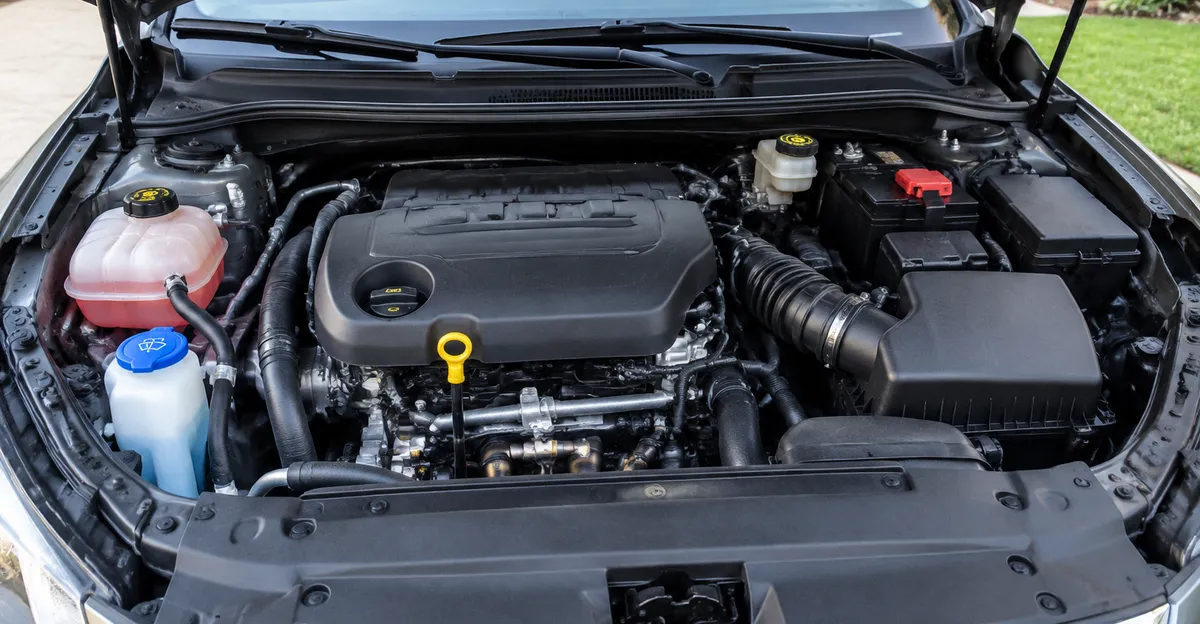
Which Fluids Matter Between Oil Changes
How to check fluids in car starts with naming what you are looking for. Mercury Insurance lists six essentials most gasoline cars still carry: engine oil, power steering fluid, brake fluid, engine coolant, automatic transmission fluid, and windshield washer fluid. AAA Automotive covers the same core set. Auto Club Group's AAA page adds fuel as a seventh "fluid" conversation, but fuel grade belongs at the pump, not on a dipstick walk. Skip inventing eighth and ninth bottles under the hood. Start with the six that fail quietly between appointments.
Engine oil lubricates, cools, and cleans. AAA says insufficient oil can cause major engine damage. Coolant (antifreeze) prevents freeze-up, raises boiling point in summer, and fights rust year-round. Automatic transmission fluid transfers power, lubricates, and keeps seals flexible. Brake fluid carries pedal force to the hydraulic brakes and protects those parts. Power steering fluid moves hydraulic pressure and protects hoses and seals when the car still has a hydraulic pump. Washer fluid clears the glass so you can see traffic.
Two modern exceptions matter before you panic about a missing bottle. AAA notes that some cars have sealed transmissions that need special procedures. Many late-model cars also use electric power steering with no hydraulic reservoir at all. Ryan's Auto Care describes those EPS cars as having no traditional power-steering bottle, or only a small auxiliary container. If the manual shows no dipstick and no P/S reservoir, you are not failing the check. You are looking at a different design. Write that down and move to the fluids that do exist.
| Fluid | Usual under-hood cue | Typical check condition |
|---|---|---|
| Engine oil | Yellow or orange loop dipstick, or electronic oil-level menu | Engine off; AAA prefers cold; Mercury allows 10–15 minutes after shutdown |
| Coolant | Translucent tank near radiator or inner fender, HOT/COLD marks | Engine cold and off |
| Automatic transmission fluid | Often a second dipstick marked ATF, or no owner dipstick | Hot and idling if the manual says so; sealed units need shop procedure |
| Brake fluid | Small translucent tank on master cylinder, usually driver-side rear of bay | Engine off; level between MIN and MAX |
| Power steering | Cap labeled Power Steering / P/S, or none on EPS cars | Engine off; hot/cold marks may both exist |
| Washer fluid | Cap with windshield spray icon | Any time; fill toward the top |
Safety Setup Before You Lift the Hood
A bad setup gives a wrong reading and a burn risk. AAA Automotive's general tips are short and non-negotiable: park on level ground, do not overfill, use only fluids that meet the automaker's specification in the owner's manual, clean around dipsticks and caps before you open them, and see a shop if a fluid needs frequent top-ups. Those five rules prevent more damage than any brand of funnel.
Level ground matters because a slanted driveway piles fluid toward one side of a pan or tank. The dipstick then lies. Flat concrete in a driveway or parking lot is enough. Soft roadside shoulders are not. Set the parking brake. Put an automatic in Park or a manual in gear with the brake set. Kill the ignition for oil, coolant, brake, power steering, and washer checks. Transmission fluid is the common exception: AAA and Mercury both describe an idling, hot check when a dipstick exists and the manual agrees.
Hot coolant is the injury risk that still catches people. Mercury says let the engine cool and ideally wait until the car has sat overnight before you trust a coolant check after hard driving. AAA Club Alliance and Auto Club South AAA both warn never to remove a radiator cap on a hot engine. The recovery reservoir is designed so you can read level through plastic without opening a pressurized radiator. If the reservoir is bone-dry and the manual also wants a cold radiator fill check, wait until you can touch the radiator tank without pain. Steam and scalding coolant are not abstract warnings.
Tools stay simple. Lint-free rags, a funnel, a flashlight, gloves, and the exact bottles named in the manual are enough. Do not pre-buy "universal" brake fluid or "any green antifreeze" because the color looked familiar. Kia's owner guidance says never mix different brake-fluid types, and AAA repeats the same principle for every under-hood fluid: match the specification, not the shelf marketing. Wipe the area around every cap before it comes off so grit does not fall into a clean system.
If a warning light for oil pressure, temperature, or brakes is already on, the drip check is not your first job. Stabilize the car, read the light the manual describes, and decide whether you are towing or driving a short distance. A fluid walk on a car that already lost pressure is documentation for the shop, not a green light to keep commuting.
How to Check Engine Oil and Coolant
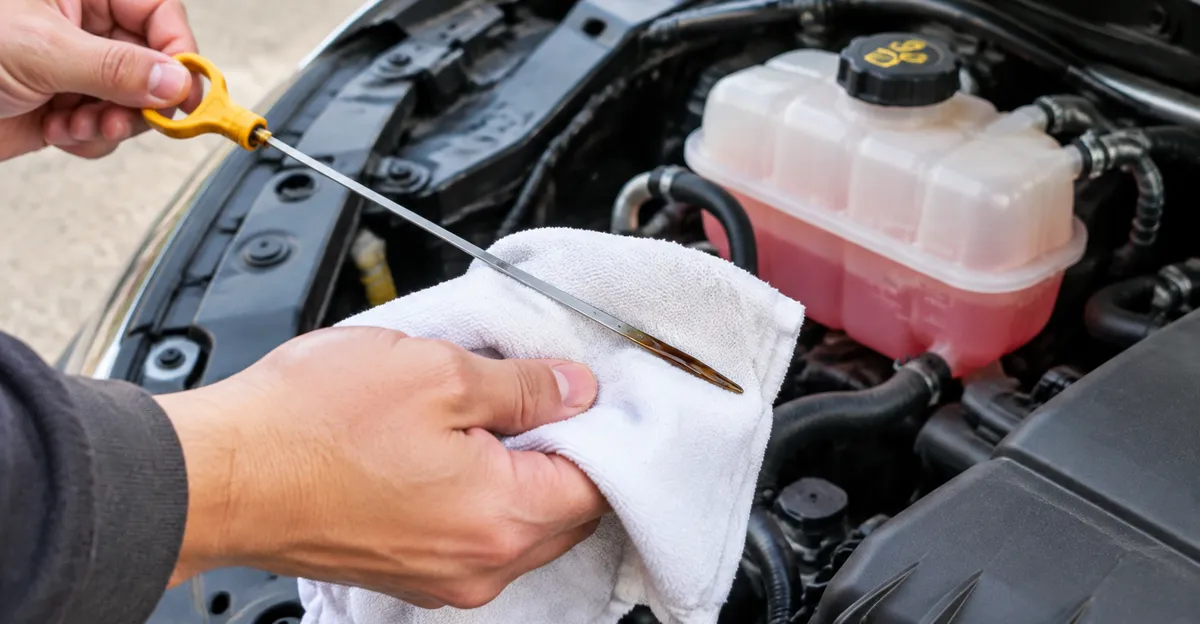
Oil is the fluid that fails most expensively when ignored. AAA Automotive's steps are the baseline: level surface, engine cold and not running, pull the dipstick, wipe it, insert it fully, pull again, and confirm the level sits between the upper and lower marks. If the level is at or below the lower mark, add the specified oil to raise it toward the upper mark. On most cars, AAA says one quart raises the level from the lower mark to the upper mark. Add in small amounts and recheck. Overfill is not free insurance.
Mercury Insurance's version adds a practical wait: after you shut the car off, give the oil about 10 to 15 minutes to drain back into the pan, then wipe and reinsert. That sits between AAA's cold preference and a hot, running check that nobody recommends. Auto Club South AAA likewise says waiting at least an hour after driving gives the best cold-style result because oil drains back and cool oil sticks to the stick better. Pick one honest method and stick with it so your monthly notes compare apples to apples. Never check oil with the engine running.
Some late-model cars hide the dipstick behind an electronic oil-level display. If your hood has no loop, open the manual to the oil section before you assume the stick is missing. Electronic menus still want the car level and often want a specific temperature or ignition state. Guessing from a YouTube car of a different year is how people overfill dry-sump and cartridge systems.
Coolant is a look-first job on most cars. AAA says locate the translucent recovery reservoir, usually near the radiator or on an inner fender, and read the upper (hot) and lower (cold) marks with the engine cold and off. Mercury adds the condition check: coolant should keep a bright green, yellow, or pink/red look depending on type; brown fluid or floating particles points to a change, not another casual top-off. If the level sits below the cold mark on a cold engine, stop diagnosing with your eyes and move to the fill steps in the next section. Do not open a hot radiator cap to "confirm" what the translucent tank already shows.
If the reservoir keeps falling between monthly checks, AAA's rule applies: frequent top-ups mean a shop visit. External hose leaks and internal head-gasket paths both steal coolant. Adding fluid without finding the path only resets the clock. For deeper oil-interval context after you confirm the sump is full, see why do cars need oil changes. For power loss that shows up with low oil or overheating, see why would my car lose power while driving.
How Do You Put Coolant in a Car
how do you put coolant in a car starts after the cold reading, not while the temperature gauge is climbing on the shoulder. Ranking guides from wikiHow, HowStuffWorks, AxleAddict, and Off-Roading Pro share the same floor: engine cool, level ground, translucent reservoir, correct mix, no overfill, then a short idle to watch for leaks. That floor is not the whole decision. The gaps those pages leave hanging are which mark counts on a cold engine, when the radiator cap is involved at all, what to buy when the shelf shows premix and concentrate side by side, and when a top-off is the wrong next move for an empty tank.
Park on flat concrete. Set the parking brake. Kill the ignition and wait until you can touch the radiator tanks without pain. wikiHow suggests fifteen to twenty minutes after a short drive; AxleAddict wants the engine stone cold before the cap moves. After a hard interstate run, Mercury's overnight wait is safer than a coffee-break guess. Hot, pressurized coolant can scald. That risk is why AAA Club Alliance and Auto Club South AAA both warn never to remove a radiator cap on a hot engine.
Find the recovery or expansion reservoir first. HowStuffWorks describes a transparent plastic tank near the radiator, often labeled "coolant" or marked with a thermometer symbol. Off-Roading Pro notes hoses linking that tank to the radiator and fill marks on the side. Read the cold or MIN mark with the engine cold. AAA's driveway rule is the one that resolves the internet fight between "fill to MAX" and "fill to COLD": with the engine cold, add only up to the lower (cold) mark—not higher. Hot coolant expands into the upper band. Filling a cold tank to the hot line leaves no room for that expansion.
| Situation | Where you add | Target on a cold engine |
|---|---|---|
| Reservoir shows fluid below the cold / MIN mark | Recovery reservoir only | Up to the cold / MIN mark |
| Reservoir bone-dry and manual also wants a radiator check | Radiator filler after a full cool-down | Per manual; often to the neck, then set reservoir to cold |
| Temperature gauge climbing, steam, or a hot pressurized cap | Nowhere yet | Wait, tow, or roadside help—do not crack the hot cap |
| Level already at cold on a cold engine | Nowhere | Leave it; check again next month |
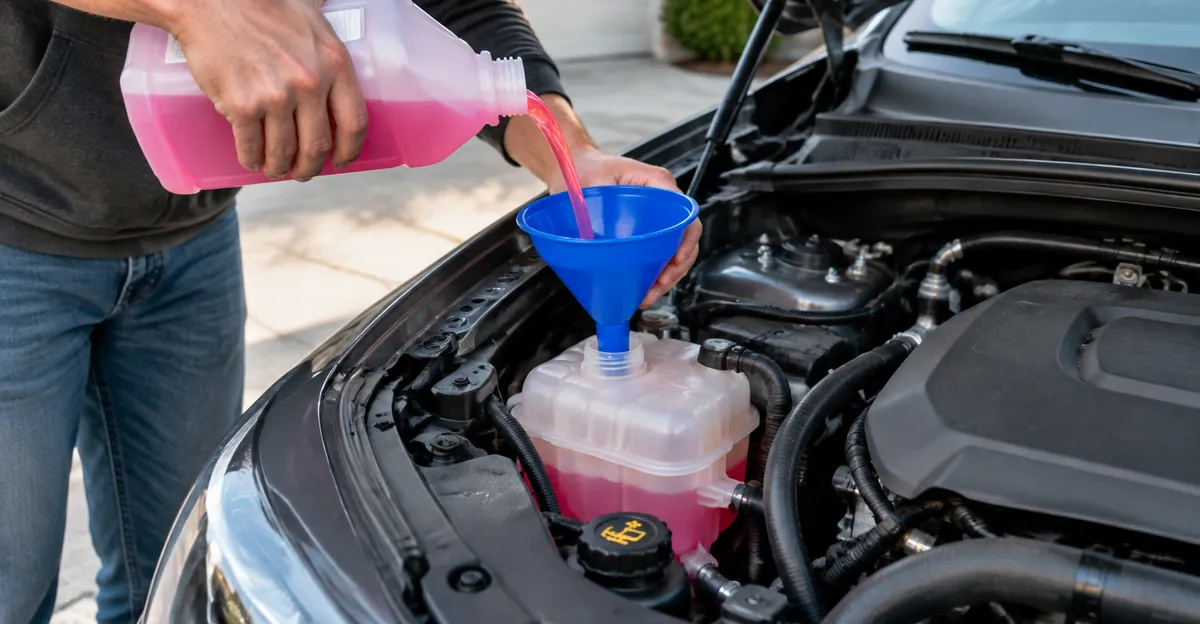
Buy the coolant chemistry the owner's manual names. AxleAddict lists gloves, eye protection, a funnel, distilled water, and the correct antifreeze type for the model year and climate. Premixed 50/50 bottles go straight in when the label says ready to use. Concentrated antifreeze needs distilled water—AxleAddict and HowStuffWorks both describe a typical 50/50 mix when the bottle and manual agree. Do not use tap water for a planned mix; minerals leave deposits. Do not pour straight concentrate into a modern system because AxleAddict notes pure antifreeze does not dissipate heat the way a water mix does. Off-Roading Pro warns against settling for "universal" coolant when the factory type is scarce: wrong chemistry can sludge the system, attack alloys and seals, and risk warranty coverage. Color on the shelf is marketing, not a specification.
If the reservoir is only a little low and you know the system already holds the correct type, top with the same premix or the same 50/50 mix. If you do not know what is in the tank, AxleAddict's advice is blunt: drain and refill with the correct mixture rather than layering unknown chemistry. A roadside emergency is the exception those pages allow—plain water can get you to a shop—but HowStuffWorks and wikiHow both say replace that water with the proper mix as soon as you can, because water alone boils sooner and freezes sooner.
Pour slowly through a funnel. Stop at the cold mark. Cap the reservoir firmly. Wipe spills so residue does not bake onto belts or paint. Then start the engine and idle a few minutes with the heater on hot if HowStuffWorks's circulation step matches your manual. Watch hoses and the reservoir for drips. The level may settle a little as air moves; a small post-idle drop that then holds is different from a tank that needs another bottle every week. If the manual requires a bleed screw, vacuum fill, or a shop burp procedure after a large loss, stop DIY filling and book that service. Off-Roading Pro notes that newer cooling layouts sometimes need vacuum filling after a drain. A driveway top-off of a slightly low reservoir is not the same job as refilling a system you just emptied.
Three decisions end the fill early. First, an empty reservoir with a climbing temperature gauge is a tow problem, not a funnel problem—see the stop-driving section below. Second, brown, rusty, or particle-filled coolant is a flush and inspection job, not another casual top-off; Mercury already flags that color change. Third, any coolant that falls again within days is AAA's frequent-top-up flag: external hose leaks and internal head-gasket paths both steal fluid, and buying another jug only resets the clock while the engine loses protection.
Putting coolant is one fluid action. Checking oil, brake fluid, ATF, and washer fluid still follows their own temperature rules in this guide. Do not treat a successful coolant top-off as proof the rest of the bay is healthy.
Transmission, Brake, Steering, and Washer Checks
Automatic transmission fluid is where DIY advice splits hardest. AAA Automotive says some cars have sealed transmissions that require special procedures. When a dipstick does exist, AAA's method is: level ground, engine idling until the transmission is at full operating temperature (usually a few minutes of driving or warm idle), parking brake set, foot brake applied, shifter cycled through each gear for a few seconds, then Neutral or Park as the manual specifies. From there the wipe-insert-read steps match oil, except AAA notes the span between upper and lower marks is usually about one pint of fluid, not a full quart. Use only the ATF the manual names.
Mercury describes a similar warm, level, wipe-and-read flow and adds condition cues: healthy ATF is often bright red with a slightly sweet smell; dark brown fluid or a burnt smell points toward service. If you cannot find a dipstick after reading the manual, stop searching the bay with a flashlight hoping for a yellow loop. Sealed units are checked with temperature-specific fill plugs, scan-tool routines, or dealer procedures. Inventing a filler hole is how transmissions get overfilled and aerated.
Brake fluid is usually a sight-glass job. AAA says the reservoir sits atop the master cylinder at the rear of the engine bay on the driver's side on most cars. Read the translucent tank between upper and lower marks. If the level sits between the marks, leave it alone. If it is near, at, or below the lower mark, AAA wants a shop to inspect for wear or leaks soon. Kia's US owner guidance matches that urgency and adds a nuance drivers miss: the level can fall with accumulated mileage as brake linings wear, which is normal, but an excessively low level still needs inspection. Clean around the cap before opening. Use only the DOT grade the manual lists from a sealed container. Kia warns that brake fluid damages paint, harms eyes, and should never be reused after long open-air exposure. A spongy pedal, a brake warning lamp, or repeated top-offs belong on a brakes inspection, not on another bottle from the parts aisle.
Power steering fluid, when the car still has hydraulics, is checked with the engine off per AAA and Mercury. AAA describes either a pump-mounted cap/dipstick with hot and cold mark sets or a remote translucent tank with high and low marks. Wipe, reinsert, read the set that matches fluid temperature, and add only to the correct upper mark with the specified fluid. Mercury notes the fluid should look clear enough and free of particles; dark fluid with debris is a change candidate. Auto Club Group AAA adds a useful symptom: a buzzing noise when you turn the wheel at low speed can point to low power-steering fluid. If there is no reservoir because the steering is electric, skip this bottle and listen for other mechanical noises instead.
Washer fluid is the easy win. AAA says modern cars use translucent plastic reservoirs; remove the cap and fill toward the top. Use bug-removing formula in summer and a mix with antifreeze properties in winter where temperatures drop below freezing. This is the one fluid you can refill aggressively without worrying about hydraulic overfill. It still matters: a dirty windshield at night is a visibility problem, not a cosmetic one.
Color, Smell, and Level: What Abnormal Means
Level is only half the decision. Color and smell tell you whether a top-off is honest maintenance or delayed diagnosis. Build the habit of looking, not only measuring.
| What you see or smell | Likely meaning | First move |
|---|---|---|
| Oil at or below Add / low mark | Consumption or leak, or overdue top-off | Add specified oil in small amounts; recheck; note how often you add |
| Milky or frothy oil | Water or coolant in the oil | Do not keep driving as if it were a color preference; get service soon |
| Coolant below cold mark on a cold engine | Evaporation, external leak, or internal leak | Top to the cold mark with correct coolant; watch the next week |
| Brown, rusty, or particle-filled coolant | Aged or contaminated coolant | Plan a flush and inspection, not endless topping |
| ATF dark brown or burnt smell | Heat-stressed fluid | Schedule transmission service; do not only refill |
| Brake fluid dark and dirty | Moisture-laden or aged fluid | Plan a flush; investigate low level for pad wear or leaks |
| Brake fluid at or below MIN | Pad wear, leak, or both | Shop inspection soon per AAA and Kia |
| Power steering dark with grit | Contaminated hydraulic fluid | Service; check for leaks if level also falls |
| Any fluid that needs weekly top-offs | Active leak or consumption | Shop visit; AAA treats frequent top-ups as a repair flag |
AAA's car-care PDF still notes that cooling systems sometimes need topping from evaporation, but frequent additions can mean an external leak or an internal engine leak that a technician should investigate. That sentence is the difference between a careful owner and a person who keeps buying coolant while a head gasket fails. The same logic applies to oil: a quart every thousand miles is data for the engine bay conversation, not a personality trait.
Brake fluid deserves a special line because moisture absorption is invisible on a casual glance. Auto Club Group AAA explains that brake fluid degrades as it absorbs moisture, which can lead to a spongy pedal or failure, so periodic changes matter even when the fluid "looks fine." Level between MIN and MAX does not mean the fluid is young. It only means the hydraulic volume is still in range today.
Transmission fluid condition is likewise not a license to ignore sealed-service schedules. Auto Club Group AAA notes that some transmission fluids can last a long mileage span depending on conditions, but replacing fluid is still cheaper than replacing a transmission. Your manual's severe-service table still wins over a blank "lifetime fill" assumption when you tow, idle in heat, or drive mostly short trips.
How Often, and When Low Means a Leak
Auto Club Group AAA's FAQ answer is the schedule most US owners can remember: check essential fluids such as oil, coolant, and brake fluid at least once a month or before long road trips, and follow the owner's manual. AAA Automotive's framing is the why: fluids need eyes between 5,000- and 10,000-mile service visits. Pair the calendar with a trip trigger. Before a holiday interstate run, walk the bay even if the month is not up.
Write what you find. A notebook line with date, oil level relative to the marks, coolant relative to cold, and brake relative to MIN/MAX turns one vague memory into a trend. Trends are what catch slow leaks. A single low reading after a long trip can be consumption. The same low reading every two weeks is a path out of the system.
When a level is low, the order of operations is: confirm the reading on level ground with the right temperature method, add the correct fluid to the correct mark if the manual allows owner filling, then ask why it fell. AAA's frequent-top-up rule is the stop condition. Kia's brake guidance is blunt on the same idea: if the brake system needs frequent additions, have an authorized dealer inspect it. Do not treat the parts-store shelf as a subscription.
Sealed or electronic systems change the cadence, not the responsibility. If oil level is menu-only, check that menu monthly. If ATF is sealed, ask the shop to report level and condition at every major service and whenever shift quality changes. If power steering is electric, drop that line from the checklist and keep brake and coolant discipline high—those systems still fail the old way.
Cost talk stays honest. Approximate DIY top-off bottles are cheap next to a neglected engine or transmission. Exact quart prices and shop flush prices vary by region, fluid type, and labor. Treat any dollar figure you hear online as a ballpark, not a quote for your ZIP code. The decision that matters is whether you are buying a bottle or buying diagnosis.
When to Stop Driving and See a Shop
Some low-fluid findings are still drive-to-shop problems. Others are stop-and-tow problems. Sort them before you merge onto a US highway.
Stop and arrange a tow or flatbed when oil pressure is lost, the oil level is unreadable because the stick is dry after a proper wait, the temperature gauge is climbing with an empty coolant reservoir, the brake pedal sinks or feels spongy with a low reservoir, or a brake warning lamp stays on after you confirm the parking brake is released. Those are not "finish the commute and check tomorrow" cases. Metal without oil film and hydraulics without fluid do not wait politely.
Drive carefully to a shop the same day when levels are low but still visible on the marks after a correct top-off, when ATF looks burnt but the car still shifts, when coolant is a bit low on a cold engine with a normal temperature gauge, or when washer fluid is empty. Those still need service. They do not always need a wrecker.
See a shop soon—without waiting for the next oil sticker—when any fluid needs another top-off within days, when you smell burnt ATF, when brake fluid is dark and the pedal feels soft, when you hear power-steering buzz at parking-lot speeds, or when milky oil appears on the stick. Auto Club Group AAA lists dashboard lights, unusual engine sounds, sluggish shifts, spongy brakes, and a dirty windshield among warning signs of low or contaminated fluids. Pair those symptoms with the bay findings instead of treating them as separate mysteries.
Bring the notes. Tell the advisor which fluid fell, how fast, what color you saw, and whether a lamp came on. That short story beats a vague "it feels off." For related noise sorting while you wait for the appointment, use car noises. For deeper mechanical branching after a leak is confirmed, use engine repair.
FAQ
how to check fluids on a car if there is no transmission dipstick
how to check fluids on a car if there is no transmission dipstick starts in the owner's manual, not in a forum photo. AAA notes that some cars have sealed transmissions that require special procedures. Your manual will say whether the unit is sealed, whether a dealer scan tool or temperature-specific fill plug is required, and whether owners should leave the case alone. Do not invent a dipstick location under the airbox. Treat a sealed transmission as a shop fluid check unless the factory document gives a driveway procedure.
How often should I check my car's fluids?
Auto Club Group AAA says to check essential fluids such as engine oil, coolant, and brake fluid at least once a month or before long road trips, and to follow the owner's manual. AAA Automotive adds that fluids need attention between common 5,000- to 10,000-mile service intervals. Monthly plus pre-trip is the habit that catches slow leaks.
Do I check engine oil with the engine running?
No. AAA Automotive describes oil checks with the engine cold and not running. Mercury Insurance says never check oil while the engine is running and to wait about 10 to 15 minutes after shutdown so oil returns to the pan. A running engine throws oil off the stick and raises burn risk.
What does low brake fluid usually mean?
AAA says a level near, at, or below the lower mark needs a shop inspection for wear or leaks soon. Kia notes that the level can fall as brake linings wear with mileage, which can be normal, but an excessively low level still needs inspection. Adding fluid without finding pad wear or a leak only hides the next failure.
Can I open the radiator cap to check coolant?
Prefer the translucent recovery reservoir with the engine cold, as AAA and Mercury describe. Never open a radiator cap on a hot engine. Pressurized coolant can scald. Only follow a cold radiator check if the manual requires it and the engine is fully cool.
Can I mix different coolant colors when I top off?
No. Off-Roading Pro warns that universal or mismatched coolant can sludge the system, corrode alloys, and risk warranty coverage. AxleAddict says if you do not know what is already in the system, drain and refill with the correct mixture instead of stacking unknown chemistry. Match the owner's manual specification, not the bottle color.
Bottom Line for the Driveway
How to check car fluids is a monthly bay walk on level ground with the right temperature method for each bottle. Read oil and coolant cold or after a settled wait. When the cold mark is low, how do you put coolant in a car is a cold-reservoir fill to that mark with the chemistry the manual names—not a hot radiator crack and not a mix-and-match color guess. Read ATF hot and idling only when a dipstick and the manual allow it. Treat sealed transmissions and electric steering as design facts, not missing homework. Match every top-off to the manual specification. Treat frequent top-ups, burnt smells, milky oil, and low brake fluid as shop problems. That is the whole decision from the search query to the next safe trip.