
By Zeng FengMyCarWhy EditorialUpdated
Power Steering Fluid: Bottle, Noise, or No Fluid?
Power steering fluid is a cap-reading problem before it is a shopping problem. Some US cars want automatic transmission fluid in the steering reservoir. Some want a dedicated power-steering fluid. Honda's own books have told owners that ATF will damage the system. A lot of newer cars have electric assist and no fluid at all. The bottle that is "best" on a shelf is the wrong bottle the moment it disagrees with the cap.
A German spike around the word for steering, tied to Volkswagen recall headlines, is news from somewhere else. It is not a checklist for the reservoir on a US driveway. Sort the fluid you are allowed to pour, then sort the noise.
If the wheel is so heavy that you cannot control the car, stop driving and have it towed. Fluid on a hot exhaust is a fire reason to get out, not a top-off.
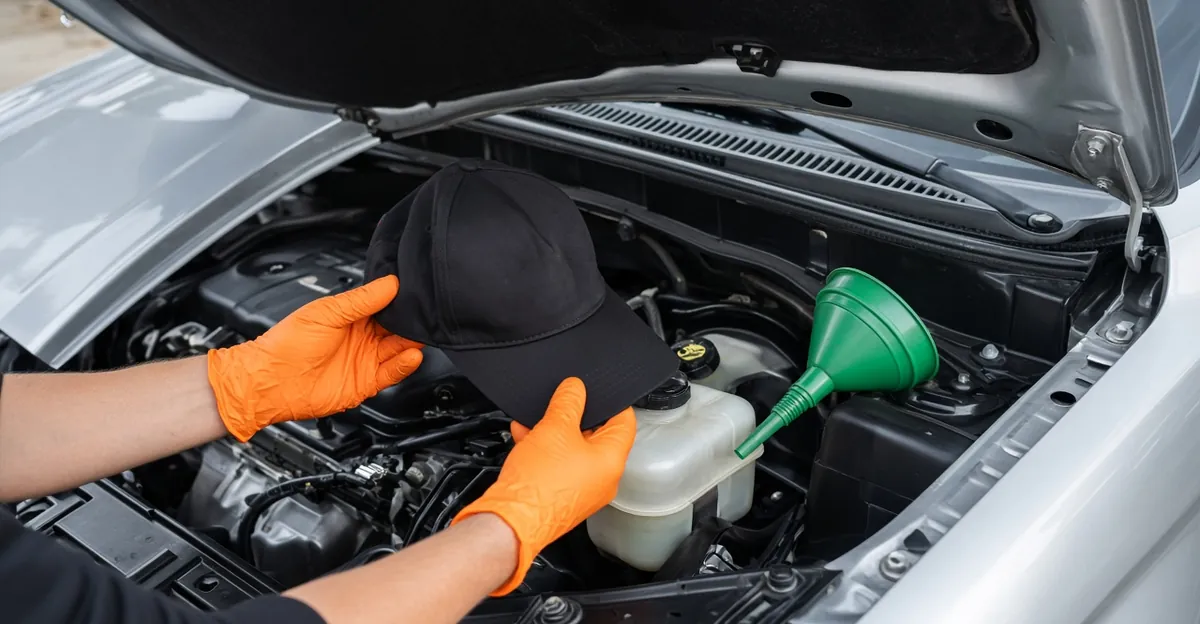
Read the cap before any bottle is "best"
The type is printed on the reservoir cap or in the owner's manual. AA1Car's fluid guide says some systems specify ATF such as Dexron, Mercon, Type F, or ATF+4, and many newer systems specify a synthetic hydraulic fluid. European and Japanese cars often name their own fluid, including Pentosin grades on many Audi, BMW, Mercedes, Porsche, Volkswagen, and Volvo applications, with the year deciding which grade. The same page says the sure mark is the cap or the manual, and that the wrong fluid is a common cause of pump failure. Its advice if you do not know the type: do not add anything until you do.
That warning is not theoretical. Two official examples point in opposite directions.
A Chrysler power-steering fluid check filed with NHTSA says to use Mopar Power Steering Fluid +4 or Mopar ATF+4, both to material standard MS-9602, and no other power-steering or transmission fluid. It says the wrong fluid can damage the pump. It also says to check with the engine off, and that at about 70°F to 80°F the level should sit between the MIN and MAX marks on the reservoir, with hot fluid allowed up to the MAX line.
A Honda owner's manual excerpt says to check the level with the engine cold, on level ground, between the upper and lower marks, and to look for leaks before you fill. The caution line is blunt: use only genuine Honda power steering fluid. ATF, or another maker's power steering fluid, will damage the system.
An application chart on AA1Car lines up with those two examples and then tells you not to trust the chart alone. It lists Honda and Acura as Honda power-steering fluid, many post-1998 Chrysler, Dodge, and Jeep applications as ATF+4, Ford as Mercon ATF, and many BMW and Mini rows as Pentosin CHF 11S. The sheet says it is a general guideline, not a complete list, and that the owner's manual wins. Years change. A 1990s note is not a 2024 cap.
| What the cap or manual says | Fluid family | Do not pour |
|---|---|---|
| ATF, Dexron, Mercon, ATF+4, or MS-9602 | The named ATF | A "universal" PSF the cap does not list |
| Honda or Acura power steering fluid | That Honda fluid | ATF, on the manual example above |
| CHF 11S, Pentosin, or the BMW/Mini part number in the fluid spec | CHF 11S when that spec matches | ATF mixed into Pentosin. The application chart says not to mix them |
| Nothing. No reservoir, manual lists electric assist | No fluid | Any bottle, including stop-leak |
If the level drops again after a correct top-off, you have a leak. AAA says a fluid that needs frequent top-ups should be checked by a shop. Adding the right fluid keeps the pump from running dry. It does not repair a split hose or a rack seal.
The other reservoirs under the hood are a different job. Oil, coolant, brake fluid, and washer fluid are sorted on how to check car fluids. Brake fluid does not go in the steering reservoir. Power steering fluid does not go in the brake reservoir. The caps are there so those two mistakes stay expensive only in stories.
Best power steering fluid is the bottle the cap already named
Best power steering fluid is not a single ASIN. These three US listings were in stock on Amazon when this page was checked. Each one matches a different sentence on a cap. Open your cap first, then open one link.
| Cap language | Listing | What it is | Skip it when |
|---|---|---|---|
| A conventional PSF the listing's own claims cover, and not a Honda-only or CHF 11S spec | Prestone AS262, 12 oz, with stop leak, B004AHDBLE | The live title is a power-steering fluid with stop leak. Older listing copy describes it for GM, Ford, Chrysler, and many foreign cars, and as mixing with approved power-steering fluids | The manual says Honda fluid only, or CHF 11S, or a specific ATF |
| CHF 11S, or a BMW/Mini reference such as 82 11 1 468 041 on the Pentosin data sheet | Pentosin CHF 11S, 1 liter, 1405116, B01LRHQ918 | Synthetic hydraulic fluid. The manufacturer data sheet lists power steering among the uses and prints BMW and Mini OE references | The cap says ATF or Honda fluid. The bottle name-drops BMW among a dozen brands. The cap still wins |
| ATF, Dexron, Mercon, or a multi-vehicle ATF the manual allows | Valvoline MaxLife Multi-Vehicle ATF, two 1-quart bottles, B0CGLWB3HD | Full synthetic automatic transmission fluid. A one-gallon jug of the same fluid is B008QDV2JG if you are also servicing a transmission that calls for it | You only needed a pint in the steering reservoir and the cap does not say ATF. The "95% of vehicles" line on MaxLife is a transmission claim |
The quart pair is the saner steering top-off. A gallon is a lot of fluid to store after you add a few ounces. Use the gallon when the transmission service and the steering cap truly want the same ATF, and you will use it.
Stop-leak is a different object. Lucas Oil 10008, 12 oz, B000ARPVNO is sold as a power-steering leak-stopper, solvent-free in the listing's feature list, and described as compatible with power steering fluids. Put it in only after the reservoir already holds the specified fluid, and only if you are chasing a seep rather than a dry pump. It is not the fill. It is not a Honda-fluid substitute. A wet driveway after a week means the additive did not find the leak.
How to check the level
AAA's fluid article and AA1Car agree on the order.
- Park on level ground. A slope lies about the mark.
- Engine off. The Chrysler procedure and AAA both want the engine off so you are not reading a spinning pump and not putting a hand near the belt.
- Find the reservoir. It may sit on the pump, or on the inner fender with hoses back to the pump. The manual's picture beats a guess.
- Wipe the cap and the neck before you open them. Grit in the reservoir becomes pump noise later.
- Read the mark that matches temperature. Many dipsticks have a cold range and a hot range. Cold fluid sits lower. Filling a cold reservoir to the hot mark overfills it.
- Add the specified fluid in small amounts. AAA says too much can be as harmful as too little. AA1Car says hot fluid expands, and an overfull reservoir can push fluid out.
- Cap it. Recheck after the next drive if you added more than a splash. A level that falls again is a leak.
Do not open the reservoir with the engine running to "see what happens." Fluid can aerate and spit. If the manual describes a bleed with the wheels off the ground, that is a shop procedure or a careful follow-the-manual job, not a driveway experiment with the belt in reach.
Color is a clue, not a part number. AAA Club Alliance says a pink or amber puddle can be power steering fluid from the reservoir or the hoses. Firestone adds that the fluid may look red, reddish-brown, pink, clear, or brown. Transmission fluid and coolant can look similar on concrete. Touch nothing that is unidentified, and do not taste it. A sweet smell is more often coolant. A thin red or amber film near the front, under the pump, is the steering conversation.
Dark, burnt-smelling fluid is a service conversation, not a "top it off and ignore it" conversation. CarParts.com says low level means a leak at the pump, the gear, the lines, or the seals, and that very dark fluid is a reason to service it rather than only add.
Tools that keep the top-off off your paint:
- FlexAll flexible funnel, small, B093X5QN27. The listing is a nitrile-rubber funnel sold for oil, transmission fluid, and other automotive fluids. The neck on a power-steering reservoir is a small target. A rigid kitchen funnel dumps half the bottle on the pulley.
- GLOVEWORKS orange 8 mil nitrile gloves, B00MGSGN1Y. Power-steering fluid is a skin and a paint mess. Gloves come off before you touch the steering wheel.

Power steering noise when turning
Power steering noise depends on when it happens. Power steering noise when turning is a different branch from a squeal that starts the moment the engine fires and does not care about the wheel.
| What you hear | Likely lane | First check | Not the first buy |
|---|---|---|---|
| High-pitched squeal as the engine starts, same noise if you do not turn | Worn or loose belt, in AAA's wording | Look at the belt. Do not pour fluid at a dry belt | A quart of ATF |
| Whine, groan, or grind at low speed while the wheel is turned | Low or dirty fluid, AAA; low fluid or a failing pump, Firestone | Level and leaks, engine off | A new pump before the level is known |
| Power steering pump noise that gets louder as you steer lock to lock, level already full | Worn pump, air, or a restriction. CARDONE lists those next to low fluid | Shop pressure test. Do not keep driving it dry | Another bottle every morning |
| Buzz or rattle that is not tied to the steering wheel | Something else in the bay | The sound sort on car noises | Steering fluid |
CARDONE's chart is the useful wide net. Chirp or squeal on startup: loose, dry, or worn belt, or a bent pulley. Whine or groan: low fluid, worn cam pack in the pump, contaminated fluid, restriction or air, oversized tires, wrong tire pressure, or a binding part. Hard steering sits on the next row: weak or damaged pump, seized front-end parts, a stuck flow valve, kinked hoses, low tire pressure, oversized tires, loose belt.
Low fluid makes noise because the pump sucks air. AA1Car says a level that is too low lets air into the pump, which causes noise and less assist. Topping off can quiet a pump that was only thirsty. It will not quiet a pump that was run dry until the cam pack is scored. If the noise stays after the level is correct and there is no leak, the next step is a pressure test, not a second brand of fluid.
Tire pressure is on that chart for a reason. A low front tire makes the wheel heavy and can add a groan that feels like a pump. Set the door-jamb pressure before you condemn the rack. That check is not a winter-tire shopping trip.
For any sound you cannot place on the wheel, start with car noises. A turn-related whine belongs here only after you have looked for a reservoir. A click over bumps, a grind while braking, or a hiss from the dash is a different system.
Steering wheel hard to turn
A steering wheel hard to turn at parking-lot speed is the symptom people pour fluid at. Firestone's stiff-wheel article says low or leaking fluid is the most common cause on a hydraulic system. The assist comes from pressurized fluid. When the level drops, the wheel gets heavy, often first at low speed. The leak can be a hose, a pump seal, or fluid trapped inside a rack boot where you never see a puddle.
The same article's second cause is the pump itself: air, low or dirty fluid, or wear. The listening test it offers is the whine while you turn at low speed.
Use this split before you buy.
| What the car is doing | More likely | First move |
|---|---|---|
| Heavy at parking speeds, whine while turning, level low | Hydraulic fluid or the pump that ran low | Correct fluid to the mark. Find the leak if it drops again |
| Heavy only until the engine has run a minute, then normal | Thick or dirty fluid, Firestone's cold-start line | Level and fluid condition. Do not switch types to "thin it" |
| Heavy all the time, no reservoir under the hood | Electric assist, a tire, or a suspension bind | Stop buying fluid. Have the steering diagnosed |
| Heavy, and the belt squeals | Loose belt, on both AAA and CARDONE | Belt, not a bottle |
| Wheel shakes or skips while turning | CARDONE lists air, wrong fluid, a loose belt, or a loose rack mount | Do not keep adding fluid that the cap does not name |
Firestone also lists cold-start stiffness with thick or dirty fluid, groaning with low fluid or air, and intermittent resistance that can be a seized suspension part or an electrical sensor. The sensor line matters. Once the car has no hydraulic pump, "add fluid" is the wrong repair and the electrical fault is a shop job. This page does not walk through electric-power-steering module replacement. That failure mode was not the search. The useful fact is the negative one: if there is no fluid, fluid cannot be the fix.
Oversized tires and low pressure show up on the CARDONE hard-steering row. A truck on much larger tires than the pump was built for can whine and feel heavy with a full reservoir of the correct fluid. That is a fitment problem. Another quart will not change the tire.
No reservoir means stop shopping for fluid
Electric power steering has no hydraulic pump, no hoses, no cooler, and no reservoir. A Seattle Automotive training chapter describes that absence as the point of the system: nothing to leak, and assist from a motor on the column or the rack instead of a belt-driven pump. Firestone makes the same consumer point. Newer electric systems are not the hydraulic story.
Look before you order.
- A cap under the hood with a steering-wheel icon, or a dipstick, means hydraulic or electro-hydraulic. Electro-hydraulic still uses fluid. The pump may be electric, but the reservoir is real. The cap still names the fluid.
- No cap, no hoses to the rack, and a manual that says electric power steering means there is nothing to fill.
- A whine from the column on that second car is not power steering pump noise. There is no pump of the hydraulic kind. The car noises guide is the sound sort. A shop that can read steering codes is the repair path. Do not pour ATF into the brake reservoir because you needed a place to put it.
Air in a hydraulic system is the in-between case. CARDONE lists foaming as low fluid, bad O-rings, leaking seals, or a bad bleed, and overflowing when the engine stops as overfill or air burping fluid out of the cap. If the reservoir was full and then puked fluid onto the belt, wipe it up, set the level to the mark once the fluid is cold, and do not drive if the belt is soaked. A soaked belt slips, the assist goes away, and the squeal AAA described shows up on the next start.
What to leave on the shelf
- A universal bottle when the cap names Honda fluid or CHF 11S.
- ATF in a Honda system the manual warns against.
- Pentosin in a Ford that asks for Mercon, because the bottle mentioned BMW.
- Stop-leak as the only fluid in an empty reservoir.
- Any fluid in a car with no reservoir.
- A pump, a rack, or a belt from a noise you have not matched to the level.
As an Amazon Associate, we may earn from qualifying purchases. Listing claims are the sellers' claims. Your cap and your year's manual outrank them. Prices move.
FAQ
Can I use ATF as power steering fluid?
Only when the reservoir cap or the owner's manual names ATF. A Chrysler procedure filed with NHTSA tells technicians to use Mopar Power Steering Fluid +4 or Mopar ATF+4, both to material standard MS-9602, and no other fluid. A Honda owner's manual example says the opposite: use only genuine Honda power steering fluid, and ATF or another maker's fluid will damage the system. Read the cap on your car.
What does power steering noise when turning usually mean?
AAA Club Alliance says a high-pitched squeal at startup usually signals a worn belt, while whining, groaning, or grinding when the vehicle is turned at low speeds can indicate low or dirty power steering fluid. Firestone says a whine while turning at low speed can mean the pump is low on fluid or failing. CARDONE's diagnostic chart lists whining or groaning as low fluid, a worn pump cam pack, contaminated fluid, a restriction, air, tire size, tire pressure, or a binding part.
Why is the steering wheel hard to turn?
Firestone says a stiff wheel is most often low power steering fluid on a hydraulic system, and that electric power steering does not use that fluid. CARDONE also lists a weak or damaged pump, a stuck flow-control valve, kinked hoses, low tire pressure, oversized tires, and a loose belt. If there is no reservoir under the hood, a bottle will not restore assist.
How do I check power steering fluid without making a mess?
AAA says park on level ground, keep the engine off, clean around the cap, and use only the fluid the automaker specifies. If the reservoir is on the pump, wipe the dipstick, seat it fully, and read between the marks. Some dipsticks have hot and cold marks. A remote translucent reservoir is read on the molded lines with the fluid at operating temperature. Do not overfill.
What if I cannot find a power steering reservoir?
Many newer cars use electric power steering and have no pump, no hoses, and no fluid. A training outline from Seattle Automotive describes electric assist as the absence of a hydraulic pump, reservoir, and fluid. If the cap is not under the hood and the manual does not list a fluid, stop shopping. A whine on that car is not a top-off.
Will stop-leak additive replace the right fluid?
No. Lucas Oil 10008 is sold as a 12 oz power-steering leak-stopper that conditions seals and is described as compatible with power steering fluids. It is an additive for a system that already has the specified fluid. An empty reservoir still needs the fluid named on the cap. A puddle means a leak, and a bottle does not find the hose, pump, or rack.