
By Zeng FengMyCarWhy EditorialUpdated
Best Wiper Blades
The best wiper blades are the correct length on the correct arm, with rubber that still has an edge. “Best” is not a trophy. It is size, then beam versus winter, then a brand that actually lists your vehicle. Most US cars now run beam wipers. Snow-belt parking still earns winter wiper blades with a rubber boot. Amazon SKUs below are specific lengths you must match—or swap—before you click.
For most late-model cars in rain, start with Bosch ICON 26A if your driver side is 26 inches, or the Bosch ICON 26-and-16 set if that pair matches the car. Want a beam with a water-repellent coating story? Use Rain-X Latitude 24-inch when 24 inches is the stamped size. Need a cheaper conventional pair? Rain-X WeatherBeater 24-inch is that frame blade. Parking in packed snow? Step to Bosch Winter 24-inch.
This page is a US Amazon buying map. Specs come from the live listings and Bosch/Rain-X size language. Checked 2026-11-13. A dirty windshield is not a new blade—clean the glass first with how to clean car windows. Interior fog after rain is HVAC moisture on how to stop car from fogging up. Ice on the outside is a scraper job on ice scraper for car. Winter rubber on the road is when to switch to winter tires.
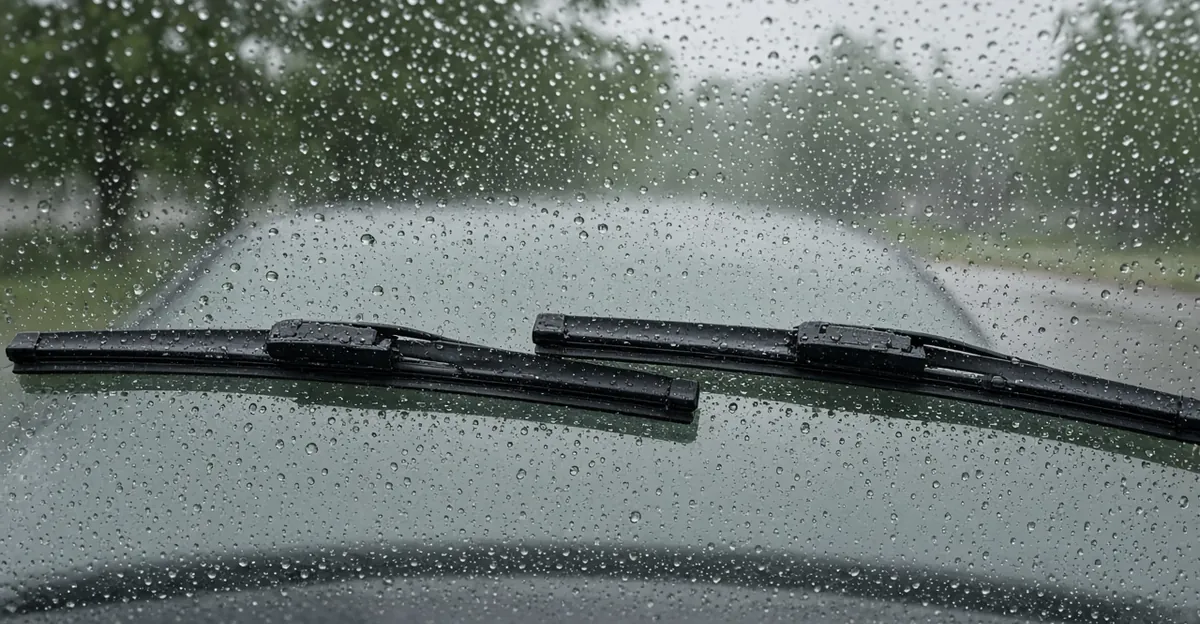
What size windshield wipers do I need?
What size windshield wipers do I need is two numbers, not one. Driver and passenger blades are often different. A rear hatch blade is a third SKU.
How to get the size without guessing:
- Lift the arm. Read the length stamped on the old blade (22, 24, 26, 28 inches are common).
- If the stamp is gone, measure the rubber length in inches, not the arm.
- Confirm year, make, model, trim, and body (sedan vs wagon vs truck) in a wiper finder. Bosch and Rain-X both run vehicle look-ups. The Amazon size in the title must match that result.
- Check the arm type. Hook, pinch tab, side-lock, and push-button adapters are not interchangeable without the right clip.
| You see | Typical meaning | Do not |
|---|---|---|
| 26 on the driver, 16–19 on the passenger | Common sedan / small SUV pair | Buy two 26-inch blades “to be safe” |
| Same length both sides | Some trucks and symmetric cowl designs | Assume every Honda is this way |
| Rear 10–14 inch | Hatch or SUV rear | Force a front beam on a rear unique arm |
| “26A” or “24A” in a Bosch title | That exact length SKU | Treat A as a performance grade |
The Bosch ICON 26A listing is a 26-inch blade. The Bosch ICON set in this table is 26 and 16 inches. The Rain-X and Bosch Winter SKUs below are 24-inch examples. If your car is 22 and 20, buy those lengths. A 24-inch beam on a 26-inch arm leaves a dirty stripe. A 26-inch blade on a 24-inch arm can hit the cowl or the other blade.
Replace both front blades together. A new driver blade next to a four-year passenger blade still streaks.
Beam wiper blades vs frame vs winter
Beam windshield wiper blades (also searched as beam wipers) are a curved spring-steel spine, a spoiler, and a rubber edge. No metal yoke. They hug modern curved glass. They have fewer ice traps. They are the default best windshield wipers for most cars built in the last 15 years.
Conventional frame blades use a metal or plastic bridge with joints. They still fit some older arms and some people prefer the price. Ice packs in the joints.
Winter wiper blades add a rubber boot over a frame, or a winter-specific beam, so snow cannot pack the joints. They look bulky. That bulk is the point in a Minnesota parking lot. In a Houston summer they age in UV like any other rubber.
| Type | Use | Skip when |
|---|---|---|
| Beam (Bosch ICON, Rain-X Latitude) | Rain, highway, most late-model cars | You need a booted winter frame for packed snow, or the arm will not take the adapter |
| Conventional (Rain-X WeatherBeater) | Older arms, budget replacement | You wanted even pressure on a highly curved windshield |
| Winter booted (Bosch Winter) | Snow-belt street parking | You live where it never ices and you hated the look |
Do not mix a 26-inch winter blade with a 16-inch summer beam unless those are the two correct lengths and you accept mixed wipe patterns. Matching pairs look and age together.
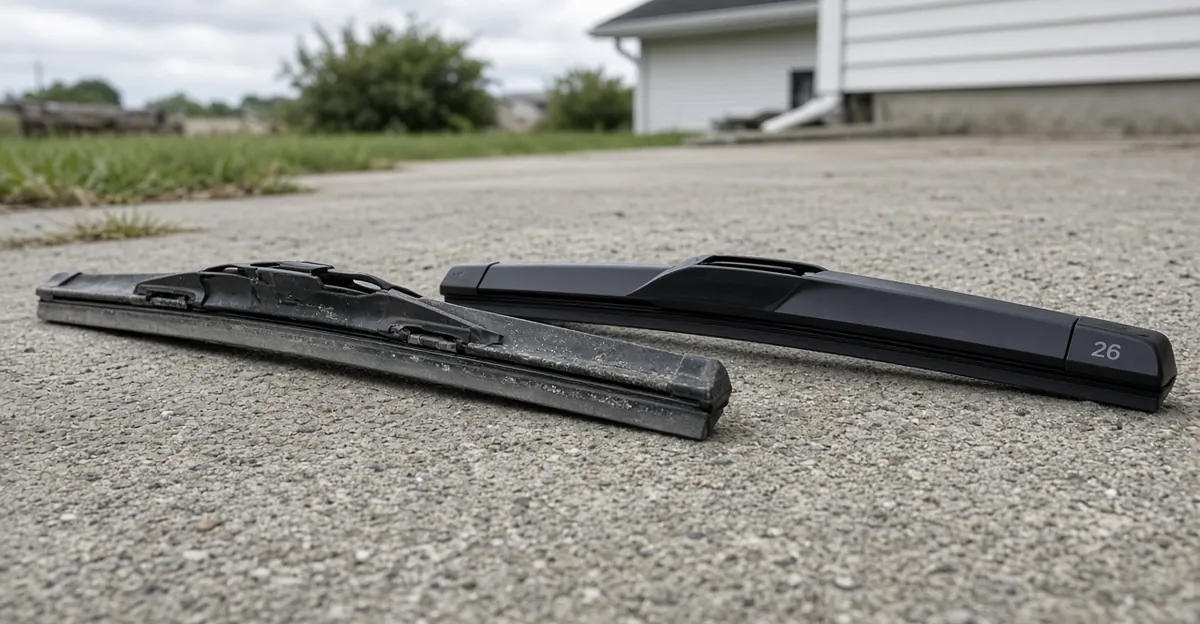
Which wiper blades should you buy?
These US Amazon listings were live when checked on 2026-11-13. As an Amazon Associate, we may earn from qualifying purchases. Confirm the inch size and arm adapter on the live page. Prices move. Rubber compounds are the maker’s claim, not a lab graph from this site.
| Product | Amazon | Type / size on this SKU | Best fit |
|---|---|---|---|
| Bosch ICON 26A | B005JU5W54 | Beam; 26-inch; dual spoiler; bracket adapter on the listing | Driver-side 26-inch beam, or buy the matching passenger length |
| Bosch ICON 26A + 16A set | B07VH2CXPS | Two beams; 26 and 16 inches | Cars whose chart is 26/16 |
| Rain-X Latitude Water Repellency 24" | B016NA9WN6 | Beam; 24-inch; coating claim | 24-inch beam with Rain-X’s water-bead story |
| Rain-X WeatherBeater 24" | B084CVBJDF | Conventional frame; 24-inch | Budget 24-inch replacement on a frame-style arm |
| Bosch Winter 47724 | B000BZI5ME | Winter; 24-inch; rubber boot over the frame | Snow-belt 24-inch winter blade |
Bosch ICON 26A — beam default at 26 inches
The Bosch ICON 26A listing is a 26-inch beam with a dual spoiler, a bracket adapter, and Bosch’s FX dual-rubber language. ICON is the beam line most US parts counters already know. Buy it when the vehicle chart says 26 inches on that side. If the other side is not 26, do not double this SKU.
Bosch ICON 26-and-16 set — when the chart is 26/16
The Bosch ICON 26A16A set is two ICON beams: 26 and 16 inches. That pair is common on some sedans and small cars. It is useless if your passenger side is 19 or 20 inches. Open the size chart. Then click.
Rain-X Latitude 24-inch — beam plus coating claim
The Rain-X Latitude Water Repellency 24-inch listing is a beam blade with Rain-X’s water-repellent coating story and a 24-inch cut. Rain-X’s own size finder still applies. Coating on the rubber is not a substitute for Rain-X on the glass if you wanted treated glass. Replace when the edge rounds off, same as any beam.
Rain-X WeatherBeater 24-inch — conventional budget
The Rain-X WeatherBeater 24-inch listing is a traditional frame blade. Use it on an older arm or when you need a cheap 24-inch replacement and a beam adapter fight is not worth it. Ice will pack the joints. That is why winter boots exist.
Bosch Winter 24-inch — booted snow blade
The Bosch Winter 47724 listing is a 24-inch winter blade with a rubber boot over the frame so snow cannot pack the joints. Bosch’s winter line is the usual best winter wiper blades answer for street-parked cars in the snow belt. It is not a beam. It looks thick. Fit the 24-inch size only. In April, you can go back to a beam if UV bothers you.
How to install without wrecking the arm
- Park on level ground. Turn the car off. Many cars have a wiper-service mode in the cluster. Use it so the arms sit up.
- Lift one arm. Do not let it slam onto glass. A folded towel on the windshield is cheap insurance.
- Unclip the old blade. Note which adapter came off the arm.
- Click the new blade until it seats. Tug it. A half-click at 70 mph is a blade in the lane.
- Lower the arm onto the glass. Repeat the other side.
- Spray washer fluid. Watch one full sweep. Look for a dry stripe, a chatter, or a blade that hits the other.
Do not run dry blades on dry dirty glass. That is how you grind grit into the windshield. If the glass is filmed, clean it before you blame Bosch. See how to clean car windows.
Washer nozzles aimed at the roof are a separate adjustment. Frozen wipers stuck to glass should be freed with defrost, not yanked. An ice scraper for car clears the park area; the blade should not be your chisel.
Washer fluid is part of the wipe. Summer bug mix gels in a freeze. Use a winter-rated mix if overnight lows sit below 32°F. A dry wipe on dirty glass is grit on rubber. If the reservoir is empty, fill it before you decide the best windshield wipers failed.
Rear hatch blades are a third SKU. Many SUVs use a short unique arm. Do not force a 24-inch front beam onto a 12-inch rear pinch tab. Buy the rear length from the same finder you used for the fronts.
A bent arm after a snowplow or a car wash is a shop issue. The new rubber will follow the bent steel and leave a comma-shaped dry patch. Look down the arm from the cowl. If it is twisted, fix the arm.
Refill interval is UV and ice, not mileage. Sun-belt cars cook the edge in six months. Snow-belt cars tear the edge on the first freeze if you peel frozen blades off the glass. Keep a spare set in a cool closet if you street-park through winter, but do not store them kinked in a trunk well.
When should you not buy these SKUs?
Skip a click when:
- You have not confirmed inch size. The table is examples, not a universal 24-inch world.
- The arm needs a rare adapter this listing does not include. Read the “what’s in the box” line.
- The streak is dirt, a cracked windshield, or a bent arm. A new rubber will not straighten steel.
- You wanted a store-brand in-aisle SKU. This page is Amazon US.
- You needed a rear blade and grabbed a front beam.
Quick pick guide
- 26-inch beam, one side: Bosch ICON 26A B005JU5W54.
- 26 and 16 together: Bosch ICON set B07VH2CXPS.
- 24-inch beam with coating claim: Rain-X Latitude B016NA9WN6.
- 24-inch conventional budget: Rain-X WeatherBeater B084CVBJDF.
- 24-inch snow-belt winter: Bosch Winter B000BZI5ME.
- Wrong size until you measure: stop. Read the old blade.
Buy the length on the car, not the length in a best-seller screenshot. Clean the glass. Then replace both fronts.
FAQ
What size windshield wipers do I need?
The two blades are often different lengths. Read the stamped size on the old metal or plastic spine, or look up year, make, model, and body style in a wiper-size chart. Do not assume both sides are 24 inches. A 26-inch driver blade with a 16-inch passenger blade is a common pair, not a universal pair.
Are beam wiper blades better than old frame blades?
For most US cars, yes. Beam windshield wiper blades use a single spring steel spine and a spoiler instead of a metal frame with joints. They sit flatter in ice, catch less snow, and usually wipe more evenly at highway speed. Conventional frame blades still fit some older arms and cost less. Match the adapter to the arm, not the look of the box.
When should I buy winter wiper blades?
Buy winter wiper blades when you park outside in snow and ice. A rubber boot over a frame, or a winter-rated beam, sheds packed snow better than a summer beam that ices at the joints. Bosch Winter is the classic booted frame. Rain-X Latitude Water Repellency is a beam that still works in mixed winters. Replace any blade that chatters, skips, or leaves a frozen park smear.
How often should I replace the best windshield wipers?
Plan on every 6–12 months in sun, or after one hard winter if the rubber tears. UV, washer fluid, and ice all age the edge. If the glass still streaks after you clean it, the blade is done. Fitment and a clean windshield matter more than buying a second pair of the same worn size.