
By Automotive Research TeamUpdated 2026-09-25
How to Prevent Rust on a Classic Car
how to prevent rust on a classic car starts with moisture, salt, and condensation—not with the most expensive can of undercoating. Bare steel, oxygen, and water make iron oxide. Road salt and brine keep that water conductive after the drive ends. Older cars lose factory coatings, trap water in seams, and often left the plant with thinner protection than a modern galvanized body. New England Rust Defenders frames the job as controlling those three drivers before corrosion reaches structural steel. Hagerty Media is blunt that rustproofing only buys time if you keep washing and inspecting. This page sorts what ranking shop and enthusiast guides already share, then answers the decisions those pages leave open: garage humidity you can actually hold at home, when rubberized spray hurts more than it helps, salt neutralization after a coastal or storm soak, and when a soft rocker means a welder, not another coat of wax.
Why Classic Cars Rust Faster
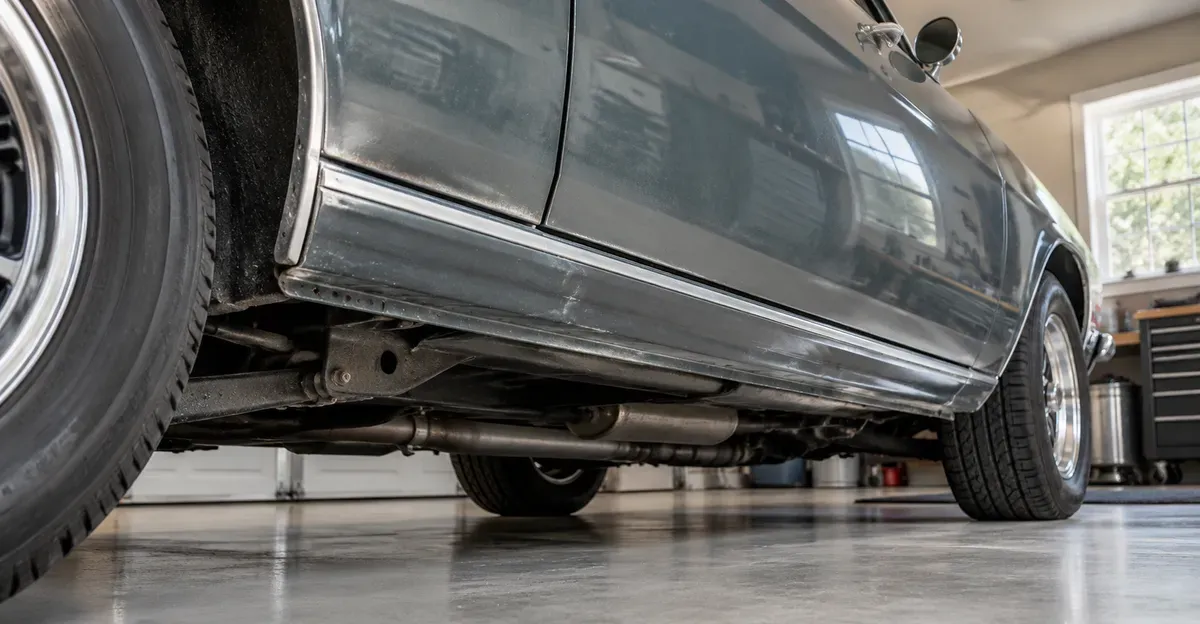
Rust is not mysterious chemistry. New England Rust Defenders describes surface rust as the early stage and deeper corrosion as the stage that spreads under paint and into the steel. Classics age into that second stage faster because coatings crack, seams hold water, and bare metal shows up at chips, worn underseal, and failed seam sealer. Gatran Garage notes that many U.S.-market vintage cars were built for regions without road salt, then later lived in winter climates that punish thin original protection.
Salt and brine speed the reaction. New England Rust Defenders sees wheel wells and seams stay wet and dirty after short winter drives. Hagerty Media’s salt-damage guide, built around submerged and soaked classics, quotes detailer Tim McNair: rinse fast, then neutralize salt, then dry every crevice. Ordinary winter brine is milder than floodwater, but the same physics apply—salt left in a rocker overnight keeps working.
Condensation does the quiet work in storage. InTheGarage explains the garage sweat pattern: evening air cools faster than the car’s metal mass, so moisture films the cool steel. Universal Classic Cars Storage’s dehumidification case study walks through dew point the same way—when air cools to saturation, distilled water drops onto anything colder than that dew point, including tools and body panels. That film does not need a rainstorm. It only needs a damp slab and a temperature swing.
| What you see | Likely driver | First move |
|---|---|---|
| Flash rust on a fresh chip | Paint breach, oxygen, humidity | Clean, prime bare metal, touch paint |
| Salt crust in wheel wells after a storm | Brine and mud held against steel | Undercarriage wash, neutralize if heavily soaked, dry drains |
| Musty carpets and foggy glass in storage | Cabin moisture on cool floors | Dry mats, fix seals, run a dehumidifier |
| Soft rocker or crunch under a probe | Long cavity corrosion | Stop coating; get a body assessment |
That table is the sorting tool. The rest of the page follows the rows.
Where Rust Hides First
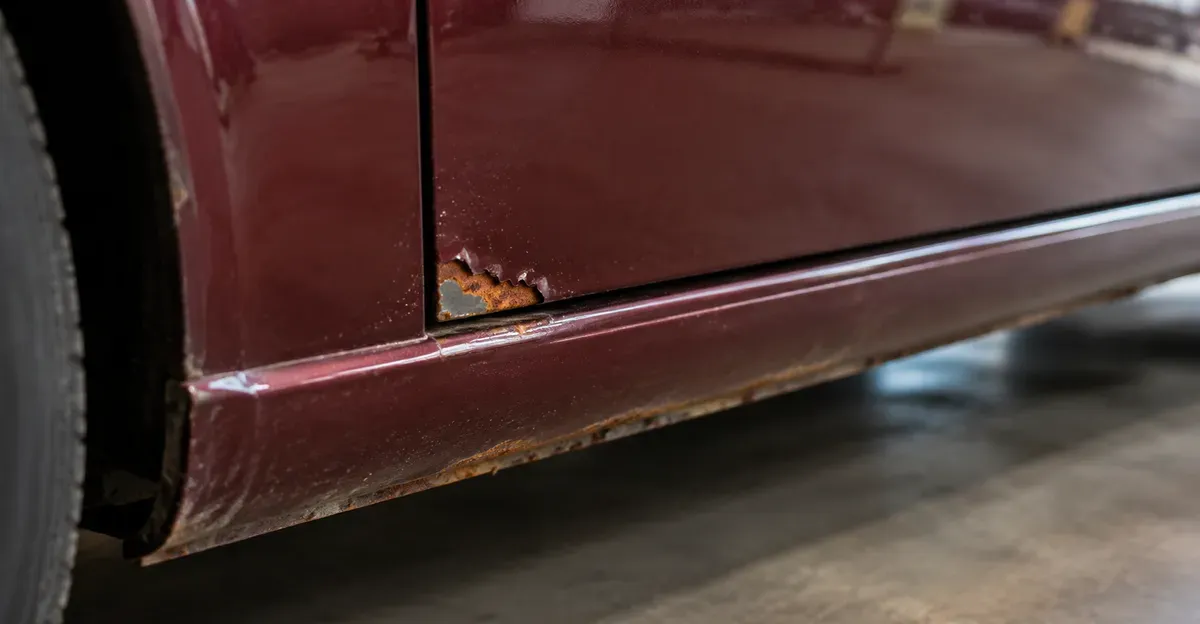
Most of the damage worth money starts where you do not look. Classic Car Hub lists the usual map: outer and inner sills, floor pans and footwells, wheel arches behind liners, the bottoms of doors, the leading edge of the hood, chassis outriggers and crossmembers, the boot floor and spare-wheel well, and any lap joint where two panels meet. Gatran Garage’s U.S.-car list matches that map—wheel arches, sills and door bottoms, hood and trunk lids, frame rails and subframe mounts near the engine bay.
The door bottoms and rocker cavities matter because water enters at the window and drip rail, then sits if the drain holes clog with leaves and undercoating sludge. Classic Car Hub’s annual habit is a torch and a gentle screwdriver probe: solid metal thuds; rotten metal crunches. Do that once a year at least, and again after a salted winter if the car saw the road.
Floor pans rust from both sides. Gatran Garage warns that wet carpets and failed seals feed floor-pan rust-through from the cabin. Check door, window, and trunk seals. Clear door drains. Pull wet mats the day they get soaked. Interior moisture is not a detailing problem. It is a structural one once the pan thins.
The hood leading edge and the trunk spare well collect condensation and splash. The bumper and chrome may look cosmetic, but Hagerty Media’s Fluid Film example shows owners also protect brightwork and underbody splash zones with oil-wax films that stay pliable through a season. Cosmetic rust on chrome is not the same as a soft sill, but both start with water that stayed too long.
Storage Humidity You Can Hold at Home
Competing guides agree that dry storage beats a perfect coating in a wet shed. New England Rust Defenders recommends a climate-controlled garage, a dehumidifier, desiccants, and a breathable cover—not plastic sheet pressed against the body. Car Rust Information Centre targets 40–55% relative humidity, stable temperature, sealed concrete floors, and airflow without blasting the car with drafts. Munters advises roughly 45–50% RH for classic storage and warns that temperature control alone does not fix humidity. InTheGarage sets a 40–50% band so leather and wood do not dry-crack while oxidation stays slow. Universal Classic Cars Storage cites a 40–60% band: below about 60% RH bare-metal corrosion largely stops, while below about 40% RH leather and wood can dry and crack.
What those pages leave hanging is the home-garage decision when you do not own a museum hall.
If you have a closed garage with power, buy a dehumidifier with a humidistat and a continuous drain to a floor drain or condensate pump. Universal Classic Cars Storage argues that dumping into a bucket fails when the collected water evaporates back into the room. Desiccant units often work better in cold unheated spaces than refrigerant units; Car Rust Information Centre makes that same point for damp, cool buildings. Set the humidistat in the mid-40s to low-50s and verify with a cheap hygrometer at bumper height, not only on a shelf by the door.
If the garage is damp and unheated and you cannot hold 55% RH, prioritize airflow and isolation from the slab. InTheGarage notes that porous concrete wicks ground moisture onto cool underbodies. A vapor barrier under the tires or a sealed floor helps. Do not wrap a damp car in plastic. New England Rust Defenders and Car Rust Information Centre both reject covers that trap moisture against paint. A breathable cover goes on only after the car is clean and dry.
If the car lives outdoors, prevention gets harder. A carport beats open sky. A breathable cover still needs a dry car underneath. Expect more frequent washes, more cavity wax, and earlier soft spots at the rockers. Outdoor storage is not a reason to skip coatings. It is a reason to inspect more often and to accept that some panels will need metal work sooner.
Jack stands during long lay-ups show up on Classic Car Hub and Gatran Garage lists. They unload tires and can improve underbody airflow. Use rated stands on solid ground. A battery tender and slightly higher tire pressure appear on Car Rust Information Centre’s storage checklist for long sits; those steps do not stop rust by themselves, but they keep the car from adding flat spots and a dead battery to a damp winter.
Wash, Neutralize, Then Dry
Washing is the floor every serious page repeats. Gatran Garage calls a thorough wash the simplest prevention and tells owners to hit wheel wells, underbody, door sills, and trim edges after salted roads. New England Rust Defenders wants an undercarriage wash plus thorough drying so seams and pinch welds do not stay wet. Hagerty Media’s winter rustproofing piece says no coating beats regular washes a few times a season, including touchless washes with undercarriage sprayers after salt storms.
The follow-up those wash tips leave open is how far to go when the car was soaked in heavy brine or coastal spray, not just dusted with winter sand.
Hagerty Media’s “Stop That Salt” article quotes Tim McNair and Griot’s Garage president Mark Greene on neutralizing salt with baking soda dissolved in water after a thorough fresh-water rinse and soap wash. McNair suggests about a tablespoon or two per gallon for finer finishes; Greene allows up to about a cup depending on the surface, fully dissolved, with a test spot and no hard scrubbing. Then rinse again and wash with normal car soap. Put the car on jack stands if you can and wash frame rails and rockers, not only the painted sides. McNair’s dry step is a blower—leaf blower or car dryer—into every nook. He also uses WD-40 on non-painted surfaces as a water displacer after the car is rinsed and dried.
For ordinary salted-road weekends, a strong rinse of the underbody, rockers, and wheel wells, followed by drying with doors and the trunk open, is the routine New England Rust Defenders and Gatran Garage describe. Compressed air or a blower on door bottoms and drain holes matters as much as the soap. Gatran Garage’s drying list is open doors, trunk, and hood; compressed air in cavities; check door bottoms for pooled water; dry seals. If water sits in a door after a wash, the drain is clogged. Clear it before you park.
Do not store the car wet. A damp classic under a cover is a condensation machine. Wax exterior paint after it is dry if you are putting the car away for weeks. Gatran Garage treats pre-storage wax as a water-repellent barrier, not as a substitute for cavity protection.
Coatings: What Belongs Where
Product tables on shop pages converge on four jobs: stabilize light surface rust, seal prepped metal, protect hollow cavities, and shield the visible underbody.
New England Rust Defenders maps converters to light, stable surface rust; moisture-cured urethane encapsulators to prepped rusted panels; lanolin-based coatings to flexible underbody duty; penetrating oil undercoating to seams and cavities on cars that already carry rust; and cavity wax to rockers, frame rails, and door bottoms. Classic Car Hub adds zinc-rich primer as the first layer on any bare steel after welding, grinding, or accident repair, and names cavity waxes such as Dinitrol, Bilt Hamber, and Waxoyl for hollow sections. Hagerty Media walks through grind-and-paint, seam sealer renewal, rubberized splash coating, and oil or non-drying wax blends such as Fluid Film and Eastwood-style waxy undercoats, applied with aerosols or a wand into cavities.
| Job | Typical product class | Best fit | Main risk |
|---|---|---|---|
| Light flash rust | Converter, then paint | Small stable spots | Missed pits keep rusting under the film |
| Bare metal after repair | Zinc-rich primer | Fresh welds and ground steel | Skipping zinc before filler or color |
| Hollow rockers and door bottoms | Cavity wax or penetrating oil | Injected through drains or access holes | Dry, cracked wax after years without recoat |
| Visible floors and arches | Underbody wax, oil-wax, or rubberized | Clean, dry, treated metal | Rubberized shells trapping salt if cracked |
The decision ranking pages raise and then leave hanging is rubberized undercoating on a classic that already has age and seam rust.
Hagerty Media’s Mike Bumbeck notes the trap: rubberized spray acts like a thin bedliner, sheds after rock hits, and can hide salt water creeping behind the shell until the panel is gone and the coating still looks present. Car Rust Information Centre warns that modern rubberized sealants can mask structural issues and clash with concours originality. New England Rust Defenders prefers penetrating oil such as its NH Oil undercoating on classics that still carry rust because oil creeps into seams brushes cannot reach and displaces moisture; it lists Boss Wax & Oil as a better fit for clean, rust-free undersides. Oil can wick out and needs yearly attention—Hagerty and New England Rust Defenders both treat annual reapplication as normal, not failure.
Cavity wax is not optional if the rockers and door bottoms are still closed boxes. Classic Car Hub’s practical line is to pick a proven wax and use it instead of debating brands while the sills disappear. Reapply every few years as the wax dries. New England Rust Defenders separates undercoating (visible underside) from rustproofing (cavities and seams) and says many classics need both. A car that only got a black floor spray with empty rockers still rusts from the inside.
Prep decides whether any of this sticks. New England Rust Defenders’ sequence is remove loose scale, clean, treat light rust, blast severe corrosion, and repair perforated metal before coatings. Classic Car Hub says converters fail on flaky, pitted, or unreachable rust because they only treat what they touch. Do not bury a soft sill under wax and hope.
Winter Driving Versus Parking the Classic
Every winter guide says wash after salt. Few force the ownership choice: drive the classic through brine season, or park it and use a daily driver.
If you drive it, Hagerty Media’s winter piece treats washes a few times a season as mandatory, not optional. Gatran Garage advises avoiding freshly salted roads, deep puddles, and heavy rain splash when you can, then washing thoroughly when you cannot. Car Rust Information Centre’s winter notes add frequent underbody rinses, protectant on exposed fasteners, and a sacrificial oil-based film such as Fluid Film before outings so salt leaves with the film instead of sitting on steel. New England Rust Defenders wants a post-winter inspection of wheel wells, seams, drains, and coating wear each spring, with touch-ups as soon as bare metal shows.
If you park it, storage humidity and a clean, dry, waxed car matter more than winter spray products. Run a maintenance start periodically if seals need exercise—Car Rust Information Centre suggests every two to three weeks in winter storage contexts—but do not leave wet snow packed in wheel wells overnight. Pull the car in dry.
Coastal owners and flood-exposed cars sit in a harder category. Hagerty Media’s salt-neutralization routine with baking soda is aimed at cars soaked in salt water, not at a light Midwestern salt dusting. If the classic sat in floodwater or ocean spray, rinse heavily, neutralize, dry with a blower, and plan a cavity and underbody treatment after the car is bone dry. Do not wrap it damp.
When Prevention Ends and Repair Starts
Surface rust on a panel is manageable. Classic Car Hub separates annoying surface corrosion from metal that has penetrated through. Perforation needs new metal. There is no spray that rebuilds a hole in a sill. New England Rust Defenders points owners with rust-through toward panel repair before protective coatings. Soft structure under a probe, bubbling that collapses, or flaking scale that returns through encapsulator are stop signs for DIY prevention-only plans.
Get a body shop or rust specialist involved when:
- A rocker, floor pan, or frame rail feels soft or crunchy.
- You see daylight through a panel that carries loads or seals the cabin.
- Seam sealer is swollen and salty sludge packs behind it (Hagerty Media’s seam-failure pattern).
- You cannot reach the back of a rusted cavity to prep it.
Document condition with photos. Gatran Garage recommends photographing critical areas regularly for early change detection and for insurance or value records. That habit also stops debates about whether a spot was “always like that.”
Cost ranges vary too widely by region, panel, and whether the car is a daily classic or a show car to invent a single invoice here. Ask for a written scope that separates stop-the-bleeding metal work from cosmetic paint. Prevention products after solid metal is restored are cheaper than repeating the same wax over active rot.
A Practical Yearly Routine
Use this as an owner checklist, not as a shop brochure.
After every salted or coastal drive: Rinse underbody, wheel wells, and rockers. Dry door bottoms and drains. Open the doors and trunk until cavities are dry.
A few times each winter season: Full undercarriage wash. Touchless underbody sprays help when a lift is unavailable (Hagerty Media). Inspect coating chips.
Spring: Post-winter inspection of wells, seams, drains, and rockers (New England Rust Defenders). Touch paint chips. Recoat worn underbody spots. Probe sills gently (Classic Car Hub).
Summer: Good weather for cavity wax and underbody work; warmer temps help wax penetration (Car Rust Information Centre). Fix minor rust before fall.
Fall before storage or winter driving: Clear leaf-packed drains. Renew underbody protection. Wax paint. Confirm dehumidifier and hygrometer work. Apply oil-wax films if you will drive on salt (Car Rust Information Centre / Hagerty Media).
Any bare metal event: Zinc-rich primer before filler or color (Classic Car Hub). Renew failed seam sealer before packing salt into the joint (Hagerty Media).
Annual: Inspect coatings and cavities. Oil undercoats often need yearly attention; cavity wax every few years (New England Rust Defenders, Classic Car Hub, Hagerty Media).
That loop is how to prevent rust on a classic car in practice: keep water and salt off steel, keep humidity in a band your garage can hold, protect cavities and floors with products that match the metal’s real condition, and stop coating over holes. Nothing here replaces a lift inspection on your specific car. A soft rocker is a repair decision, not a shopping decision for a bigger spray can.
FAQ
Does a dehumidifier matter more than undercoating?
Both matter. New England Rust Defenders treats climate-controlled storage as equal to coatings because condensation still attacks seams when the garage swings wet and dry. Munters advises keeping relative humidity near 45–50% for classic storage so steel corrosion and mold risk stay down. Coatings fail faster if the car sits wet overnight after every wash or every salt storm.
Can I use rubberized undercoating on a classic?
Use it carefully. Hagerty Media notes that rubberized spray can trap salt and moisture behind a cracked shell after road hits, so rockers and kick panels can rot under a layer that still looks intact. Car Rust Information Centre adds that modern rubberized sealants can hide structural problems and complicate concours-level originality. Prefer oil or wax products on classics that already show rust in seams, and reserve rubberized spray for clean, painted, inspectable splash zones if you check it every year.
What humidity should a home garage hold?
Aim for roughly 40–55% relative humidity. Car Rust Information Centre uses 40–55% for UK-style damp storage; InTheGarage targets 40–50%; Universal Classic Cars Storage cites a 40–60% band where corrosion largely stops below about 60% RH and trim stays safer above about 40% RH. A humidistat-controlled dehumidifier with a drain hose beats a towel-and-hope garage in most U.S. coastal and snow-belt climates.
When is rust past DIY prevention?
When metal is soft, flaking in layers, or perforated. Classic Car Hub states there is no product that fills a hole in a sill—welding new metal is the path. New England Rust Defenders treats grit blasting and panel repair as the prep step before coatings when scale is severe. Soft rockers, crunchy floor pans, or bubbling that collapses under light probe pressure need a body shop assessment before more wax goes on.